
On this page
- Is There a Difference Between Black and White Chia Seeds?
- How Do Black and White Chia Seeds Differ in Appearance and Taste?
- How Do Black and White Chia Seeds Compare on Nutrition?
- What Does the Research Say About Chia Seed Colour?
- What Are the Culinary and Industrial Uses of Each Colour?
- Which Colour Do Buyers Prefer?
- How Should You Buy Black or White Chia Seeds in Bulk?
- Frequently asked questions
Black or white chia seeds are nutritionally almost the same. Both come from the same plant, Salvia hispanica, and controlled studies have found no meaningful difference in protein, oil, omega-3 or fibre between the two colours. The real differences are in appearance, supply and price. This guide compares black and white chia seeds on looks, taste, nutrition, research and uses, and explains which colour bulk buyers usually choose.
Key takeaways
- Black and white chia are the same species. Seed colour comes from the genetics of the plant line, not from processing.
- A study of two genotypes that differ only in seed colour found no significant difference in protein, oil, fibre or omega-3.
- White chia is grown in much smaller volumes, so it is harder to source and is quoted separately.
- Choose by appearance: white chia suits light-coloured foods, while black chia is the standard for most retail and bakery uses.
Is There a Difference Between Black and White Chia Seeds?
Yes, but the difference is mainly in colour. Black chia seeds have a grey, brown and black mottled coat. White chia seeds have a cream or off-white coat. Both are seeds of Salvia hispanica, a plant of the mint family that is native to Mexico and Central America. They are not two different species, and white chia is not black chia that has been bleached or hulled.
Most commercial chia is a mix that is mainly dark, with a few white seeds scattered through it. Seed breeders have also selected pure white-seeded lines. These are grown and sold separately as “white chia”. Inside, the two colours are very similar. They absorb water in the same way and form the same gel when soaked. Our guide on how long to soak chia seeds applies to both colours.
How Do Black and White Chia Seeds Differ in Appearance and Taste?
Black and white chia differ in coat colour, and sometimes slightly in size, but not in taste. Both have a mild, neutral, slightly nutty flavour. Most people cannot tell them apart once they are mixed into food.
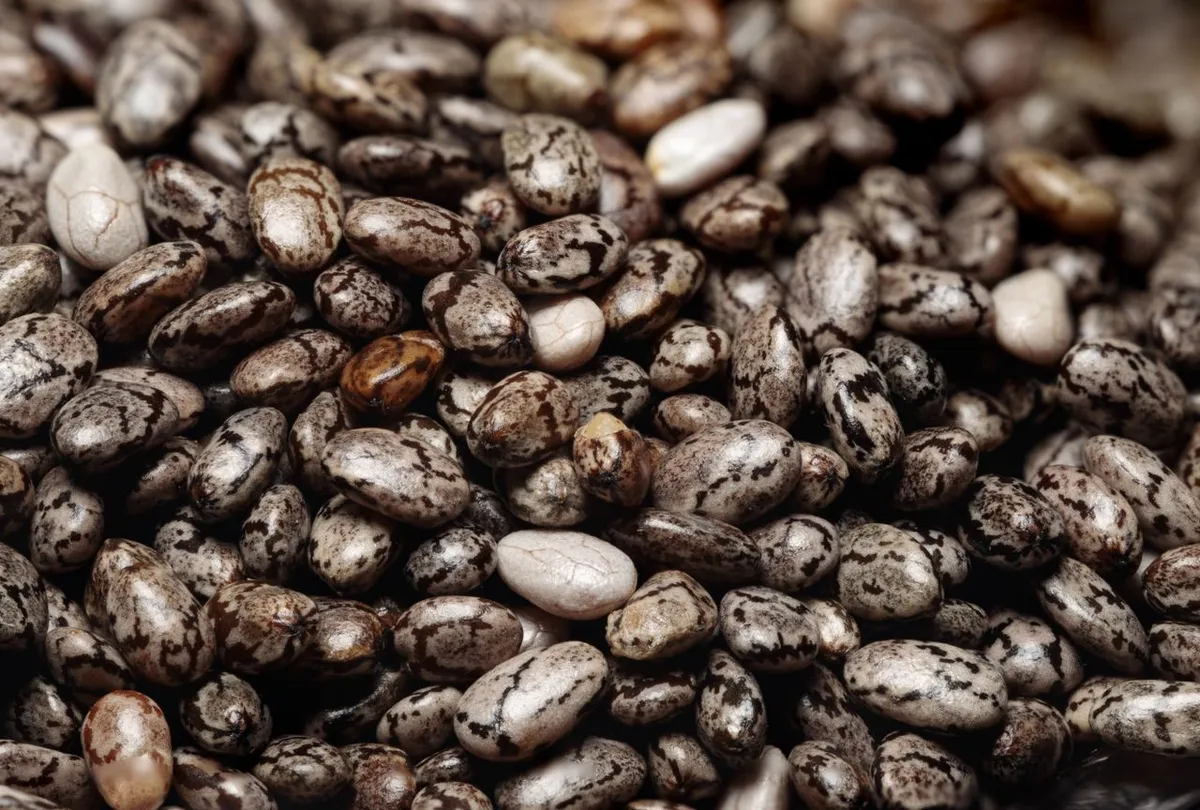
- Colour: black chia is grey to black with a marbled pattern. White chia is cream to off-white, sometimes with faint markings.
- Size: both are small, oval seeds about 1 to 2 mm long. Seed size depends more on the crop and growing area than on colour.
- Taste: both are mild and neutral, and neither changes the flavour of a recipe.
- Look in food: white chia almost disappears in light foods such as yoghurt, milk puddings and white bread. Black chia shows as dark specks.
Buyers should watch for one quality point. Small brown or reddish seeds in a chia lot can be immature or weed seeds, not white chia. A good specification limits these as foreign matter or other seeds.
How Do Black and White Chia Seeds Compare on Nutrition?
The two colours have very close nutrient profiles. USDA FoodData Central does not split chia by colour. Its standard entry, “Seeds, chia seeds, dried“, covers chia in general. For colour, the best data comes from a 2013 study by Ricardo Ayerza in the Emirates Journal of Food and Agriculture. He grew a black-spotted line (Tzotzol) and a white line (Iztac) side by side and compared their seeds.
| Measure | Black chia (Tzotzol) | White chia (Iztac) | USDA chia, any colour |
|---|---|---|---|
| Protein | 19.0% | 18.8% | 16.5 g per 100 g |
| Oil (fat) | 34.2% | 32.1% | 30.7 g per 100 g |
| Omega-3 ALA, share of fatty acids | 64.5% | 63.3% | 17.8 g ALA per 100 g |
| Total fibre | 23.2 g per 100 g | 25.9 g per 100 g | 34.4 g per 100 g |
| Statistically significant difference? | No, for all of the above | – | |
Black versus white chia composition (Ayerza, 2013) next to the USDA FoodData Central values for chia seeds.
The USDA values differ from the study values because they come from different samples and methods. The point is the side-by-side comparison: within one trial, black and white chia were statistically the same. USDA also lists about 631 mg of calcium, 335 mg of magnesium and 7.7 mg of iron per 100 g of chia. For a fuller picture of these nutrients, see our article on the advantages of chia seeds.
What Does the Research Say About Chia Seed Colour?
The research shows small differences that depend on the sample, with no consistent winner. Two studies are often cited.
- Ayerza (2013): the black and white lines were grown in the same field under the same conditions. The author found “no relationship of the seed coat color” with protein, oil, fibre, amino acids or antioxidants. He linked this to the small genetic difference between the two lines.
- Tunçil and Çelik (2019): this study in Akademik Ziraat Dergisi tested black and white chia bought in Turkey. White seeds showed slightly higher total phenolics (3.52 vs 3.42 mg GAE/g) and stronger antioxidant activity. Black seeds had more protein and ash. Oil content was not different.
The second study used retail samples of unknown origin, so growing area and crop year may explain part of the gap. In practice, the growing conditions, the crop and the cleaning grade affect chia quality more than seed colour. For buyers, this means a well-cleaned, tested lot of either colour will meet the same nutrition claims.
This article is for general information and is not medical or dietary advice.
What Are the Culinary and Industrial Uses of Each Colour?
Both colours have the same uses. Food makers choose the colour by how the seeds will look in the finished product.
- Bakery: breads, crackers and biscuits. Black chia is the usual choice and gives a speckled look. In the EU, chia in bread is capped at 5% whole or ground seed, and in other baked products at 10%.
- Breakfast foods: cereals, granola, muesli and overnight oats.
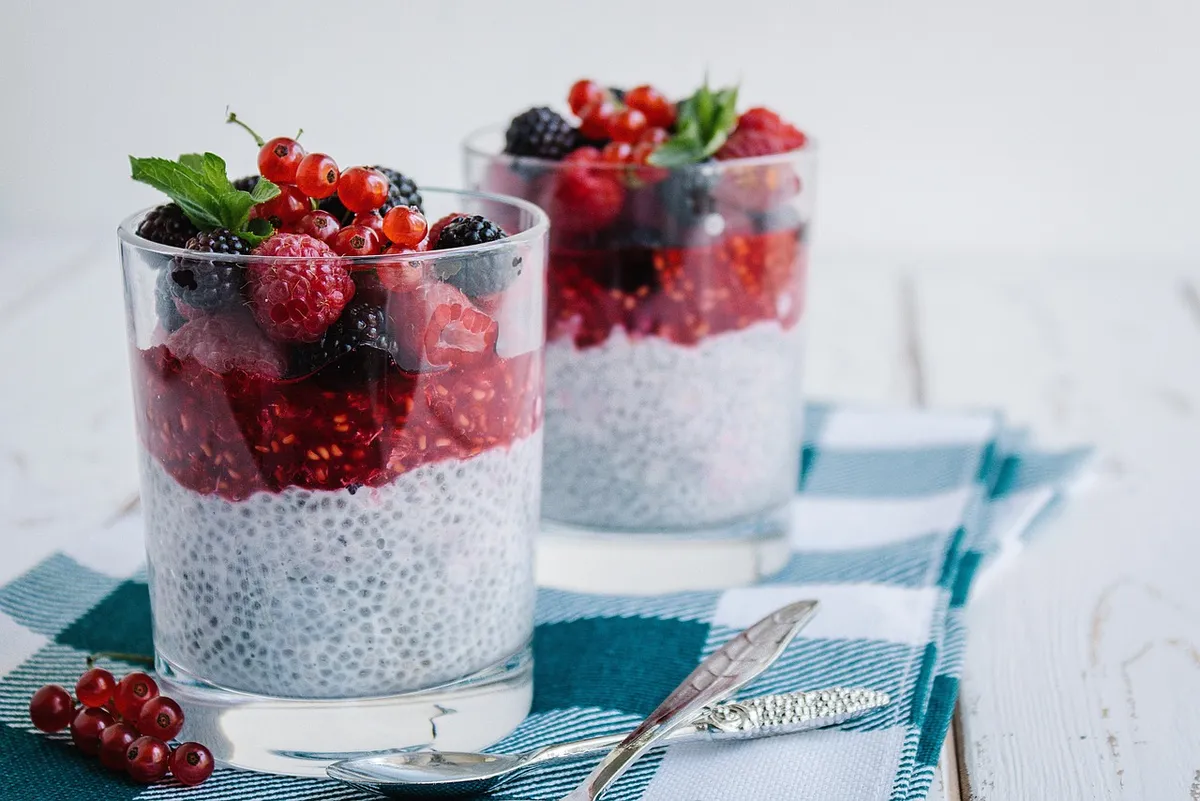
- Puddings, yoghurts and drinks: white chia is popular where a clean, light look matters.
- Snack bars and seed mixes: often black, sometimes blended with white for a contrast effect.
- Oil and powder: cold-pressed chia oil and defatted chia flour, where seed colour does not matter.
Chia is often compared with other gel-forming seeds. Our guide to chia seeds vs basil seeds explains how the two differ in use and texture.
Which Colour Do Buyers Prefer?
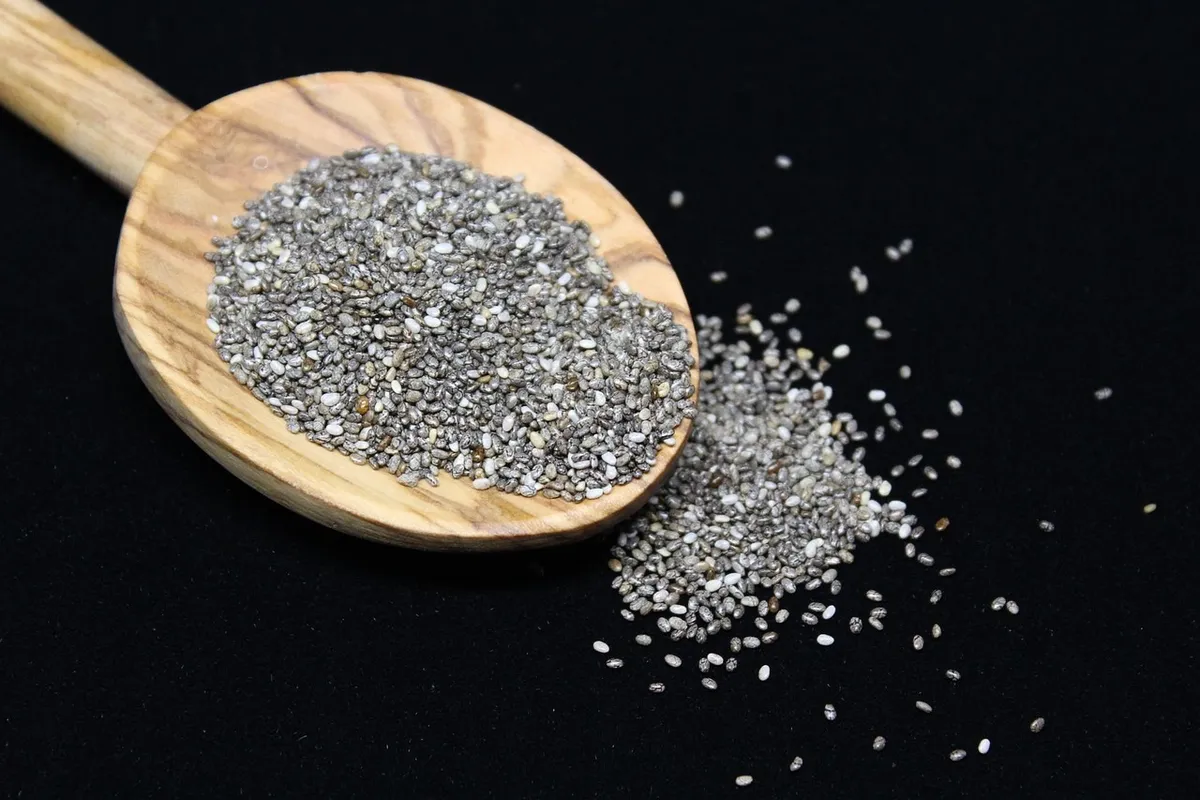
Most bulk buyers order black chia, because it is the standard trade product and is available in large volumes. Paraguay and Bolivia still dominate world chia, and India is a growing origin. The bulk of their crop is the mottled dark type.
White chia is less common because fewer farms grow pure white-seeded lines, and those lots must be kept apart from black chia at every step, from the field to the packing line. Small amounts of black seed can spoil a white lot. That extra care, and the smaller supply, mean white chia is quoted separately from black. Buyers who choose white chia are usually retail brands that want a premium or “clean-look” product, or food makers who want invisible seeds in light-coloured recipes. If colour does not affect your product, black chia gives the widest choice of lots, grades and prices.
How Should You Buy Black or White Chia Seeds in Bulk?
Whether you buy black or white chia seeds, specify the purity grade, the moisture limit, microbiology, aflatoxin and pesticide residues, and ask for a lot-wise certificate of analysis. For white chia, also set a limit for dark seeds in the lot. Chia is an authorised novel food in the EU, and since 2021 it can be sold there “as such”, in bulk as well as pre-packed.
Elysium Agri Corporation exports Indian chia seeds from Jamnagar, Gujarat. Our standard product is black chia in machine-cleaned 99.5% and sortex 99.9–99.95% grades, with moisture at 8% maximum, and white chia is available on request. Every lot is tested for Salmonella, yeast and mould, aflatoxin, pesticides and cadmium before loading, as set out on our lab testing page. We pack in 25 kg kraft paper bags with a PE liner, 25 kg PP bags or 1 MT big bags. A 20 ft container holds about 18 to 19 MT, which you can check with our container load calculator.
Tell us the colour, grade, quantity and destination port, and we will send a quote with the specification sheet. Request a chia seeds quote →
Frequently asked questions
Is there a difference between black and white chia seeds?
The main difference is colour. Both black and white chia seeds come from the same plant, Salvia hispanica, and they look different because of the genetics of the plant line. They taste the same, absorb water in the same way and form the same gel. Nutrition is very similar, and white chia is simply grown in smaller volumes.
Which chia seeds are more nutritious, black or white?
Neither colour is clearly more nutritious. A 2013 study that grew black and white chia lines side by side found no significant difference in protein, oil, omega-3, fibre or antioxidants. A 2019 study of retail samples found slightly more antioxidants in white chia and more protein in black chia, so the small differences depend on the sample.
Do black and white chia seeds taste different?
No. Black and white chia seeds both have a mild, neutral and slightly nutty flavour, and most people cannot tell them apart once they are mixed into food. The only practical difference is visual. White chia blends into light foods such as yoghurt and puddings, while black chia shows as dark specks in bread and other products.
Why are white chia seeds less common?
White chia seeds are less common because fewer farms grow pure white-seeded lines, and most of the world's chia crop is the mottled dark type. White lots must also be kept apart from black chia from the field to the packing line, since a few dark seeds spoil the look. The smaller supply means white chia is quoted separately.
Can black and white chia seeds be used interchangeably?
Yes. Black and white chia seeds can replace each other in almost every recipe and product, in the same amounts and with the same soaking time. They behave the same in puddings, drinks, baking, cereals and snack bars. Choose the colour only for appearance: white for light-coloured foods, and black for standard bakery, retail packs and mixes.
Related reads


