
On this page
The difference between chia seeds and basil seeds starts with the plant: chia comes from Salvia hispanica, a sage native to Central America, while basil (sabja) seeds come from sweet basil, Ocimum basilicum. Chia seeds are oval and mottled grey, black or white, can be eaten dry or soaked, and gel slowly; basil seeds are jet-black and teardrop-shaped, are almost always soaked, and swell within minutes into a seed with a thick white halo. Both are used in drinks and desserts, but they are not the same product. This comparison covers appearance, behaviour in water, uses and buying tips.
Key takeaways
- Chia and sabja are different species in the mint family: chia is a sage, sabja is a basil.
- Sabja seeds swell faster and form a looser gel with a clear white coat; chia forms a thicker, even gel over 15–30 minutes or more.
- Chia can be eaten dry in small amounts on moist food; sabja seeds are hard when dry and are soaked before use.
- Basil seeds can replace chia in drinks and desserts, but not always in baking or puddings.
Chia Seeds vs Basil Seeds: Quick Answer
Chia seeds vs sabja seeds is a common question, because both are small, dark seeds that form a gel in water. The quick answer is that they come from different plants, look different up close and behave differently in water. Chia is the better choice for puddings, baking, cereal toppings and energy bars. Sabja is the traditional choice for cold drinks and desserts in South and Southeast Asia, such as falooda and sherbets.
Both seeds belong to the mint family (Lamiaceae), but they are separate species and are traded as separate products. Chia is a world commodity grown in South America and, increasingly, in India. Basil seed is a smaller trade item, grown mainly in Asia.
What Are Chia Seeds?
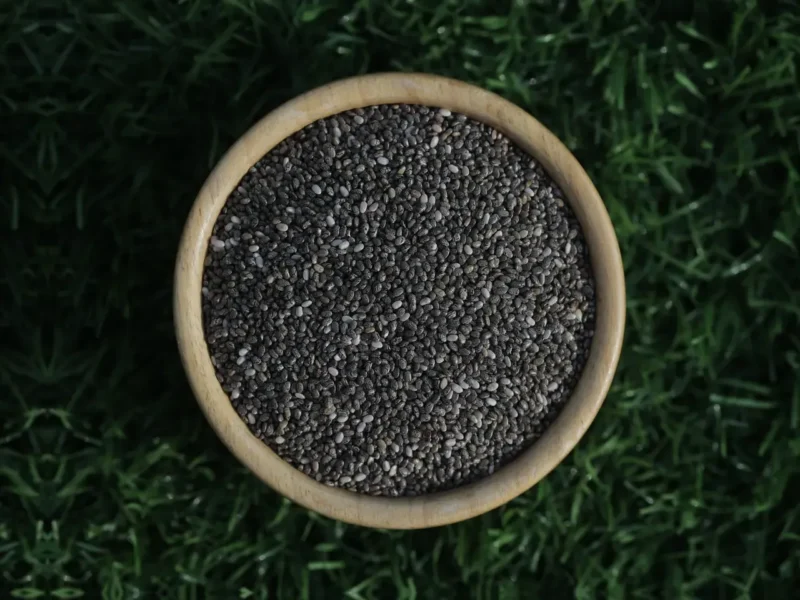
Chia seeds are the seeds of Salvia hispanica, a flowering plant in the sage genus. The plant is native to Mexico and Guatemala. Paraguay and Bolivia lead world supply today, and India has become a growing origin, with chia grown mainly in the Neemuch–Mandsaur belt of Madhya Pradesh and newer areas in Maharashtra, Karnataka and Uttar Pradesh.
Chia is valued for its nutrition. Export-grade chia typically contains about 30–34% fat, 17–22% protein and 17–19 g of omega-3 alpha-linolenic acid (ALA) per 100 g, plus a high level of dietary fibre. Black (mottled) chia is the standard trade type, while white chia is rarer and usually costs more; both have almost identical nutrition. Chia is an authorised novel food in the EU and, since 2021, can be sold there “as such”, in bulk as well as pre-packed.
What Are Basil (Sabja) Seeds?
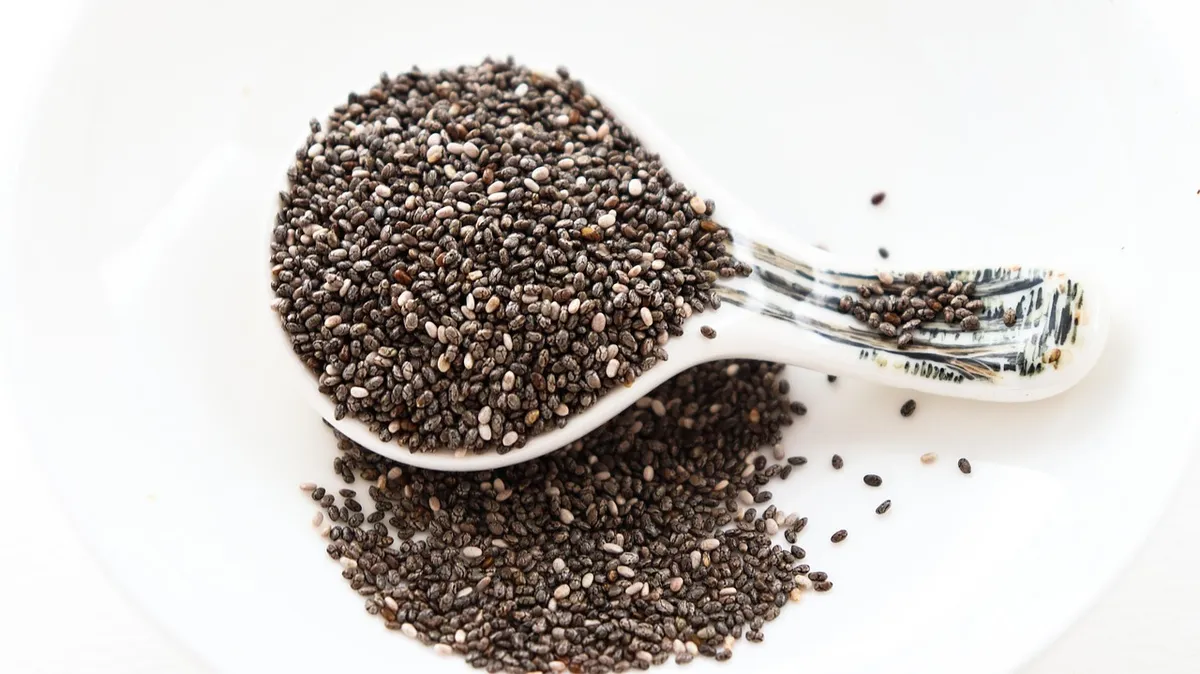
Basil seeds are the seeds of sweet basil, Ocimum basilicum, the same species as the familiar culinary herb. In India they are called sabja or tukmaria, and in other markets they are sold as falooda seeds, selasih or hột é. They are harvested from the dry flower spikes of the basil plant after flowering.
Basil seeds are also rich in fibre and contain oil in which alpha-linolenic acid is the main fatty acid. A 2025 review of basil seed composition reports high fibre and lipid contents and describes how the seed rapidly releases mucilage on contact with water. The review also notes that the extracted mucilage is used as a thickener, stabiliser or emulsifier in food. Basil seed is not the same as holy basil (tulsi) seed, which comes from a different species.
Appearance, Size and Texture Compared
You can tell chia seeds from basil seeds by colour, shape and how they feel. The table compares the main features.
| Feature | Chia seeds | Basil (sabja) seeds |
|---|---|---|
| Botanical name | Salvia hispanica | Ocimum basilicum |
| Colour | Mottled grey, black and white; white chia also exists | Uniform jet black |
| Shape | Flat oval | Teardrop or slightly elongated oval |
| Size | About 1–2 mm long | Similar size, slightly more elongated |
| Dry texture | Crunchy, can be eaten dry on moist food | Very hard, usually soaked first |
| Swelling speed | Gel forms over 15–30 minutes; sets fully in hours | Swells within a few minutes |
| Soaked look | Seeds suspended in an even, thick gel | Black centre with a distinct white, translucent halo |
| Taste | Mild, slightly nutty | Neutral |
| Main origins | Paraguay, Bolivia, Mexico, India | India, Southeast Asia |
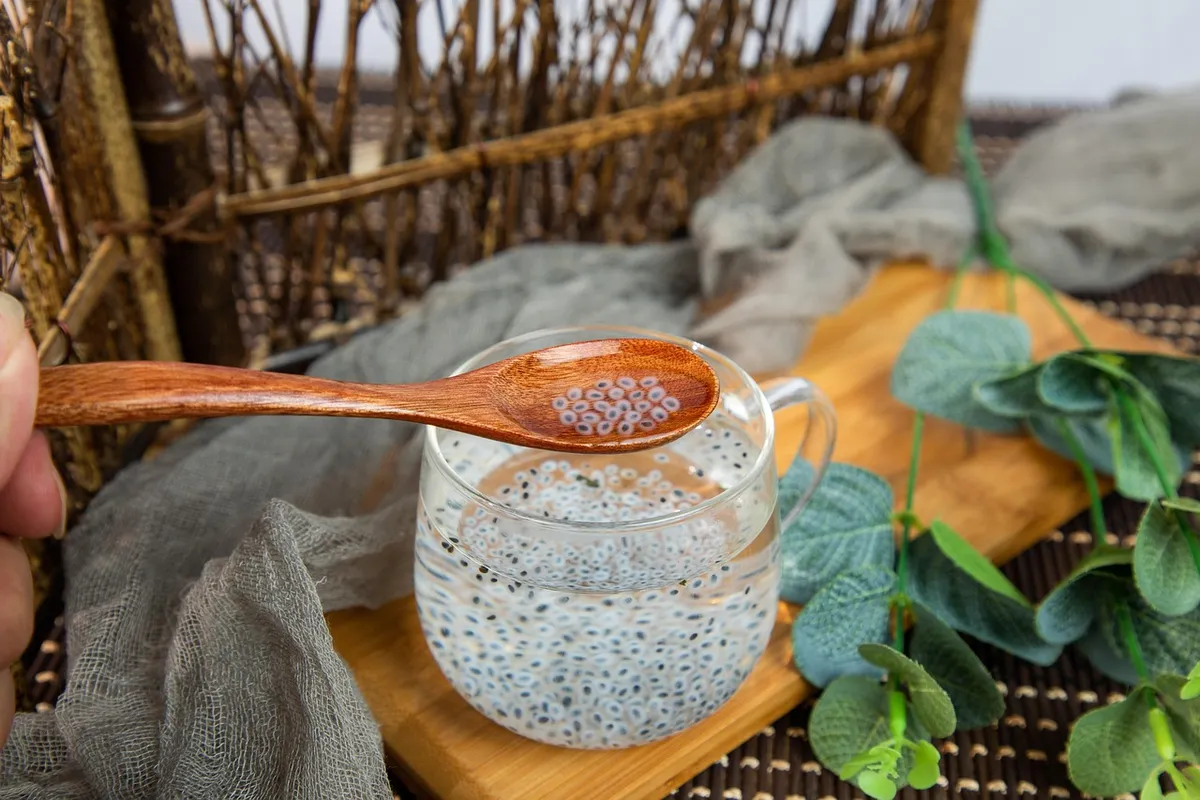
The easiest test is the soak test. Put a pinch of each in water. After two or three minutes, basil seeds already show a white, cloudy coat around a black dot. Chia seeds take longer and form a clearer, more even gel.
Nutrition is harder to compare directly. Chia is a large commodity with well-documented export specifications for fat, protein and omega-3. Published figures for basil seed vary more between studies, varieties and growing areas. Both are high-fibre seeds, but if you need consistent nutrition values on a label, chia is easier to specify and verify lot by lot.
How Does Each Seed Behave in Water?
Both seeds have a coat of mucilage, a soluble fibre that swells into a gel. The difference is speed and structure. Basil seeds swell very quickly, so they are ready to use almost at once. Each seed becomes a separate soft bead with a crunchy centre. Chia seeds absorb water more slowly but form a thicker, more cohesive gel. This is why chia sets into a pudding and can replace eggs in baking, while sabja gives the loose, bead-like texture of falooda.
Typical home use is about 1 teaspoon of basil seeds in a glass of water for 10–15 minutes, or 1 part chia to 4–6 parts liquid for 20 minutes to overnight. Our guide on how long to soak chia seeds gives times and ratios for different uses.
Whichever seed you use, let it swell fully in liquid before eating, and do not eat a spoonful of dry seeds followed by water. Both seeds absorb many times their weight in liquid. People with swallowing difficulties should take extra care.
What Are the Culinary Uses of Each Seed?
The seeds overlap in drinks but differ in most other uses.
- Chia: puddings, overnight oats, smoothies, yoghurt toppings, breakfast cereals, granola and energy bars, breads and crackers, jams, and as a vegan egg replacer in baking. Food makers also use chia flour and cold-pressed chia oil.
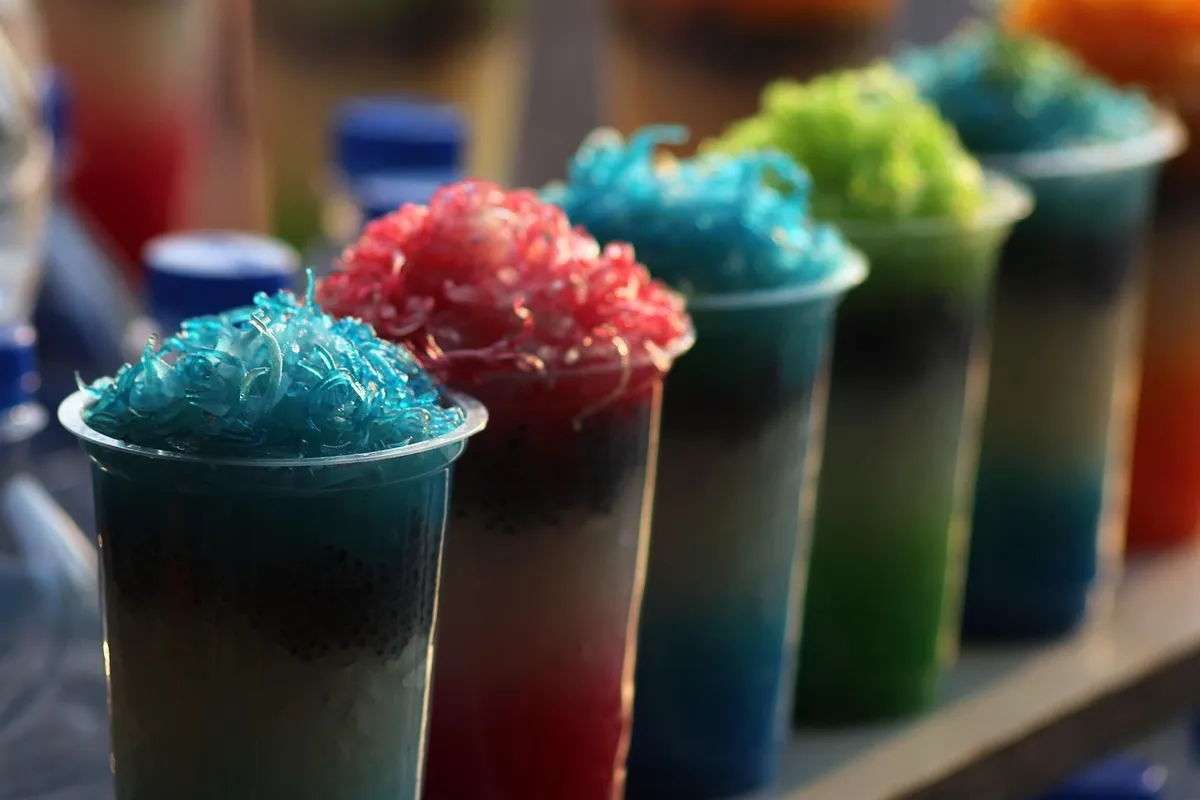
- Basil (sabja): falooda, lemonades and sherbets such as nimbu pani, rose milk, coconut drinks, Thai and Vietnamese sweet drinks and desserts, and ice-cream toppings. It is popular in summer drinks across South Asia.
Can basil seeds replace chia seeds in recipes? In drinks and simple desserts, yes. Use a little less sabja, because it swells faster. In chia pudding, baking and egg replacement, the swap does not work as well, because basil seeds do not form the same thick, binding gel. Basil seeds are also not suited to eating dry as a topping.
For food manufacturers, labelling matters too. In the EU, chia must be labelled as “Chia seeds (Salvia hispanica)”. Basil seed sold as a food ingredient follows the rules of each market, so check the regulatory status before you launch a product with it.
Related reading: Black or White Chia Seeds: Differences, Nutrition and Uses.
Buying Chia Seeds in Bulk from Trusted Origins
Because chia and sabja look similar when dry, buyers should know the difference between chia seeds and basil seeds and specify the botanical name in every contract. Ask for a lot-wise Certificate of Analysis and check the seed under good light before you accept a lot. Good export chia has 99.5–99.95% purity, 8% max moisture, Salmonella absent in 25 g, aflatoxin B1 of 2 µg/kg or less and pesticide residues within EU limits. Microbiology is the main reason EU buyers reject Indian chia, so make sure every lot is tested for it.
Elysium Agri Corporation, based in Jamnagar, Gujarat, exports Indian black chia seeds in machine-cleaned and sortex grades up to 99.95% purity, with white chia on request. Every lot is tested for plate count, yeast and mould, E. coli, Salmonella, aflatoxin, pesticides and cadmium at an NABL-accredited lab. We offer private label and bulk export packing, and our certificates and lab testing pages give full details.
Tell us the grade, colour, packing and quantity, and we will send a specification and price. Request a chia seeds quote →
Frequently asked questions
What is the difference between chia seeds and basil seeds?
Chia seeds come from Salvia hispanica, a sage, while basil or sabja seeds come from sweet basil, Ocimum basilicum. Chia is oval and mottled grey, black or white, can be eaten dry on moist food and gels slowly. Basil seeds are jet black and teardrop-shaped, are soaked before use and swell within minutes into beads with a white halo.
Are sabja seeds and chia seeds the same?
No. Sabja seeds are basil seeds from Ocimum basilicum, while chia seeds come from Salvia hispanica. Both belong to the mint family and both form a gel in water, which is why they are often confused. They differ in colour, shape, swelling speed, gel texture and typical uses, and they are traded as separate products.
How can you tell chia seeds from basil seeds by sight?
Chia seeds are flat ovals with a mottled mix of grey, black and white, and white chia also exists. Basil seeds are uniformly jet black and more teardrop-shaped. A quick soak test helps: after two or three minutes in water, basil seeds show a cloudy white coat around a black centre, while chia forms a clearer, even gel.
Which seeds absorb water faster, chia or sabja?
Sabja, or basil seeds, absorb water faster. They swell within a few minutes and are usually ready to use in 10 to 15 minutes. Chia absorbs water more slowly, forming a usable gel in 15 to 30 minutes and setting fully over a few hours or overnight. Chia forms the thicker, more binding gel of the two.
Can basil seeds replace chia seeds in recipes?
In drinks, lemonades, falooda and simple desserts, basil seeds can replace chia, using slightly less because they swell faster. In chia pudding, baking and egg replacement they work less well, because they do not form the same thick, binding gel. Basil seeds are also too hard to eat dry, so they are not suitable as a sprinkled topping.
Related reads


