
On this page
- What Are Kabuli Chickpea Sizes?
- How Is Size Measured: Millimetres and Counts per Ounce?
- Kabuli Chana Size Chart: 7 mm to 14 mm
- Which Sizes Are Best for Canning, Hummus and Roasting?
- How Do Sieving, Grading and Uniformity Work?
- Which Quality Parameters Matter Beyond Size?
- How Do You Buy Kabuli Chickpeas in Bulk from India?
- Frequently asked questions
Kabuli chana size is the diameter of the seed in millimetres, measured by the round-hole screen it fails to pass through. Export kabuli runs from small 7–8 mm seed (about 75/80 count per ounce) to bold 12 mm “Dollar” (about 42/44) and 13–14 mm “Double Dollar” (about 40/42 to 38/40). Size drives both price and end use. Larger seed costs more and suits retail packs, while smaller seed is the economical choice for hummus, canning and flour.
Key takeaways
- India sells kabuli by screen size in millimetres. Many overseas buyers order by count per ounce, which is the number of seeds in 28.35 g.
- A smaller count means a bigger seed: 75/80 is about 7–8 mm, and 42/44 is about 12 mm.
- Each step up in size adds to the price, so match the size to your product rather than buying the boldest grade.
- Size is only one parameter. Moisture, foreign matter, damaged and broken seeds, and residue results matter just as much.
What Are Kabuli Chickpea Sizes?
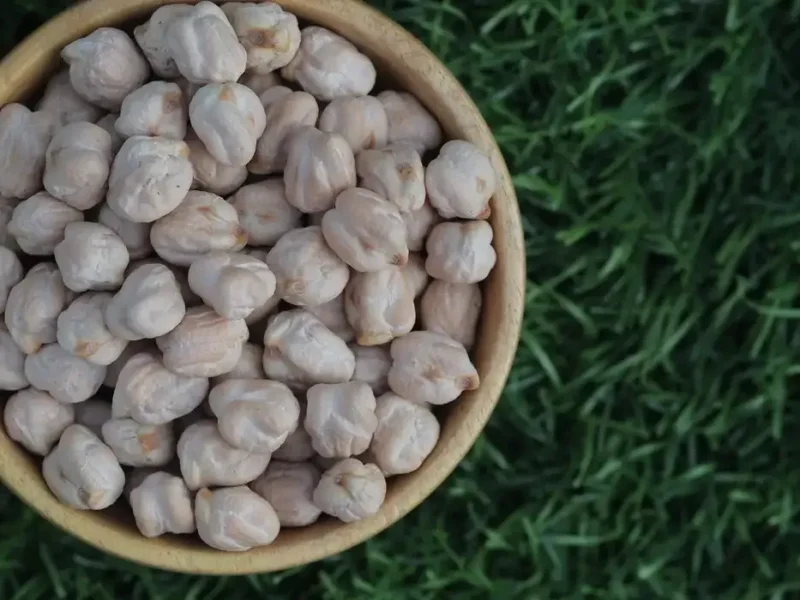
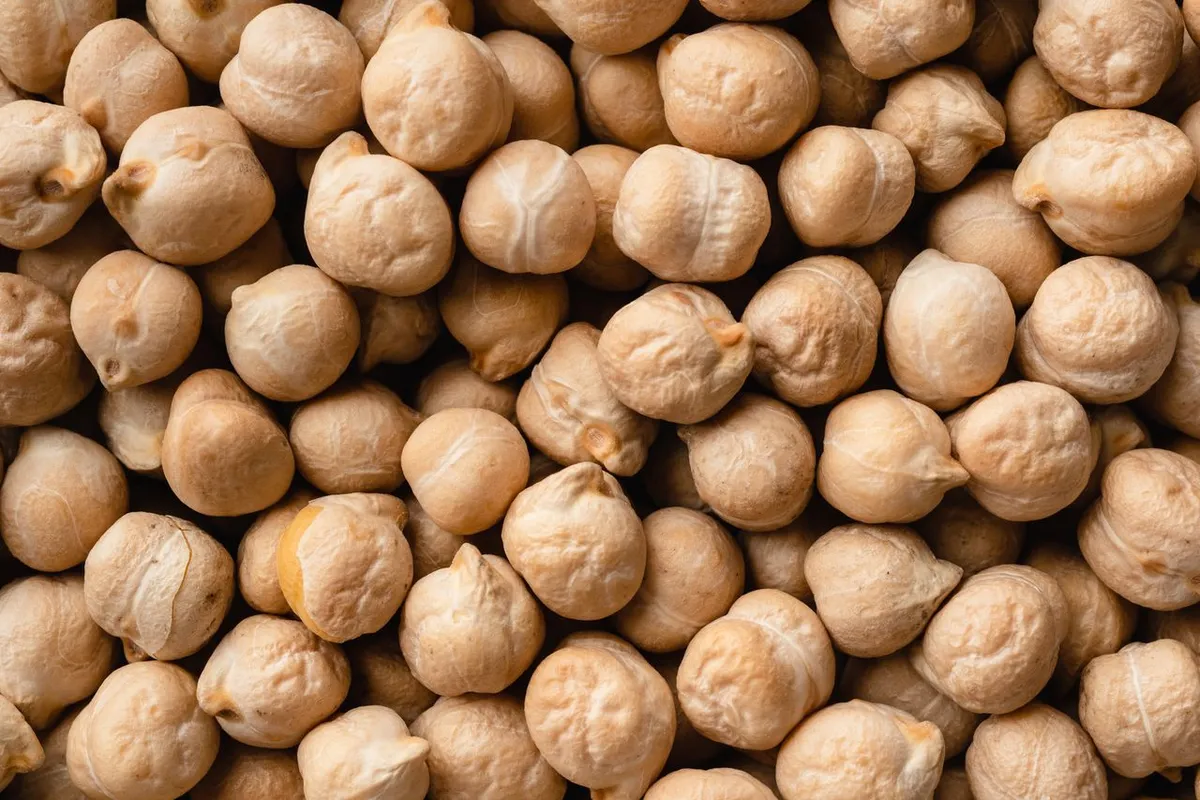
Kabuli chickpea sizes are commercial grades that group seeds by diameter. Kabuli is the large, cream-coloured chickpea with a thin seed coat, also called white chickpea or kabuli chana. It is different from desi chana, which is smaller, darker and has a thicker skin. Because kabuli is sold mainly as a whole, visible seed, buyers pay close attention to its size and how even it is.
The Indian trade names the grade by the screen size: 7–8 mm, 9 mm, 10 mm, 11 mm, 12 mm and 12+ mm. “Dollar” usually means 12 mm, and “Double Dollar” means 13–14 mm. These names are market terms, not legal grades, so always confirm the millimetre size and count in the contract. Our guide to white and brown chickpeas explains how kabuli differs from desi chana in more detail.
Seed size depends mostly on the variety and the growing season. Large-seeded varieties produce more bold seed, but every crop gives a mix of sizes. That is why exporters grade each lot on screens before sale. In Canadian trials reported by Top Crop Manager, kabuli seed of 9 mm and above earned the premium price, and the share of seed in that class changed a great deal between varieties.
How Is Size Measured: Millimetres and Counts per Ounce?
Size is measured in two ways: by screen diameter in millimetres, or by counting the seeds in one ounce. Millimetres are common in India. Counts are common with many overseas traders.
- Millimetres (screen size): the lot is passed over sieves with round holes. A “12 mm” seed stays on a 12 mm screen and does not fall through. When a buyer says “12 mm kabuli chana”, they mean seed that is retained on a 12 mm screen, within an agreed tolerance for smaller seed.
- Count per ounce: a sample of one ounce (28.35 g) is weighed and the seeds are counted. The count is quoted as a range, such as 42/44, meaning 42 to 44 seeds per ounce. A lower count means bigger, heavier seeds.
To check a count yourself, weigh 28.35 g from a well-mixed sample, count the seeds, and repeat three or four times. The result should fall inside the contract range. A count is a quick test of average weight. A screen test shows the spread of sizes. Ask for both when you compare offers from different suppliers.
Kabuli Chana Size Chart: 7 mm to 14 mm
The table below links each kabuli chana size to its usual count per ounce, trade name and main use. Counts are typical trade ranges. Seed weight changes a little with variety and moisture, so the counts for your lot may differ by one or two seeds.
| Size (mm) | Count per ounce | Trade name | Typical use |
|---|---|---|---|
| 7–8 mm | 75/80 | Small kabuli | Hummus, canning, flour |
| 9 mm | 58/60 | Medium | Canning, retail, ready meals |
| 10 mm | 46/48 | Bold | Retail packs, canning |
| 11 mm | 44/46 | Bold | Retail packs, salads |
| 12 mm | 42/44 | Extra bold / Dollar | Premium retail, Middle East |
| 13–14 mm | 40/42 to 38/40 | Double Dollar | Premium retail |
Kabuli chickpea sizes as traded from India. Your contract figures apply.
Each step from 8 mm to 12 mm and above adds to the price per tonne.
Which Sizes Are Best for Canning, Hummus and Roasting?
The best size depends on whether the customer will see the whole seed. If the seed is ground, buy the smaller grades. If the seed is the product, buy bold and even seed.
- Hummus and dips: 7–8 mm or 9 mm. The seed is cooked and blended, so size does not show in the finished product. Small seed gives good value. What matters more is that the seed cooks evenly and has few stones or damaged seeds.
- Canning: 8 mm to 10 mm is common. Canners want seeds that soak and cook in the same time, because mixed sizes give some hard and some split seeds in one can. Uniform size often matters more than large size.
- Retail packs: 10 mm to 12 mm. Supermarket shoppers judge chickpeas by eye, so bold, clean, sortex-cleaned seed sells best.
- Premium and Middle East retail: 12 mm Dollar and larger. These sizes are popular in Middle East markets for whole-seed dishes.
- Roasting and snacks: medium sizes of 9 mm to 10 mm roast evenly.
- Flour and protein: the smallest and most economical grades, because the seed is milled.
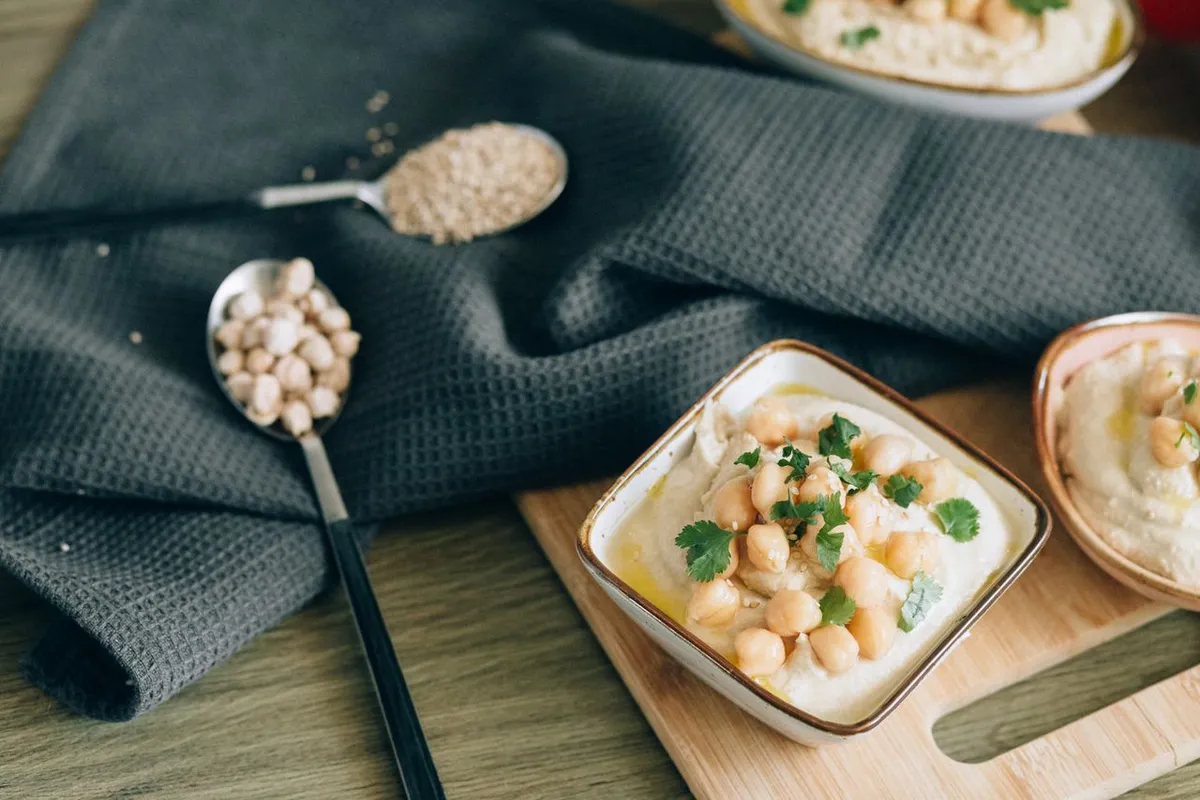
Food makers with several products often buy two sizes, such as 7–8 mm for hummus and 10 mm for salads. We also supply roasted chickpeas if you prefer a ready-to-eat product.
How Do Sieving, Grading and Uniformity Work?
Grading separates a lot into size bands on vibrating screens with round holes. Each screen holds back seed that is too big to pass, and that seed becomes one size grade. Seed that passes the last screen is sold as a smaller grade or for milling.
A typical export cleaning line has these steps:
- Pre-cleaning to remove dust, straw and light material.
- Destoning to remove stones and heavy particles.
- Size grading on round-hole screens.
- Gravity separation to remove light, shrivelled and insect-damaged seed.
- Sortex (optical colour sorting) to remove off-colour, stained and damaged seed.
- Optional polishing for a brighter surface on retail lots.
Uniformity is how much of the lot falls inside the stated size. No lot is perfect, so contracts allow a small share of undersize seed. Agree on this tolerance before you sign, and ask for the screen test in the certificate of analysis. Machine-cleaned kabuli is destoned and graded, which is usually fine for milling and canning. Sortex-cleaned kabuli also has off-colour and damaged seed removed, which retail packers prefer. You can read more about our cleaning and inspection steps on our quality page.
Which Quality Parameters Matter Beyond Size?
Size tells you how big the seed is, not how good it is. A complete kabuli specification also limits moisture, foreign matter, damaged seed and broken seed, and sets food-safety limits for residues and heavy metals. The international benchmark is the Codex Standard for Certain Pulses (CXS 171-1989), together with the FSSAI standard for pulses in India. Export contracts are usually much tighter than these legal limits.
| Parameter | Typical export specification | Codex / FSSAI benchmark |
|---|---|---|
| Purity | 99% min (sortex-cleaned) | Contract term |
| Moisture | 12% max | 14% max |
| Foreign matter | 0.2–0.5% max | 1% max (mineral 0.25% max) |
| Damaged / discoloured | 0.5–1% max | FSSAI discoloured 3% max |
| Weevilled seed | 0.5% max | Buyer limit |
| Broken / split | 1% max | 3% max |
| Lead / cadmium | 0.20 / 0.040 mg/kg max | EU limits for pulses |
Typical export specification for Indian kabuli chickpeas against Codex and FSSAI benchmarks.
Pesticide residues, including glyphosate, are checked against the limits of the importing country. Ask for a certificate of analysis for each lot, and see our lab testing page for the full test panel we use.
Related reading: Toor Dal vs Chana Dal: Pigeon Peas vs Chickpeas Compared and Desi Chana in English: Names, Types and Forms Explained.
How Do You Buy Kabuli Chickpeas in Bulk from India?
To buy kabuli chickpeas in bulk from India, state the size in millimetres and the count per ounce, choose machine-cleaned or sortex-cleaned finish, and agree the quality limits, packing and container load. India’s main kabuli harvest is the rabi crop from February to April, which sets the supply for the year. Kabuli is exported under ITC-HS code 0713 20 10. Desi chana uses 0713 20 20.
Elysium Agri Corporation exports kabuli chickpeas from Jamnagar, Gujarat, in every export size from 7–8 mm to 12 mm and above, including Dollar grades. Our kabuli is machine-cleaned, size-graded and sortexed to 99%+ purity. We pack in new 25 kg or 50 kg PP or BOPP bags, or 1 MT jumbo bags, with your marks or private label on request. A 20 ft container holds about 24–25 MT and a 40 ft high cube about 26–28 MT. You can plan your order with our container load calculator. Each shipment travels with a phytosanitary certificate, a certificate of origin and a certificate of analysis, and SGS or your own surveyor can inspect the lot on request. Our registrations are listed on the certificates page. If you are new to the trade, our guide to importing chickpeas and pulses from India covers documents and payment.
Tell us the kabuli chana size, count, finish, quantity and destination port, and we will send an FOB or CIF price with the specification sheet. Request a kabuli chickpea quote →
Frequently asked questions
What are the standard kabuli chickpea sizes?
Export kabuli chickpeas are graded by screen size in millimetres. The standard sizes are 7–8 mm, 9 mm, 10 mm, 11 mm, 12 mm and 12+ mm. The 12 mm grade is often called Dollar, and 13–14 mm is called Double Dollar. Larger sizes cost more and are mostly used for retail packs.
What does 12 mm kabuli chana mean?
12 mm kabuli chana is chickpea seed that stays on a round-hole screen with 12 mm holes, within an agreed tolerance for smaller seed. It equals about 42 to 44 seeds per ounce. The trade often calls it the Dollar or extra bold grade, and it is popular for premium retail packs in the Middle East.
How are chickpea counts per ounce measured?
A well-mixed sample of one ounce, or 28.35 grams, is weighed and the seeds are counted. The test is repeated a few times and averaged. The result is quoted as a range, such as 58/60. A lower count means bigger seeds, so 42/44 is bolder than 75/80.
Which kabuli chickpea size is best for hummus?
Small kabuli sizes of 7–8 mm or 9 mm are usually best for hummus. The seed is cooked and blended, so its size does not show in the finished product, and smaller grades cost less. Focus instead on even cooking, low foreign matter, few damaged seeds and clean residue test results.
Which kabuli chickpea size is best for canning?
Canners commonly use kabuli sizes from 8 mm to 10 mm. Even size matters more than large size, because seeds of the same size soak and cook in the same time. Mixed sizes can leave some seeds hard and others split in the same can. Ask for a screen test with each lot.
Related reads


