
On this page
- How Does Importing Spices from India Work?
- Which Indian Spices Are Imported Most Often?
- Step 1: How Do You Define Your Spec and Volume?
- Step 2: How Do You Find and Verify an Indian Spice Exporter?
- Which Documents and Certificates Are Required?
- How Do Shipping, Incoterms and Customs Clearance Work?
- What Quality Checks Should Happen Before and After Shipment?
- How Can You Source Spices from India with Elysium?
- Frequently asked questions
To import spices from India, you agree a written specification with a registered Indian exporter, confirm the tests your market requires, choose an Incoterm, and receive the goods with a phytosanitary certificate, a certificate of origin and a lab Certificate of Analysis. Most first orders take four to eight weeks from the confirmed contract to arrival, and most of that time is processing, testing and sea freight. This guide covers each step and the checks that keep a container from being held at your port.
Key takeaways
- India exported 17.35 lakh tonnes of spices worth US$ 4.43 billion in 2025-26 (Spices Board of India).
- Every Indian spice exporter must hold a Spices Board registration (CRES). Ask for the number and check it.
- EU and US buyers face different rules: EU border checks for ethylene oxide and pesticides, and US FDA Prior Notice and FSVP.
- A 20 ft container holds about 13–14 MT of cumin seeds. Mixed loads let you combine several spices in one container.
How Does Importing Spices from India Work?
Importing spices from India follows the same path for almost every buyer: specification, supplier check, contract, pre-shipment testing, export clearance in India, sea freight, and import clearance in your country. The exporter handles the Indian side, including the Spices Board formalities, the phytosanitary inspection and customs. You, or your customs broker, handle the import side.
India is the world’s largest producer and exporter of spices. According to the Spices Board of India, the country exported 17,34,562 tonnes of spices and spice products worth US$ 4,430.9 million in 2025-26. China, the USA, the UAE and Bangladesh were the largest buyers. Most bulk buyers import whole spices and grind, blend or pack them near their own market.
Which Indian Spices Are Imported Most Often?
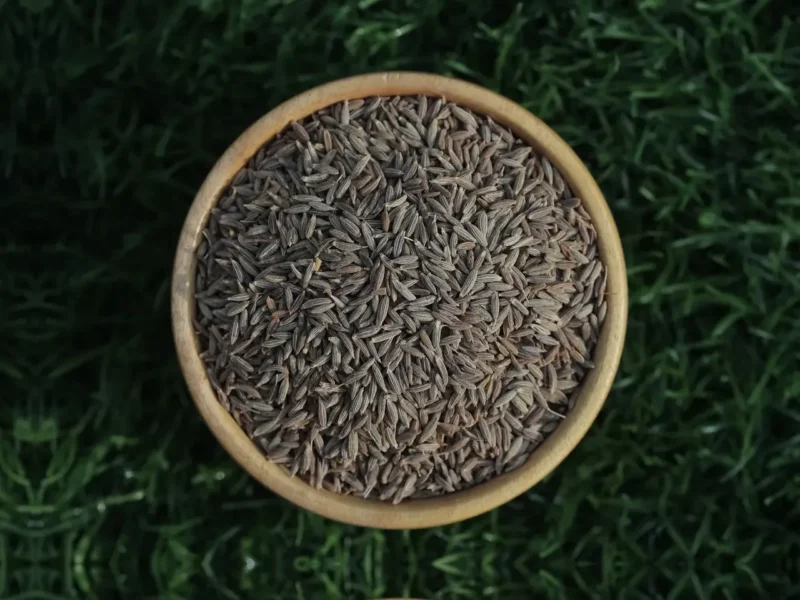
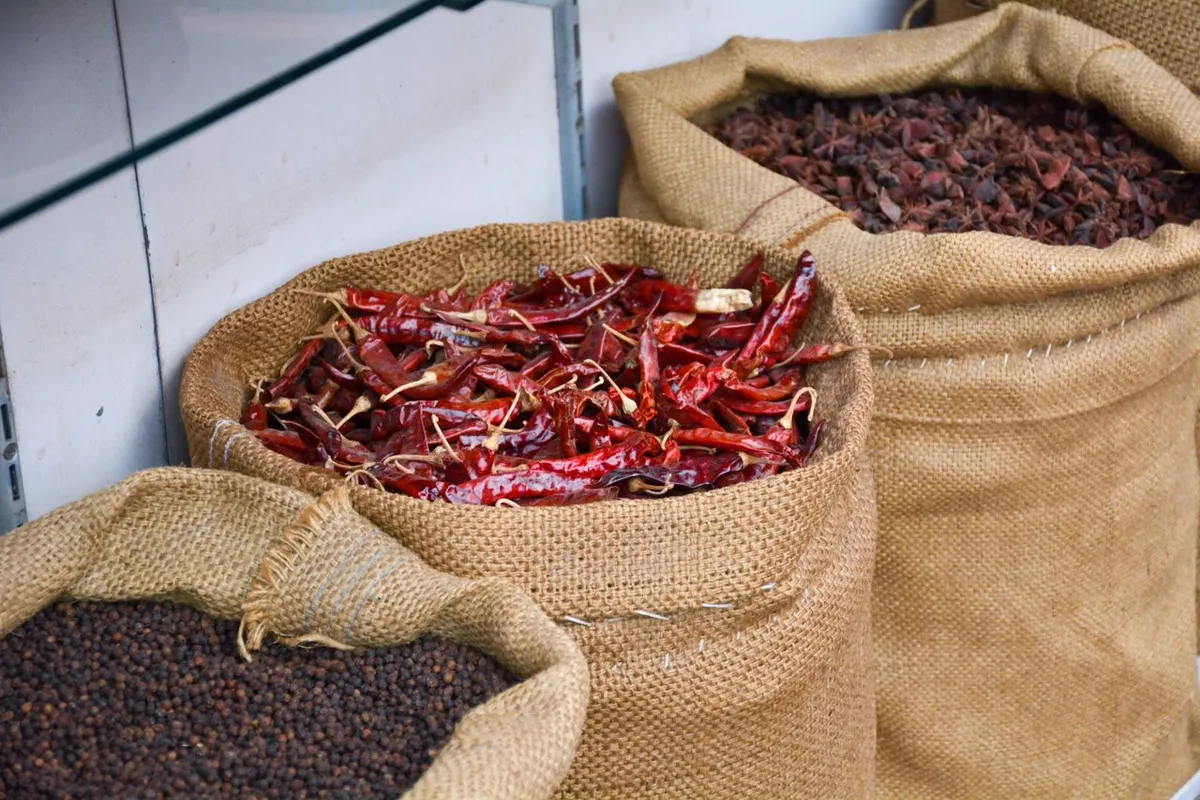
Cumin and turmeric are the largest whole-spice exports by volume. They are followed by coriander, fenugreek and fennel, all of which are seed spices grown mainly in Gujarat and Rajasthan. These two states grow more than 80% of India’s seed spices, and Unjha in north Gujarat is one of Asia’s largest cumin and fennel markets.
| Spice | Export volume 2025-26 | Export value | Main buyers |
|---|---|---|---|
| Cumin seeds | 1,96,800 t | US$ 524.2 mn | UAE, Bangladesh, USA |
| Turmeric | 1,75,896 t | US$ 327.2 mn | USA, UAE, Bangladesh |
| Coriander seeds | 60,211 t | US$ 77.0 mn | Malaysia |
| Fenugreek seeds | 47,069 t | US$ 40.5 mn | UAE, Bangladesh, Sudan |
| Fennel seeds | 33,038 t | US$ 47.8 mn | Bangladesh |
Source: Spices Board of India, item-wise export data 2025-26.
Each spice is sold in named trade grades. Cumin, for example, ships as Singapore 98, Singapore 99, Gulf 99 or Europe 99.5 sortex, where the number is the purity and the rest is admixture. Coriander is traded as Parrot, Scooter, Eagle or Badami by colour and size. Learn the grade names for your spice before you ask for quotes, because prices are only comparable grade for grade.
Step 1: How Do You Define Your Spec and Volume?
Write down what you need before you contact suppliers. A clear specification is the single best protection against disputes, because every test result and every claim is judged against it. At minimum, your specification should state:
- Product and grade: for example, whole cumin seeds, Europe 99.5 sortex.
- Physical limits: purity or admixture, moisture, extraneous matter, insect damage and total ash.
- Food safety limits: aflatoxin, ochratoxin A, Salmonella, ethylene oxide and pesticide residues, usually set to your market’s legal limits (EU MRLs, US tolerances, or your own).
- Cleaning: machine-cleaned, sortex-cleaned, or steam-sterilised for a lower microbial load.
- Packing: 25 or 50 kg PP or jute bags, or 25 kg paper bags with a liner, plus any private-label printing.
- Volume and frequency: one container, or a monthly or quarterly programme.
Volume decides your freight cost per kilo. A 20 ft container typically holds about 13–14 MT of cumin seeds and a 40 ft about 26–28 MT. Lighter, bulkier spices load less weight in the same space. If one spice does not fill a container, a mixed container lets you combine several spices in one shipment. Use our container load calculator to estimate the load for your product mix.
Step 2: How Do You Find and Verify an Indian Spice Exporter?
Short-list exporters who specialise in your spice and can show official registrations. Every spice exporter in India must hold a Certificate of Registration as Exporter of Spices (CRES) issued by the Spices Board. Ask for these documents before you pay anything, and check each one on the issuing authority’s portal:
- Import Export Code (IEC) from the DGFT, India’s foreign trade directorate.
- Spices Board CRES number and validity date.
- FSSAI licence, India’s food safety licence.
- GST registration, which should match the name on the invoice and the bank account.
Then ask for a recent Certificate of Analysis for the grade you want, a pre-shipment sample, and a reference from a buyer in your region. A reliable exporter will send a sealed sample and a full specification sheet without hesitation. Our own registrations are listed with scans on the certificates page, and the verification guide shows how to check any Indian exporter in about five minutes.
Which Documents and Certificates Are Required?
Every spice shipment from India travels with a standard set of commercial and official documents. Some markets add their own certificates on top.
| Document | Issued by | Purpose |
|---|---|---|
| Commercial invoice and packing list | Exporter | Value, quantity and packing for customs |
| Bill of lading | Shipping line | Title to the goods; needed to collect the container |
| Phytosanitary certificate | Plant Quarantine, Government of India | Confirms the goods were inspected and found free of regulated pests |
| Certificate of origin | Chamber of commerce or export council | Proves Indian origin; a preferential version can cut duty under a trade agreement |
| Certificate of Analysis (CoA) | NABL-accredited laboratory | Test results against your specification |
| Health certificate / ETO certificate | Spices Board | Required for spices to the EU and some other markets |
| Fumigation certificate | Approved fumigation agency | Only when the buyer or destination requires it |
Your own country’s rules matter just as much. For the EU, Indian seed spices, ginger and turmeric are listed for ethylene oxide checks under Regulation (EU) 2019/1793, so each consignment needs an official certificate and goes through Spices Board sampling before export. Indian cumin is also subject to increased border checks for pesticide residues. For the USA, the importer must file FDA Prior Notice before arrival and, in most cases, run a Foreign Supplier Verification Program (FSVP) showing that the supplier meets US food safety standards. Find the correct tariff line with our HS code finder; whole cumin, for example, falls under HS 0909.31.
How Do Shipping, Incoterms and Customs Clearance Work?
Spices from Gujarat usually ship in full containers from Mundra, one of India’s largest container ports, or from Pipavav and Nhava Sheva. The Incoterm in your contract decides who pays for and controls each leg of the trip:
- FOB (Free on Board): the exporter delivers the goods loaded on your vessel at the Indian port. You book and pay for the sea freight and insurance. This suits buyers with their own forwarder.
- CIF (Cost, Insurance and Freight): the exporter books freight and insurance to your port. This is simpler for first-time importers.
- CFR (Cost and Freight): the same as CIF, but you arrange the insurance.
Our guide to FOB vs CIF for agri imports compares the two in detail. As a rough guide to sea time, Gulf ports such as Jebel Ali are usually under a week from Gujarat. Northern Europe and the US East Coast are usually 25–40 days port to port, depending on the carrier and transhipment. On arrival, your customs broker files the entry, pays duty and VAT or GST, and presents the documents. Border authorities may then sample the goods before release. The landed cost calculator adds freight, duty and clearance charges to the FOB price so you can compare offers on a like-for-like basis.

What Quality Checks Should Happen Before and After Shipment?
Test before the container is sealed, not after it lands. A rejected lot at your border costs freight both ways, or destruction, and can put your company on an alert list. A sound pre-shipment programme for spices covers:
- Pesticide residues: a multi-residue screen by LC-MS/MS and GC-MS/MS against your market’s maximum residue limits.
- Ethylene oxide: tested as the sum of ethylene oxide and 2-chloroethanol, mandatory for the EU.
- Mycotoxins: aflatoxin B1 and total aflatoxins (EU limits 5 and 10 µg/kg for the listed spices), plus ochratoxin A.
- Microbiology: Salmonella absent in 25 g, plus total plate count, yeast and mould if you sell into ready-to-eat use.
- Turmeric extras: lead and chromate checks, because adulteration with lead chromate has been found in turmeric sold in some markets.

Use an NABL-accredited laboratory, the Indian ISO/IEC 17025 accreditation, which is recognised internationally through ILAC. Make sure the CoA quotes the lot and container number. For larger orders, appoint an independent surveyor such as SGS, Intertek or Bureau Veritas to sample at loading. After arrival, keep a retained sample from each lot and test a portion yourself for the first few shipments. Our lab testing page sets out the full test panel and the limits we work to.
Related reading: Spice Board India: Role, CRES Registration and What It Means and List of Spices in India: Names in English, Hindi and Arabic.
How Can You Source Spices from India with Elysium?
Elysium Agri Corporation is a registered spices exporter based in Jamnagar, Gujarat (Spices Board CRES/SBCB/28692/2026-2027). We source cumin and fennel through Unjha, coriander through Gondal and Rajkot, and turmeric from Salem, Erode, Nizamabad and Sangli. We supply cumin, coriander, fennel, fenugreek, kalonji and turmeric in export grades, machine-cleaned, sortex-cleaned or steam-sterilised to your specification. Every lot is tested for pesticides, ethylene oxide, aflatoxin, ochratoxin A and Salmonella before shipment. We ship single-spice and mixed containers, with private-label packing on request.
Send us your spice, grade, quantity and destination port, and we will reply with a quote, a specification sheet and a recent CoA. Request a spices quote →
Frequently asked questions
What documents do I need to import spices from India?
A commercial invoice, packing list, bill of lading, phytosanitary certificate, certificate of origin and a lab Certificate of Analysis. EU-bound spices also need a Spices Board health or ethylene oxide certificate, and US importers must file FDA Prior Notice and keep an FSVP.
How do I find a reliable spice exporter in India?
Short-list exporters that specialise in your spice, then check their IEC, Spices Board CRES, FSSAI licence and GST registration on the official portals. Ask for a recent Certificate of Analysis, a sealed pre-shipment sample and a buyer reference before paying.
Do imported Indian spices need a phytosanitary certificate?
Yes, for most destinations. It is issued by India's Plant Quarantine authority after inspection and confirms the consignment is free of regulated pests. Check your own country's plant health rules, as some processed or ground spices are exempt.
What is the minimum order quantity for bulk spice imports?
Most exporters quote by the container. A 20 ft container holds about 13–14 MT of cumin seeds, and lighter spices load less weight. If one spice will not fill a container, a mixed load lets you combine several spices in one shipment.
How long does shipping spices from India to my country take?
Gulf ports such as Jebel Ali are usually under a week at sea from Gujarat. Northern Europe and the US East Coast are usually 25–40 days port to port. Add one to three weeks for processing, testing and export clearance before loading.
Related reads


