
On this page
- What Is the Spices Board of India?
- Which Spices Does the Board Regulate?
- Who Needs Spices Board Registration?
- How Does the Registration Process Work?
- Which Documents Are Required for Registration?
- What Does Spice Board India Registration Mean for Overseas Buyers?
- How Do You Buy Spices from a Registered Indian Exporter?
- Frequently asked questions
The Spice Board India, officially the Spices Board, is the Government of India body that develops and promotes Indian spices and registers every spice exporter. Any company that exports one of the 52 scheduled spices must hold its Certificate of Registration as Exporter of Spices (CRES). For overseas buyers, a valid CRES is one of the simplest checks of an Indian spice supplier. This guide explains what the Board does, who needs registration, how it works and what it means for you.
Key takeaways
- The Spices Board was set up on 26 February 1987 under the Spices Board Act 1986 and works under the Ministry of Commerce and Industry.
- It covers 52 scheduled spices, from black pepper and cardamom to cumin, turmeric and chilli.
- A CRES is mandatory for exporting scheduled spices. Exporters register as merchant or manufacturer exporters.
- Buyers should check the CRES number and validity before paying an advance.
What Is the Spices Board of India?
The Spices Board of India is a statutory body that promotes the export of Indian spices and supports their production and quality. It was constituted on 26 February 1987 under the Spices Board Act 1986, by merging the former Cardamom Board and the Spices Export Promotion Council. It works under the Ministry of Commerce and Industry, Government of India, and its head office is in Kochi, Kerala.
The Board has three broad roles:
- Export promotion: registering exporters, collecting export returns, publishing trade statistics and promoting Indian spices at international fairs.
- Quality: running quality evaluation laboratories, supporting post-harvest improvement for export spices, and issuing health certificates for spices where an importing country requires them.
- Development: improving the production, productivity and quality of cardamom, and supporting growers of other spices.
Details of the Board’s work and its online services are on its official website, indianspices.com.
The Board also publishes India’s official spice export statistics, based on the returns that registered exporters file. According to the Spices Board, India exported 17.35 lakh tonnes of spices and spice products worth US$ 4.43 billion in 2025-26. China, the USA, the UAE and Bangladesh were the largest buyers. By value, the leading exports were chilli, cumin, spice oils and oleoresins, cardamom, mint products and turmeric. Cumin exports alone were worth US$ 524 million, and turmeric US$ 327 million. These figures help buyers see which spices India supplies in volume, and which markets compete for the same crop.
Because export returns are compulsory, the statistics also show the scale of the registered trade. A supplier that is not registered cannot file returns, and its shipments fall outside the system the Board monitors. This is another reason buyers should deal only with CRES holders.
Which Spices Does the Board Regulate?
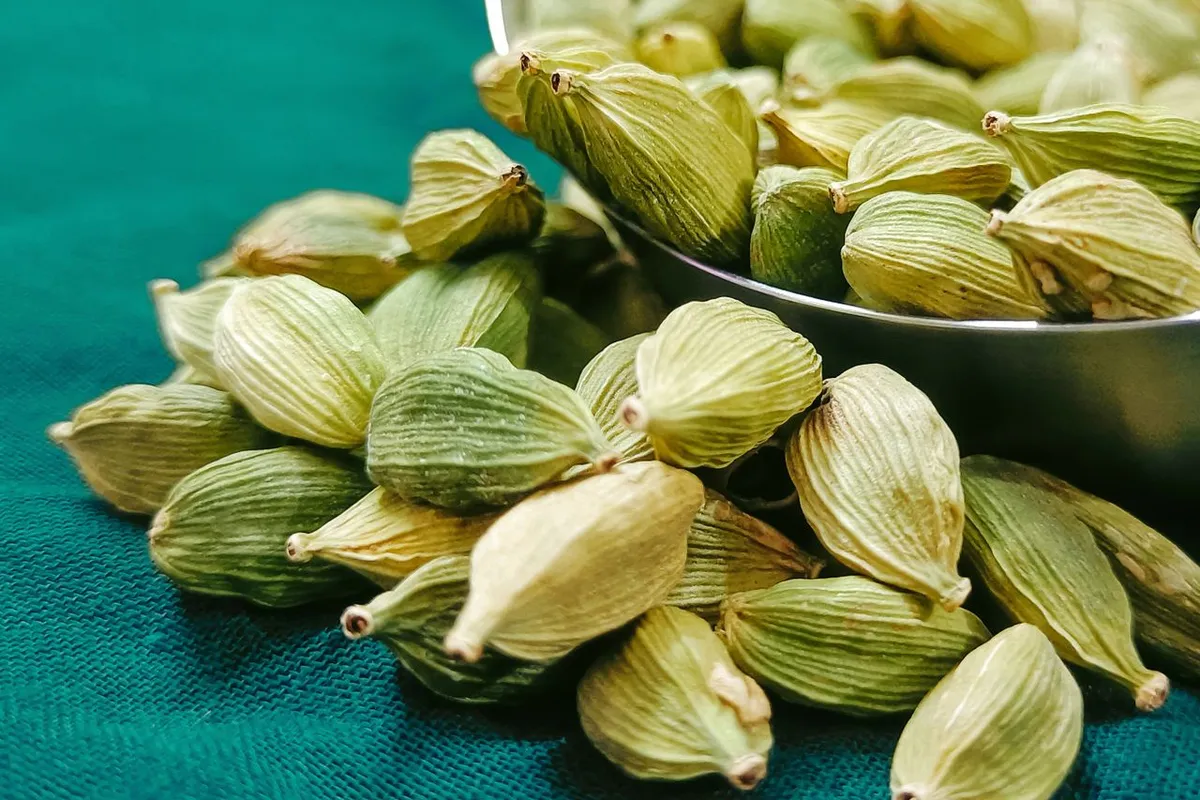
The Board covers 52 scheduled spices listed under the Spices Board Act. Export of any of them requires a CRES. The table groups the main spices by type.
| Group | Examples of scheduled spices | Main Indian growing areas |
|---|---|---|
| Major spices | Black pepper, small cardamom, large cardamom, chilli, ginger, turmeric | Kerala, Karnataka, Sikkim, Andhra Pradesh, Telangana |
| Seed spices | Cumin, coriander, fennel, fenugreek, ajwain, celery, dill, nigella | Gujarat, Rajasthan, Madhya Pradesh |
| Tree spices | Clove, nutmeg, mace, cinnamon, cassia, tamarind | Kerala, Karnataka, Tamil Nadu |
| Other spices | Garlic, saffron, vanilla, curry leaf, mint | Madhya Pradesh, Jammu and Kashmir, Kerala and others |
Selected scheduled spices covered by the Spices Board of India.
Products made from these spices, such as spice powders, blends, oils and oleoresins, are also part of the Board’s export statistics. If you are unsure whether a product is a scheduled spice, ask the exporter to confirm that its CRES covers it.
Who Needs Spices Board Registration?
Every company that exports scheduled spices from India needs a CRES. Registration is mandatory under the Spices Board (Registration of Exporters) Regulations, and the applicant must already hold a valid Import Export Code (IEC) from DGFT.
There are two categories:
- Merchant exporter: a company that buys spices from processors or traders and exports them.
- Manufacturer exporter: a company that cleans, grinds, processes or packs spices in its own unit and exports them. Manufacturer exporters need extra documents, and their unit is inspected.
For spices, the Spices Board acts as the registering authority under India’s Foreign Trade Policy, so the CRES works as the exporter’s Registration-cum-Membership Certificate (RCMC) for spices. Registered exporters must also file regular export returns with the Board. Keeping the CRES valid therefore depends on staying active and compliant.
Registration applies to the exporter, not the buyer. As an importer, you do not need any registration with the Spices Board. If you buy spices in retail packs under your own brand, the Indian exporter that packs them for you still needs its own CRES, and the packing unit must meet FSSAI rules. Our private label service explains how this works for spice packs.
How Does the Registration Process Work?
Registration is done online through the Spices Board website. The process follows these steps:
- Create an account: the exporter registers on the Board’s online portal with its IEC.
- Choose the category: merchant exporter or manufacturer exporter.
- Upload documents: company, tax and bank documents, plus unit documents for manufacturers.
- Pay the fee: through the online payment gateway. Fees differ for new and renewal applications and for each category.
- Inspection: for manufacturer exporters, the Board inspects the processing unit.
- Issue of the CRES: the certificate is issued with a registration number and a validity period.
Under the Board’s 2021 guidelines, merchant applications were processed within about five working days and manufacturer applications within about ten days after inspection. CRES certificates are issued for a fixed period and must be renewed. To renew, an exporter must have carried out export business during the previous period; otherwise it must apply again as a new exporter. Rules and fees are updated from time to time, so exporters should follow the Board’s latest circulars.
Which Documents Are Required for Registration?
Both merchant and manufacturer exporters must upload these documents:
- Import Export Code (IEC)
- PAN card of the firm
- GST registration certificate
- Bank report or certificate
- Constitution documents of the firm, such as a partnership deed or certificate of incorporation
Manufacturer exporters also need:
- MSME or Udyam registration
- A valid FSSAI licence or Pollution Control Board certificate for the unit
- A lease agreement, if the premises are rented
These requirements are summarised from the Board’s published CRES guidelines. Exporters should check the current list on the Board’s portal before applying.
What Does Spice Board India Registration Mean for Overseas Buyers?
For buyers, a valid CRES shows that the supplier is a recognised spice exporter, known to the Board and subject to its rules and returns. It does not guarantee the quality of a specific lot, so you still need a lot-wise Certificate of Analysis. But it is a basic check that removes many unreliable traders.
Before you pay an advance, ask for the supplier’s CRES number and validity date, together with its IEC, GST number and FSSAI licence. Check that the company name is the same on each document and on the bank account. You can also ask whether the supplier is a merchant or manufacturer exporter, because this tells you who controls cleaning and processing.
The Board matters at the shipping stage too. EU-bound spices may need a Spices Board health certificate or an ethylene oxide certificate, and the Board’s laboratories test spices for residues and contaminants. Our guide on how to import spices from India covers the full set of documents, and our lab testing page explains the tests we run.
Related reading: List of Spices in India: Names in English, Hindi and Arabic.
How Do You Buy Spices from a Registered Indian Exporter?
Buy from an exporter whose CRES you have checked, and ask for a lot-wise lab report with every shipment. Elysium Agri Corporation, based in Jamnagar, Gujarat, is registered with the Spice Board India as an exporter of spices, with CRES number CRES/SBCB/28692/2026-2027, valid to 23 June 2029. Our IEC, GST, APEDA and FSSAI registrations are listed with scans on our certificates page, and our verify page shows how to check them yourself in a few minutes.
We export Indian spices including cumin seeds, coriander, fennel, fenugreek and turmeric, tested before loading and shipped with a Certificate of Analysis, phytosanitary certificate and certificate of origin. We arrange Spices Board health certificates where your market requires them.
Tell us the spice, grade, quantity and destination port, and we will send a quote with the specification sheet. Request a spices quote →
Frequently asked questions
What is the Spices Board of India and what does it do?
The Spices Board is a statutory body under India's Ministry of Commerce and Industry, set up in 1987 under the Spices Board Act 1986. It registers spice exporters, promotes Indian spices abroad, runs quality laboratories, issues health certificates where required and supports cardamom and other spice growers. Its head office is in Kochi, Kerala.
Is Spices Board registration mandatory for exporting spices from India?
Yes. Any company that exports one of the 52 scheduled spices from India must hold a Certificate of Registration as Exporter of Spices (CRES) from the Spices Board. The applicant must already have an Import Export Code. Registration is available as a merchant exporter or a manufacturer exporter, and it must be renewed when it expires.
How do exporters register with the Spices Board of India?
Exporters apply online on the Spices Board website. They choose the merchant or manufacturer category, upload documents such as the IEC, PAN, GST certificate, bank report and firm constitution, and pay the fee online. Manufacturer exporters also submit unit documents, and the Board inspects the unit before issuing the CRES.
What is an RCMC certificate for spice exporters?
An RCMC is a Registration-cum-Membership Certificate, which Indian exporters need to claim benefits under the Foreign Trade Policy. For spices, the Spices Board is the registering authority, so the CRES serves as the exporter's RCMC for spices. Exporters of other products, such as peanuts or pulses, hold an RCMC from APEDA instead.
Why should buyers check an exporter's Spices Board registration?
A valid CRES confirms that the supplier is a recognised spice exporter, known to the Board and subject to its rules. It helps you avoid unregistered traders. It does not guarantee a specific lot's quality, so also ask for a lot-wise Certificate of Analysis and check that names match across the CRES, IEC, GST and bank records.
Related reads


