
On this page
- Do Sesame Seeds Go Bad?
- How Long Do Sesame Seeds Last?
- What Are the Signs That Sesame Seeds Have Gone Rancid?
- What Are the Best Ways to Store Sesame Seeds?
- How Does Shelf Life Differ by Sesame Type?
- How Should Bulk Sesame Shipments Be Stored?
- How Can You Buy Fresh Sesame Seeds in Bulk?
- Frequently asked questions
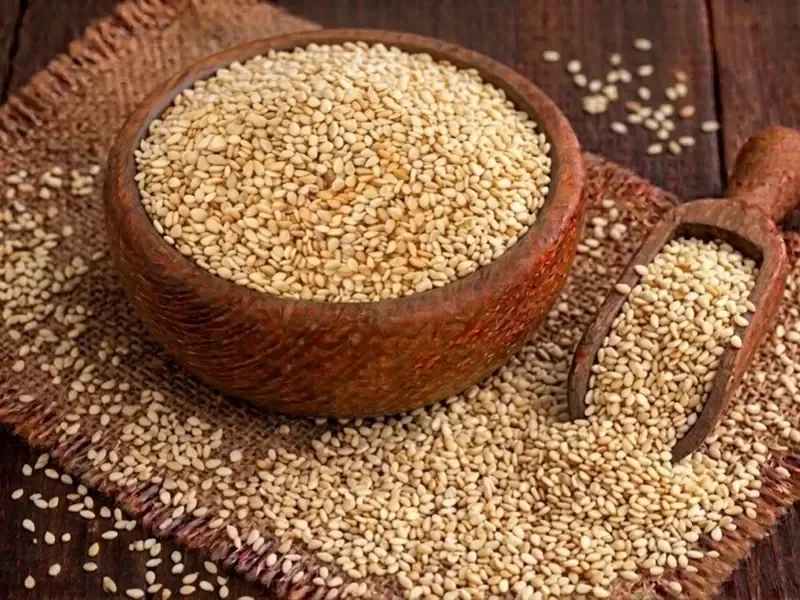
Yes, sesame seeds do go bad, but slowly. Raw sesame seeds stored cool, dry and sealed usually keep about 12 months, and natural (unhulled) seeds often keep longer than hulled ones. They spoil mainly by going rancid, because they are about half oil. Heat, light, air and moisture speed this up. This guide explains how long sesame seeds last, how to tell if they have gone off and how to store them at home and in bulk.
Key takeaways
- Sesame seeds contain about 48–52% oil, so rancidity, not mould, is the usual cause of spoilage.
- Natural sesame keeps about 12 months or more, and hulled sesame about 12 months, under good storage.
- A bitter, sour or paint-like smell is the clearest sign that sesame has gone rancid.
- Bulk sesame needs low moisture, lined bags, cool dry warehouses and protection from condensation in transit.
Do Sesame Seeds Go Bad?
Yes. Sesame seeds go bad over time, mainly because their oil oxidises and becomes rancid. Sesame is an oilseed. Natural white sesame typically contains 48–52% oil, so the seeds behave more like nuts than like grains or pulses.
The good news is that sesame is one of the more stable oilseeds. Its oil contains natural antioxidants, and the seed coat helps protect the oil inside. Dry sesame seeds also have too little water for most moulds and bacteria to grow. So, if you are asking whether sesame seeds go bad quickly, the answer is no, provided they are kept dry and sealed. They lose quality gradually rather than spoiling overnight.
There are three main risks: rancidity from oxidation, mould if the seeds get damp, and insects if they are stored open or in a warm warehouse. Each one can be controlled with good storage, from the farm and the warehouse to your kitchen shelf.
How Long Do Sesame Seeds Last?
Raw sesame seeds usually last about 12 months when stored in a cool, dry, dark place in a sealed container. Natural (unhulled) sesame often keeps for 12 months or more, because the hull protects the seed. Hulled sesame keeps for about 12 months, because its oil-rich kernel is more exposed.
Retail packs usually carry a “best before” date rather than a strict expiry date. After that date, the seeds may still be safe to eat, but their flavour and aroma will have faded. Several factors shorten or extend this time:
- Temperature: warmth speeds up oxidation. Cooler storage keeps seeds fresh for longer.
- Moisture: damp seeds can grow mould and develop high free fatty acids. Export sesame is usually shipped at 6% moisture or less for natural and 5% or less for hulled.
- Air and light: exposure to oxygen and light drives rancidity, so sealed, opaque packs are best.
- Processing: toasting and grinding expose more oil to air, so roasted sesame and sesame paste keep for less time than raw whole seeds once opened.
- Freshness at purchase: seeds from a recent crop start with more shelf life left. Ask for the crop year.
What Are the Signs That Sesame Seeds Have Gone Rancid?
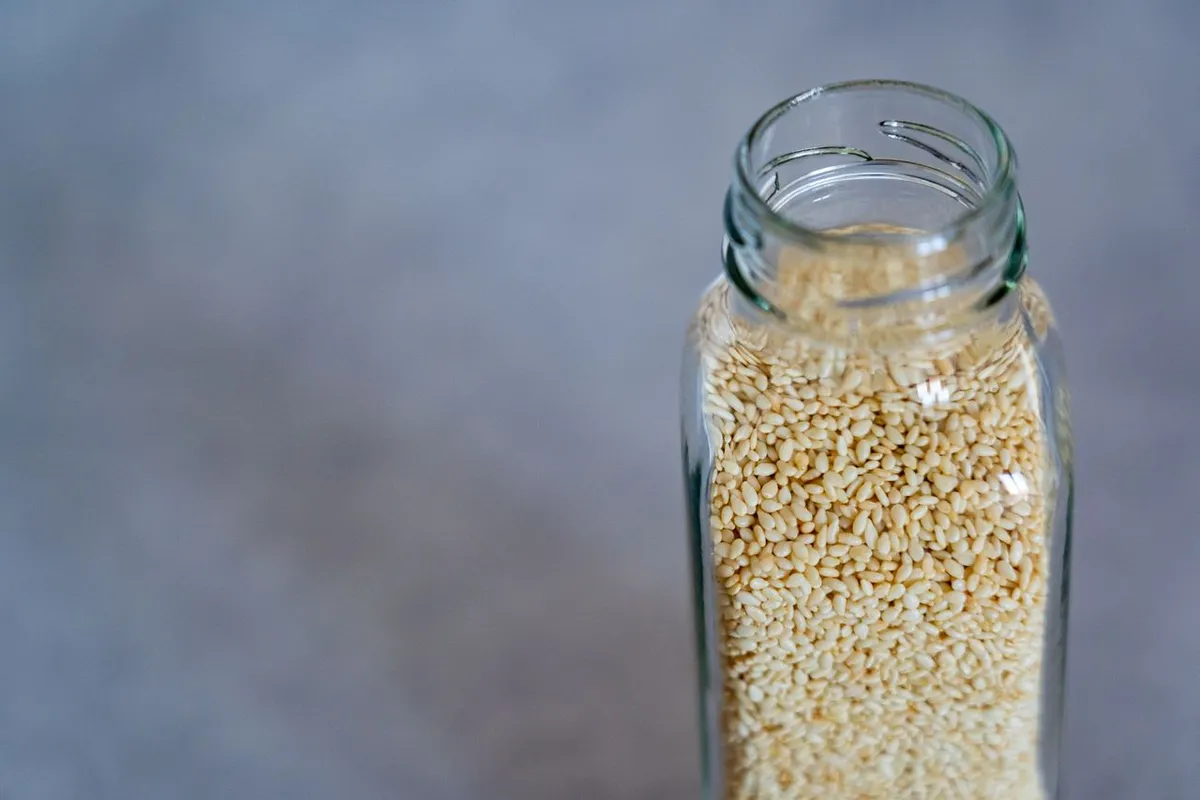
The clearest sign is smell. Fresh sesame seeds smell mild, nutty and clean. Rancid sesame smells sharp, bitter, sour or a little like paint or old cooking oil. Check these signs before you use stored seeds:
- Smell: a stale, bitter or chemical odour means the oil has oxidised.
- Taste: a bitter or soapy aftertaste, even when the smell seems normal. Taste only a few seeds.
- Appearance: darkening of white seeds, clumping, or an oily film on the seeds or the container.
- Mould: white, green or black fuzzy growth, or a musty smell. Discard mouldy seeds.
- Insects: webbing, live insects, small holes or powder at the bottom of the pack.
Rancid seeds are unpleasant rather than an immediate hazard, but they will spoil the flavour of your food. Mouldy seeds should always be thrown away, because some moulds can produce toxins. In the trade, rancidity is measured in the lab as free fatty acid (FFA) and peroxide value.
FFA shows how much of the oil has broken down into free fatty acids, often because of moisture or damaged seed. Peroxide value shows early oxidation, before the off-smell is strong. Export specifications usually set FFA at 1.5% max for sortex natural sesame and 1.0–1.5% max for hulled. Our lab testing page lists the methods we use. Rancidity is a quality issue, while Salmonella is a safety issue that storage cannot fix; see our guide to Salmonella in sesame and spices.
What Are the Best Ways to Store Sesame Seeds?
The best way to store sesame seeds is in an airtight container in a cool, dry, dark place. That is enough for most kitchens and small users. If you buy large packs or live in a hot climate, the fridge or freezer helps.
- Use airtight containers: glass jars or sealed food-grade tubs keep out air, moisture and insects.
- Keep them cool and dark: store away from the stove, oven, sunlight and other heat sources.
- Refrigerate in hot climates: the fridge slows rancidity. Use a well-sealed container to stop the seeds picking up moisture and odours.
- Freeze for long storage: freezing keeps seeds fresh for longer. Let the container reach room temperature before opening, so moisture does not condense on the seeds.
- Toast in small batches: toast only what you need, because toasted seeds go stale faster.
How Does Shelf Life Differ by Sesame Type?
Shelf life depends on whether the hull is on and whether the seed has been processed. The table gives typical guidance for sealed, cool and dry storage.
| Sesame type | Typical shelf life | Why | Storage tip |
|---|---|---|---|
| Natural (unhulled) white | About 12 months or more | Hull protects the oil-rich kernel | Cool, dry, sealed bags |
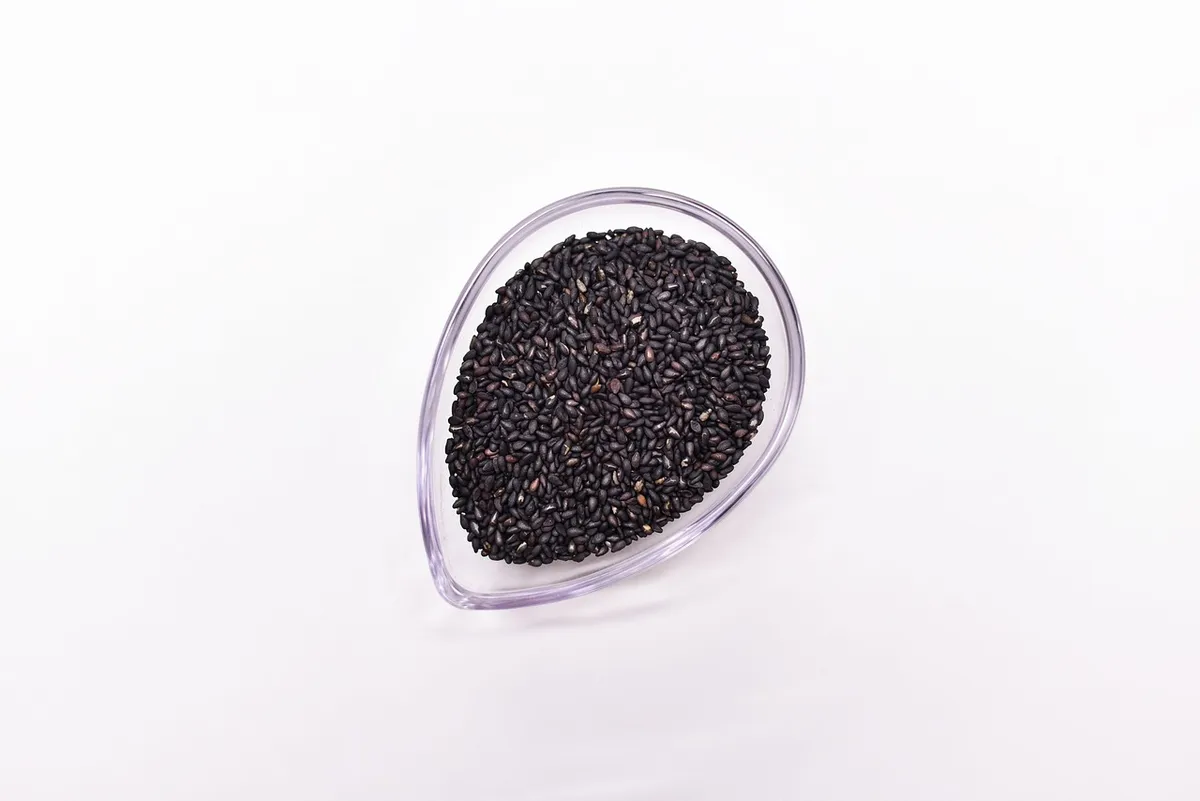
| Black sesame (natural) | Similar to natural white | Hull left on | Cool, dry, sealed bags |
| Hulled white | About 12 months | Kernel exposed without its hull | Lined bags; keep away from odours |
| Toasted or roasted | Shorter than raw | Heat starts oxidation and dries out the seed | Small packs; use soon after opening |
| Ground sesame or tahini | Shorter than whole seed once opened | Grinding exposes the oil to air | Seal well; follow the pack date |
Indicative shelf lives for raw export sesame under good storage. Actual life depends on crop, moisture, packing and climate.
How Should Bulk Sesame Shipments Be Stored?
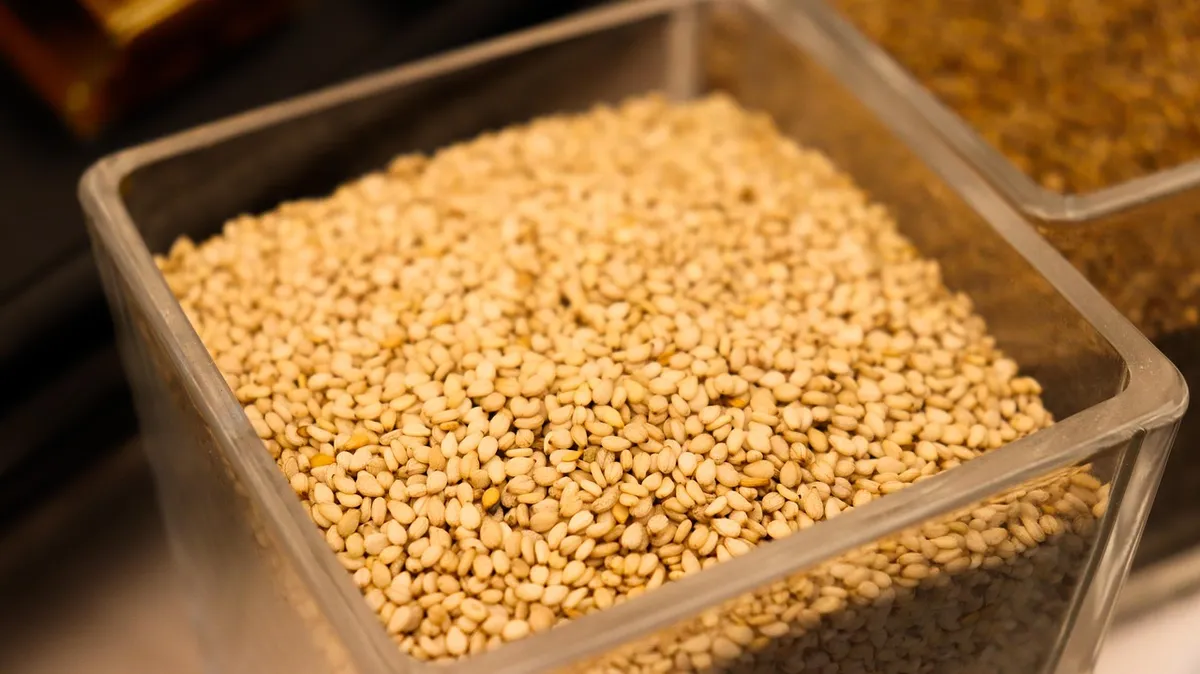
Bulk sesame keeps best when it starts dry, travels in lined bags and is stored cool and off the floor. Most quality problems in bulk sesame start with moisture, either in the seed or from condensation in the container.
- Start with low moisture: buy to a specification, such as 6% max for natural and 5% max for hulled, and check it on the lab report.
- Use lined packing: hulled sesame should always travel in multi-wall paper bags or PP bags with a PE liner to keep out moisture and odours.
- Protect against container rain: clean, dry containers, kraft paper liners and desiccants reduce condensation on long sea voyages.
- Store well on arrival: keep bags on pallets, away from walls, in a cool, dry and ventilated warehouse with pest control.
- Rotate stock: use the oldest lots first, and keep the lot number on each bag for traceability.
- Retest older stock: check FFA and peroxide value on lots held for many months before using them in sensitive products.
Our packaging page shows the bag and liner options, and our traceability page explains how each lot is tracked from market to container.
Related reading: Sesame Seeds for Oil: Oil-Grade vs Food-Grade Sesame.
How Can You Buy Fresh Sesame Seeds in Bulk?
Elysium Agri Corporation exports natural, hulled and black sesame seeds from Jamnagar, Gujarat. Gujarat has two sesame crops a year, so we can offer fresh seed for most months. We state the crop year on every contract, ship at 6% max moisture for natural and 5% max for hulled, and test every lot for Salmonella, ethylene oxide, pesticide residues and aflatoxin. Hulled sesame is always packed with a liner.
To compare grades, read our guide to sesame purity grades. If you still wonder whether sesame seeds go bad in your supply chain, our team can advise on packing and storage for your route. Request a sesame quote →
Frequently asked questions
Do sesame seeds go bad?
Yes, but slowly. Sesame seeds are about half oil, so over time the oil oxidises and the seeds turn rancid. They can also grow mould if they get damp, or attract insects if stored open. Kept cool, dry and sealed, raw sesame seeds stay fresh for about a year, and natural unhulled seeds often keep longer.
How long do sesame seeds last?
Raw sesame seeds usually last about 12 months in a cool, dry, dark place in a sealed container. Natural unhulled seeds often keep for 12 months or more, while hulled seeds keep for about 12 months. Toasted seeds and ground sesame keep for less time once opened. Refrigeration or freezing can extend shelf life in hot climates.
How do you know if sesame seeds have gone rancid?
Smell them first. Fresh sesame smells mild and nutty, while rancid sesame smells bitter, sour, stale or like old oil or paint. Taste a few seeds: a bitter or soapy aftertaste is another sign. Darkened colour, clumping or an oily film can also point to rancidity. Throw away any seeds that show mould.
Should sesame seeds be stored in the fridge?
It is not essential, but it helps. In a cool, dry kitchen, an airtight container in a dark cupboard is enough for several months. In hot or humid climates, or for large packs, the fridge or freezer slows rancidity. Use a well-sealed container, and let cold seeds warm up before opening to avoid condensation.
Do hulled sesame seeds spoil faster than unhulled?
Yes, slightly. Removing the hull exposes the oil-rich kernel to air, light and moisture, so hulled sesame usually keeps for about 12 months, while natural unhulled sesame often keeps for 12 months or more. Hulled sesame is also more sensitive to odours, so it should always be packed in bags with a liner.
Related reads


