
On this page
- Does Peanut Butter Go Bad?
- What Is the Typical Shelf Life of Peanut Butter?
- Why Does Oil Separate in Peanut Butter?
- How Can You Spot Rancidity and Spoilage?
- How Does Shelf Life Change by Type and Storage?
- What Are the Best Storage Practices for Peanut Butter?
- What Affects Peanut Butter Shelf Life in Manufacturing?
- How Do You Source Peanut Butter with Stable Shelf Life?
- Frequently asked questions
Yes, peanut butter does go bad, but slowly. It rarely grows mould because it holds very little water; instead, its oil slowly oxidises and turns rancid, so the flavour fades and becomes stale, bitter or paint-like over months. A sealed jar of commercial peanut butter keeps for many months, and an opened jar keeps for a few months in the cupboard or longer in the fridge. This guide explains shelf life, oil separation, signs of spoilage and the manufacturing choices that make peanut butter last.
Key takeaways
- Peanut butter spoils mainly through rancidity, not mould, because its moisture is very low.
- Guidance from the US National Peanut Board gives 6–9 months for an unopened jar and 2–3 months for an opened jar in the pantry.
- Oil separation is normal in natural peanut butter and is not a sign of spoilage on its own.
- Roast level, moisture, stabilizer, packing and storage temperature decide how long a bulk batch stays fresh.
Does Peanut Butter Go Bad?
Yes. Peanut butter is a stable food, but it is not permanent. The main risk is not bacteria or mould. It is fat oxidation. Peanut butter is about half fat, and much of that fat is unsaturated. When oxygen, light and heat reach the fat over time, it breaks down into compounds that smell and taste stale. This is called oxidative rancidity.
Microbial spoilage is less common because peanut butter has very little free water. Our own specification sets moisture at 2% maximum, against an FSSAI limit of 3%. At that level, moulds and bacteria cannot grow easily. However, low moisture does not mean that pathogens are killed. Salmonella can survive in peanut butter if the peanuts or the plant are contaminated, which is why good manufacturers roast to a validated temperature and test every batch.
So the honest answer is this: peanut butter goes bad slowly, mostly in flavour and quality, and the date on the jar is a quality guide. If the jar has been opened, stored badly or contaminated with other food, it can spoil sooner.
What Is the Typical Shelf Life of Peanut Butter?
Commercial peanut butter usually keeps for 6–12 months unopened and 2–3 months after opening at room temperature. The US National Peanut Board gives 6–9 months for an unopened jar in the pantry, 2–3 months for an opened jar in the pantry, and a longer period in the refrigerator.
Manufacturers set their own best-before dates from shelf-life testing. For our bulk product, stabilized peanut butter has a shelf life of about 12 months at ambient temperature, and natural peanut butter has about 6 months when stored cool. Both should be kept below 25 °C and away from light. These figures are for sealed bulk packs. Once a drum, pail or jar is opened, the clock runs faster because air and moisture get in.
Why Does Oil Separate in Peanut Butter?
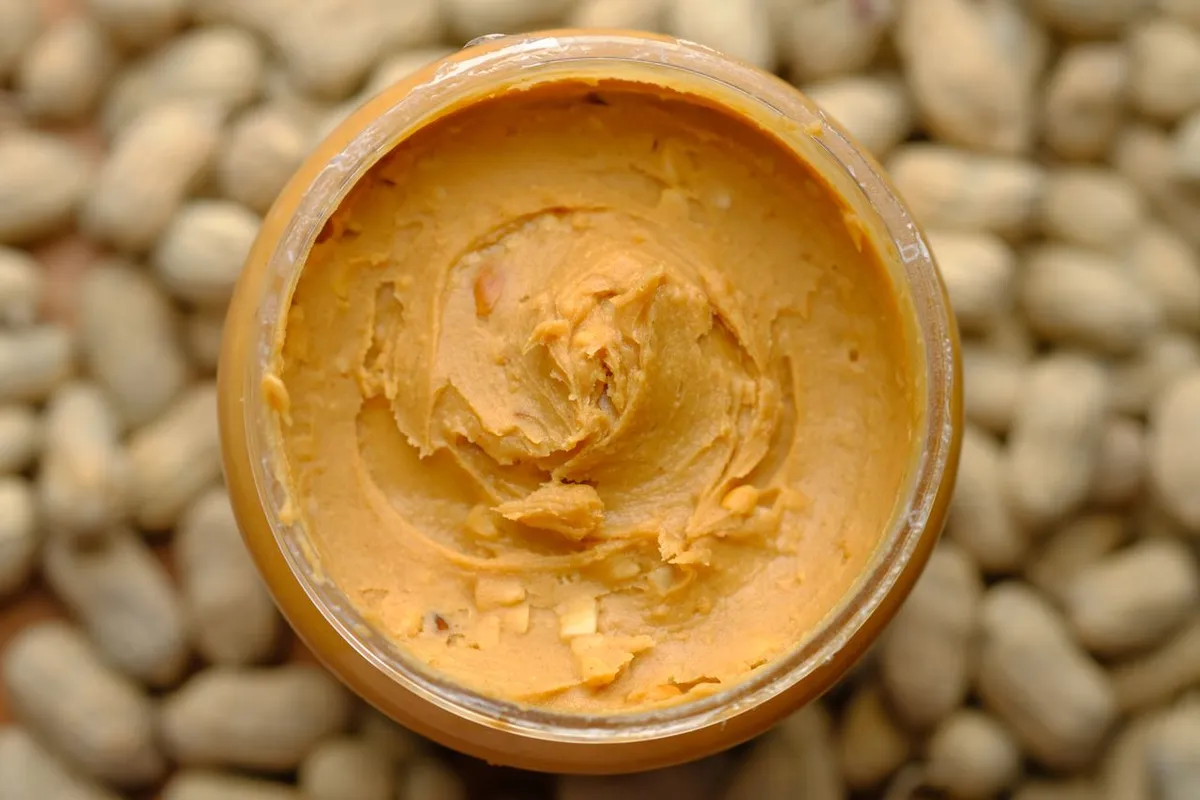
Oil separates because peanut butter is a suspension of fine peanut solids in peanut oil. Over time, gravity pulls the heavier solids down and the lighter oil rises to the top. This happens most in natural peanut butter, which is made from peanuts only, with salt as an option.
Oil separation is normal and is not spoilage. Stir the oil back in before use. A layer of oil can even protect the paste below from air. Warm storage speeds up separation, because the oil becomes thinner and moves more freely.
Stabilized peanut butter does not separate. It contains a small amount of vegetable-oil stabilizer, up to about 2% in our recipe, which forms a fine crystal network at room temperature and holds the peanut oil in place. Our stabilized grades show no oil separation at 25 °C over their shelf life. The process is explained in more detail in how peanut butter is made.
How Can You Spot Rancidity and Spoilage?
Use your nose first. Rancid peanut butter smells sharp, sour, soapy or like old paint, instead of roasted and nutty. Other signs are easy to check:
- Smell: a stale, metallic or paint-like odour is the clearest sign of rancidity.
- Taste: a bitter or sour aftertaste, or a flat flavour with no roasted notes.
- Colour: the paste becomes darker than when it was opened.
- Texture: the paste is hard and dry, or very grainy, beyond normal firming in the cold.
- Visible growth: any mould spots, often caused by a wet or dirty spoon. Discard the whole jar.
Eating a small amount of slightly rancid peanut butter is unlikely to make most people ill, but the taste is unpleasant and the product has lost quality. Mould is different. Do not scrape it off. Throw the jar away.
In a laboratory, rancidity is measured with tests such as peroxide value and the acid value of the extracted fat. FSSAI sets an acid value limit of 4.0 for peanut butter, and we test against it. Aflatoxin is a separate safety issue that starts in the raw peanuts; we explain it in aflatoxin in peanuts.
How Does Shelf Life Change by Type and Storage?
Stabilized peanut butter lasts longest, and natural peanut butter lasts longer when it is kept cool. The table brings together the published guidance and our bulk specifications.
| Type and condition | Storage | Typical shelf life | Source |
|---|---|---|---|
| Commercial jar, unopened | Pantry | 6–9 months | National Peanut Board |
| Commercial jar, opened | Pantry | 2–3 months | National Peanut Board |
| Commercial jar, opened | Refrigerator | Several months longer than pantry | National Peanut Board |
| Stabilized bulk, sealed | Below 25 °C, away from light | About 12 months | Elysium specification |
| Natural bulk, sealed | Cool storage | About 6 months | Elysium specification |
| Natural, opened | Refrigerator advised | Shorter than stabilized; check smell and taste | General guidance |
Always follow the best-before date on the pack first. Shelf-life figures assume the product was made well, sealed properly and kept within the stated temperature.
What Are the Best Storage Practices for Peanut Butter?
Keep peanut butter cool, dark, dry and sealed. These simple rules slow oxidation and stop contamination:
- Store sealed stock below 25 °C, away from direct sunlight, ovens and hot walls.
- Close the lid tightly after each use to keep air and moisture out.
- Use a clean, dry spoon or knife. Crumbs, jam and water bring in microbes.
- Refrigerate natural peanut butter after opening if you will not finish it within a few weeks. It will firm up, so take it out a little before use.
- Stir natural peanut butter fully once, then refrigerate, so it does not separate again quickly.
- In warehouses, rotate stock first in, first out, and keep drums and pails off the floor and away from strong odours.
Bakeries and food factories should treat an opened drum or pail like an opened jar. Cover it, note the opening date and use it within the period set by your quality team.
What Affects Peanut Butter Shelf Life in Manufacturing?
Shelf life is decided long before the jar reaches a shelf. Six manufacturing factors matter most:
- Raw peanut quality: sound, well-dried kernels with low free fatty acids give a more stable butter. Damaged or old kernels start oxidising earlier.
- Fatty acid profile: high-oleic peanut varieties have more monounsaturated fat and are known to resist oxidation better than normal-oleic peanuts.
- Roasting and blanching: an even, medium roast develops flavour without burning. Removing skins and hearts reduces bitterness.
- Moisture: keeping moisture at 2% or below protects against microbial growth and texture changes.
- Stabilizer: a small vegetable-oil stabilizer prevents oil separation and the oxidation that follows from an exposed oil layer.
- Packing: filling into clean, sealed, food-grade containers with little headspace limits oxygen. Opaque or lined packs block light.
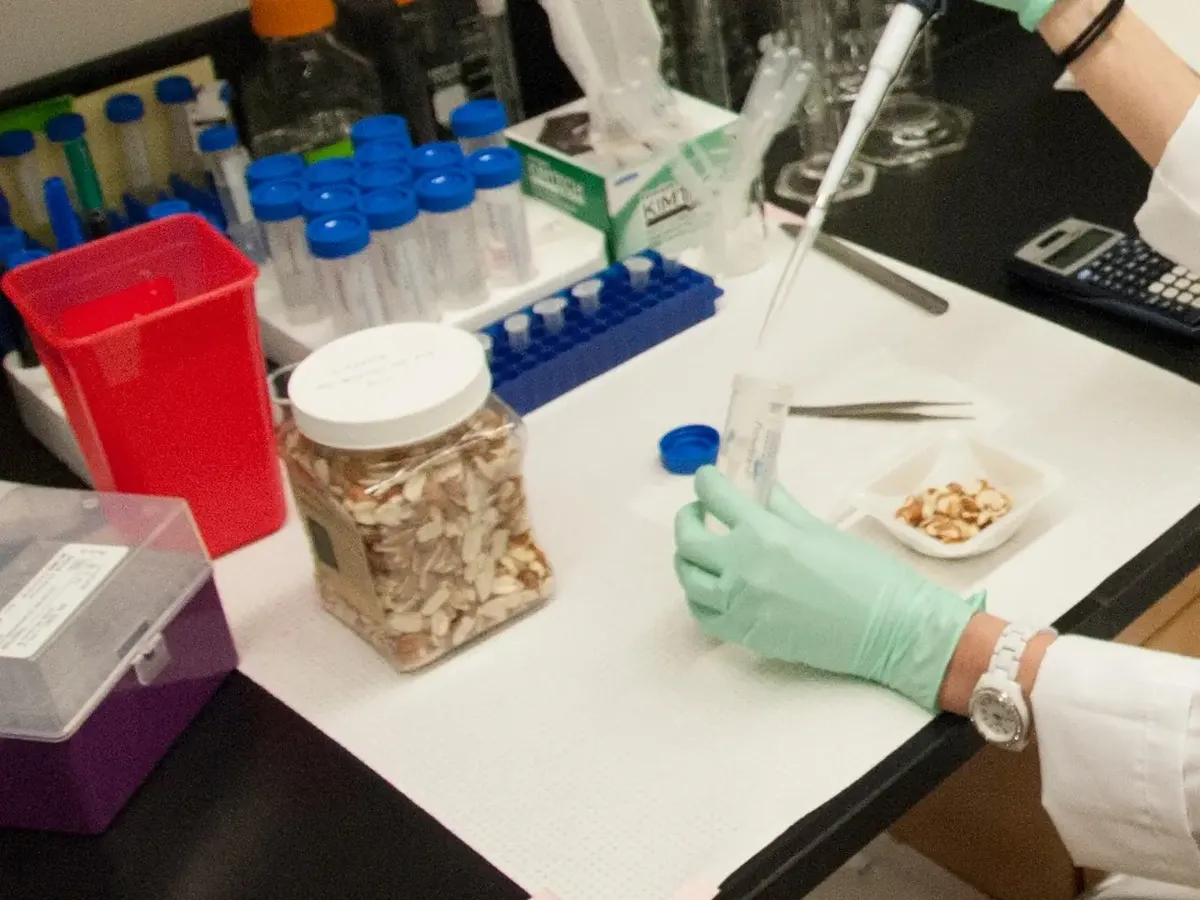
Testing confirms the result. A sound batch should come with a certificate of analysis that covers moisture, fat, acid value, aflatoxin and microbiology. Our lab testing page lists the full test panel, and the quality page describes our process controls.
Related reading: Does Peanut Butter Have Gluten? A Guide for Food Brands.
How Do You Source Peanut Butter with Stable Shelf Life?
To answer the question “does peanut butter go bad” for your own supply chain, start with the specification. Ask your supplier for the shelf life by variant, the storage conditions it assumes, the moisture and acid value limits, the stabilizer used, and a batch certificate of analysis. Check aflatoxin against your market’s limit, and agree the packing format before you order.
Elysium Agri Corporation makes bulk peanut butter in smooth, crunchy, natural and stabilized variants from graded, blanched and roasted Gujarat peanuts. Moisture is held at 2% maximum, and every batch is tested for aflatoxin, Salmonella and Listeria. We pack in 200 kg drums, 20 kg pails, IBCs and retail jars, and we can fill under your brand through our private label service. Our registrations are on the certificates page.
Tell us the variant, pack size, quantity and destination port, and we will send a specification sheet and price. Request a peanut butter quote →
Frequently asked questions
Does peanut butter go bad?
Yes, but slowly. Peanut butter has very low moisture, so mould and bacteria rarely grow in it. The main problem is rancidity: oxygen, light and heat slowly break down its oil, giving a stale, bitter or paint-like flavour. A sealed jar keeps for many months, while an opened jar keeps for a few months, longer if refrigerated.
How long does an opened jar of peanut butter last?
An opened jar of commercial peanut butter usually keeps its quality for 2 to 3 months in a cool cupboard, according to the US National Peanut Board. In the refrigerator it lasts several months longer. Natural peanut butter without stabilizer is best refrigerated after opening. Always close the lid tightly and use a clean, dry spoon each time.
Why does oil separate in peanut butter?
Peanut butter is fine peanut solids suspended in peanut oil. Over time, the heavier solids settle and the lighter oil rises to the top. This is normal in natural peanut butter and is not spoilage. Stir the oil back in before use. Stabilized peanut butter contains a small vegetable-oil stabilizer that holds the oil in place and prevents separation.
How can you tell if peanut butter has gone rancid?
Smell it first. Rancid peanut butter smells sour, soapy, metallic or like old paint instead of roasted and nutty. It may also taste bitter, look darker than before or feel hard and dry. Rancid peanut butter is unpleasant but usually not harmful in small amounts. Any visible mould means the whole jar should be thrown away.
Should peanut butter be stored in the fridge?
It is not essential for stabilized peanut butter, which keeps well in a cool, dark cupboard. Refrigeration does slow rancidity, so it helps if you use a jar slowly or live in a hot climate. Natural peanut butter is best refrigerated after opening, because it has no stabilizer. It will firm up, so take it out shortly before use.
Related reads


