
On this page
- Which Peanuts Are Best for Peanut Butter?
- What Do Manufacturers Look for in Butter Peanuts?
- Are Java Peanuts Good for Peanut Butter?
- Are Bold Peanuts Good for Peanut Butter?
- Are Blanched Splits Good for Peanut Butter?
- How Do Java, Bold and Blanched Splits Compare?
- What Aflatoxin, Moisture and Roast Factors Should You Consider?
- How Do You Buy Blanched Split Peanuts in Bulk?
- Frequently asked questions
The best peanuts for peanut butter are small, sweet, high-oil kernels that roast evenly, such as Spanish-type Java peanuts, and the most cost-effective form is split blanched Java peanuts with the skins and hearts removed. Bold peanuts also work, but they cost more for a product where kernel size does not matter. This guide compares Java, Bold and blanched splits as peanuts for peanut butter, and sets out the specifications that decide flavour, texture and food safety.
Key takeaways
- Java peanuts are small and round, with 45–50% oil and a naturally sweet roasted taste, which suits smooth butter.
- Split blanched peanuts save cost because shape does not matter once the nuts are ground.
- Removing the heart (germ) avoids a bitter note in the finished butter.
- Aflatoxin control starts with the raw kernel. Roasting cannot be relied on to remove it.
Which Peanuts Are Best for Peanut Butter?
Small, round, high-oil peanuts with a sweet flavour are best for peanut butter. In India, that means Java peanuts, which come from Spanish-type bunch varieties grown mainly in Gujarat. They roast evenly, release oil easily during grinding and give a smooth, well-flavoured butter.
The same logic applies in other origins. In the USA, the National Peanut Board notes that runner peanuts make up more than 80% of the US crop and are mostly used for peanut butter and confectionery, while Spanish peanuts are also used for candy and peanut butter. Large Virginia-type peanuts, which are similar to Indian Bold, are mainly sold as snack nuts.
For an industrial plant, the form of the peanut matters as much as the variety. Most manufacturers buy blanched kernels, because the red skin must be removed before grinding. Many buy split blanched peanuts, because halves cost less than whole kernels and grind just as well.
What Do Manufacturers Look for in Butter Peanuts?
Manufacturers look for flavour, oil content, low moisture, clean appearance after roasting and a clear food safety record. Each factor affects either the taste of the butter or the cost of making it.
- Flavour: a sweet, nutty roasted taste with no sour, bitter or rancid note.
- Oil content: higher oil gives a smoother, more spreadable butter and easier grinding.
- Low moisture: dry kernels roast faster and more evenly, and keep better in storage.
- Skin and heart removal: red skin darkens the butter and adds astringency, and the heart can taste bitter.
- Uniform size: even kernels roast to the same colour, so the batch does not contain burnt and under-roasted pieces.
- Food safety: low aflatoxin, Salmonella absent and no foreign matter, backed by a lot-wise lab report.
Price is the final factor. Peanuts make up most of the cost of a jar of peanut butter, so a small saving per tonne on the kernel has a large effect on margin.
Are Java Peanuts Good for Peanut Butter?
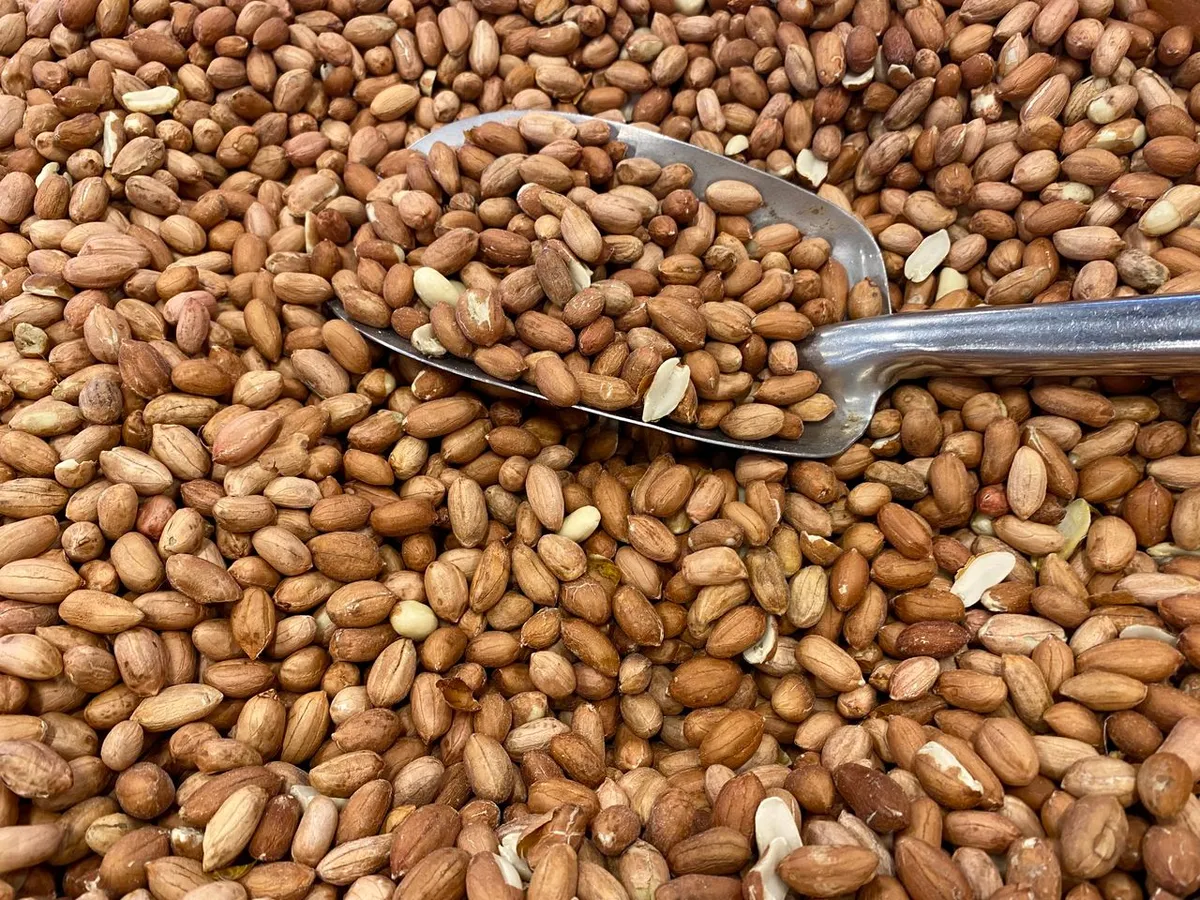
Yes. Java peanuts are the usual first choice for peanut butter. They are small, round kernels with a light pink skin and a thinner skin than Bold. They carry about 45–50% oil and have a naturally sweeter taste after roasting.
Java peanuts are traded by count, which is the number of kernels in one ounce (28.35 g). Our standard range runs from 50/60 to 80/90, and 80/90 is one of the most traded Java counts for peanut butter and candy. Higher counts mean smaller kernels, which usually cost less per tonne than large kernels. Because a butter plant grinds the kernel, there is little reason to pay for size. Smaller counts, up to 140/160, are available on request.
Java kernels can be supplied hand-picked or sortex-cleaned. Sortex cleaning removes discoloured and damaged kernels by camera, which also helps to lower the aflatoxin risk. For a butter plant, a sortex-cleaned lot means fewer defects to remove before roasting and a more even colour in the jar.
Are Bold Peanuts Good for Peanut Butter?
Bold peanuts can make good peanut butter, but they are not the usual choice. They are large, long, oval kernels from Virginia-type varieties, with a red skin and a firmer bite. Their oil content is about 44–48%, a little lower than Java, and their flavour is less sweet.
Bold kernels are priced for their size and appearance, which matter in roasted and salted snacks. In peanut butter, those qualities are lost in the grinder. Bold can still make sense when it is cheaper than Java in a given season, or when a buyer wants a particular roasted flavour. Prices change with each crop, and Java has at times traded above Bold, so always compare offers by count.
Are Blanched Splits Good for Peanut Butter?
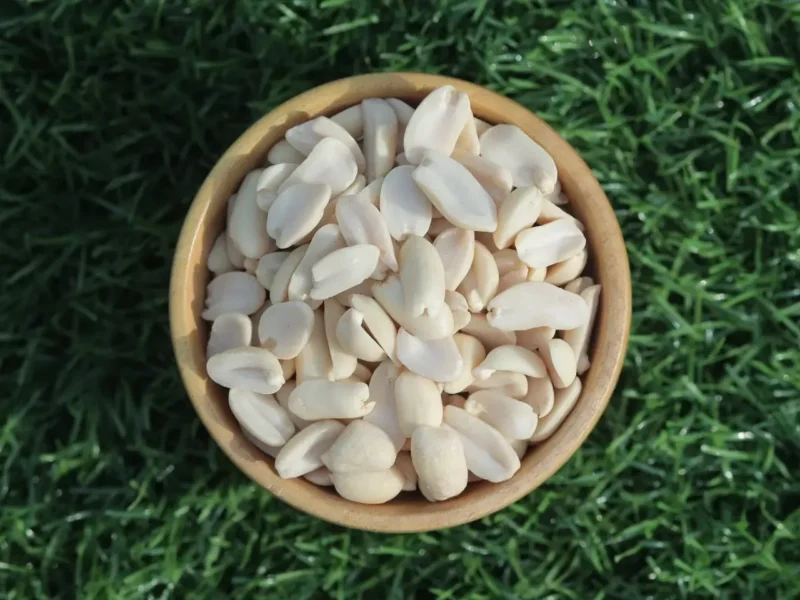
Yes. Blanched splits are often the most practical choice for peanut butter. Split blanched peanuts are blanched kernels separated into their two natural halves, with the red skin removed and the heart screened out. They are made from Bold or Java kernels and colour-sorted before packing.
Splits cost less than whole blanched kernels because appearance does not matter once they are ground. Removing the heart avoids the bitter note it can give in butter. The blanching also means your plant does not need its own skin-removal line. For most buyers, Java splits are the best fit, while Bold splits suit bakery, chikki and toppings.
How Do Java, Bold and Blanched Splits Compare?
The table compares the three main peanut options for a butter plant, using our standard export specifications.
| Factor | Java peanuts | Bold peanuts | Split blanched peanuts |
|---|---|---|---|
| Type | Spanish type, small and round | Virginia type, large and long | Halves of Java or Bold kernels |
| Skin | Light pink, thin (must be blanched) | Red, thicker (must be blanched) | Removed, 3% max remaining |
| Hearts | Present | Present | Removed |
| Oil content | 45–50% | 44–48% | 48–52% |
| Moisture | 7% max | 7% max | 5% max |
| Flavour after roasting | Sweet, nutty | Milder, less sweet | Clean, no bitter heart note |
| Processing needed at your plant | Blanch, sort, roast, grind | Blanch, sort, roast, grind | Roast and grind |
| Best for | Butter makers with their own blanching line | Snacks; butter only when price suits | Most peanut butter and paste makers |
Typical specifications for Gujarat peanuts. Your contract specification applies.
What Aflatoxin, Moisture and Roast Factors Should You Consider?
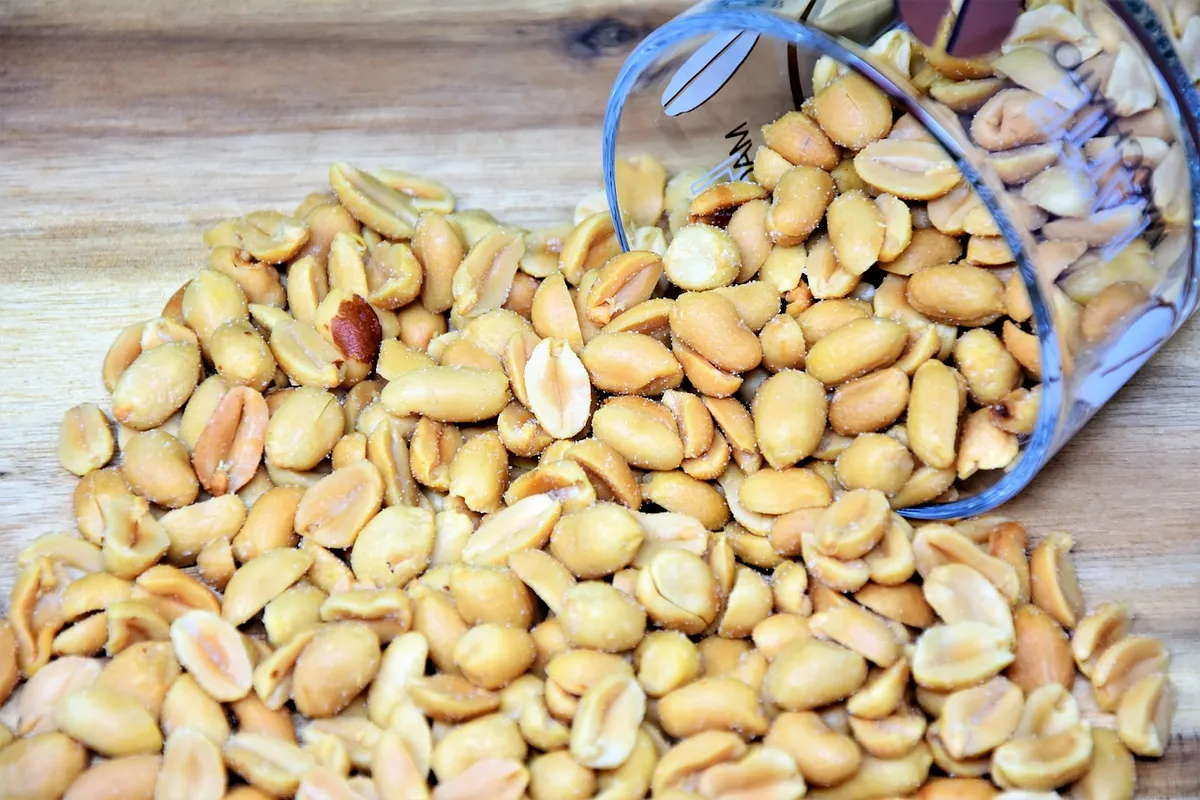
Aflatoxin is the most important food safety factor for peanuts for peanut butter. It is produced by moulds and is heat-stable, so roasting cannot be relied on to remove it. Control must start with the raw kernel: good drying, colour sorting to remove damaged and discoloured nuts, and a lab test on every lot.
- Aflatoxin limits: for the EU, peanuts for direct consumption must meet B1 ≤ 2 µg/kg and total ≤ 4 µg/kg. Other markets have their own limits, such as USDA 15 µg/kg and US FDA 20 µg/kg total.
- Moisture: our raw kernels ship at 7% max and blanched splits at 5% max. Roasting brings the moisture down further, and our finished butter is made to 2% max.
- Free fatty acid: a low FFA, such as 1.0% max for splits, shows the oil is fresh and lowers the risk of a rancid taste.
- Roast colour: set a roast target with a colour meter. Our own butter is made to a medium roast, Hunter L about 44–52.
Salmonella is the other key risk, because peanut butter is eaten without further cooking. Ask for Salmonella absent in 25 g on the kernel report and keep raw and roasted areas separate in your plant. Our lab testing page lists the methods we use.
Related reading: Groundnut Cholesterol: Do Peanuts Contain Cholesterol? and HPS Peanuts Explained: Hand Picked Selected Groundnut Grades.
How Do You Buy Blanched Split Peanuts in Bulk?
Elysium Agri Corporation exports split blanched peanuts from Jamnagar, Gujarat, made from Bold or Java kernels, degermed and colour-sorted. Every lot is tested for aflatoxin at an APEDA-approved lab and for Salmonella before shipment. We pack in 25 kg vacuum bags, 25 or 50 kg PP bags with a liner, or jumbo bags. A 20 ft container holds about 18–19 MT and a 40 ft high cube about 26–27 MT.
If you would rather buy finished product, we also supply bulk and private label peanut butter made from Gujarat peanuts. Our guide on how to import peanuts from India covers documents, shipping and payment, and the landed cost calculator helps you compare the delivered cost of peanuts for peanut butter at your plant.
Tell us the grade, count, quantity and destination port, and we will send a specification and price. Request a blanched split peanut quote →
Frequently asked questions
Which peanuts are best for making peanut butter?
Small, round, high-oil peanuts with a sweet flavour are best. In India, Java peanuts from Spanish-type varieties are the usual choice, with 45 to 50% oil and a sweet roasted taste. Many manufacturers buy them as split blanched peanuts, with skins and hearts removed, because halves cost less and grind just as well.
Can you make peanut butter from blanched split peanuts?
Yes. Split blanched peanuts are one of the most common raw materials for peanut butter. The red skin is already removed and the bitter heart is screened out, so the plant only needs to roast and grind. Splits also cost less than whole blanched kernels because their shape does not matter once they are ground.
Are java peanuts good for peanut butter?
Yes. Java peanuts are small, round kernels with a thin pink skin, 45 to 50% oil and a naturally sweeter taste after roasting. They roast evenly and give a smooth, well-flavoured butter. Higher counts such as 80/90 per ounce usually cost less per tonne, which suits a product where kernel size is not visible.
Why are peanuts roasted before grinding into butter?
Roasting develops the typical nutty flavour and brown colour of peanut butter. It also lowers moisture, which helps the oil release during grinding and improves shelf life. The roast level should be agreed in advance, often using a colour meter, because over-roasting gives a bitter, burnt taste and under-roasting leaves a raw, beany note.
What moisture level is ideal for peanut butter peanuts?
Raw export kernels are usually shipped at 7% moisture or less, and blanched splits at 5% or less. Roasting reduces moisture further. Finished peanut butter is commonly made to 2% moisture or less, and India's FSSAI sets a maximum of 3%. Low moisture helps grinding, flavour and shelf life, and lowers the risk of mould.
Related reads


