
On this page
- What Is the Nutrition Profile of Peanut Butter?
- How Much Protein, Fat and Calories Are in a Serving?
- Why Does Protein Content Vary Between Peanut Butters?
- What Kinds of Fat Are in Peanut Butter?
- Which Vitamins, Minerals and Fibre Does Peanut Butter Provide?
- How Does Natural Peanut Butter Compare With Conventional?
- What Does the Research Say?
- How Can You Source Peanut Butter and Private Label from India?
- Frequently asked questions
The peanut butter with the highest protein is usually a natural butter made from 100% peanuts, because nothing dilutes the peanuts. A standard 2-tablespoon (32 g) serving of smooth peanut butter gives about 7 g of protein, 16 g of fat and 190 kcal, according to USDA data. Recipes with added sugar or oil carry slightly less protein per serving, while products with added protein carry more. This fact sheet covers the full nutrition profile of peanut butter, why protein varies, and what the research says.
Key takeaways
- Smooth peanut butter has about 22 g of protein and 51 g of fat per 100 g, and about 597 kcal.
- Protein per serving depends mostly on the share of peanuts in the recipe.
- About three-quarters of the fat in peanut butter is unsaturated.
- Peanut butter supplies vitamin E, niacin, magnesium and fibre, but it is energy-dense, so portion size matters.
What Is the Nutrition Profile of Peanut Butter?
Peanut butter is a high-energy food rich in fat, with a good amount of protein and fibre. It is made from roasted, ground peanuts, so its nutrition closely follows that of the peanut itself. Most of its calories come from fat, about a seventh come from protein, and the rest from carbohydrate.
Peanut butter also supplies several vitamins and minerals, including vitamin E, niacin (vitamin B3), magnesium, potassium and copper. It contains no cholesterol, because it is a plant food. Its exact profile depends on the recipe: natural peanut butter is peanuts and perhaps salt, while conventional peanut butter may also contain sugar, a vegetable-oil stabiliser and salt.
How Much Protein, Fat and Calories Are in a Serving?
The table shows USDA values for smooth peanut butter without salt, per 100 g and per 2-tablespoon (32 g) serving. The figures come from the US Department of Agriculture’s nutrient data, available through FoodData Central. Values are rounded.
| Nutrient | Per 100 g | Per 2 tbsp (32 g) |
|---|---|---|
| Energy | 597 kcal | 191 kcal |
| Protein | 22.2 g | 7.1 g |
| Total fat | 51.4 g | 16.4 g |
| Saturated fat | 10.3 g | 3.3 g |
| Monounsaturated fat | 25.9 g | 8.3 g |
| Polyunsaturated fat | 12.5 g | 4.0 g |
| Carbohydrate | 22.3 g | 7.1 g |
| Dietary fibre | 5.0 g | 1.6 g |
| Sugars | 10.5 g | 3.4 g |
| Vitamin E | 9.1 mg | 2.9 mg |
| Niacin | 13.1 mg | 4.2 mg |
| Magnesium | 168 mg | 54 mg |
USDA values for smooth peanut butter without salt. Brands differ with recipe; check the label of each product.
Most retail labels show 7 to 8 g of protein per 2-tablespoon serving. A salted version adds sodium, and a sweetened version adds sugar.
Why Does Protein Content Vary Between Peanut Butters?
Protein varies mainly because of how much of the jar is peanut. Peanuts themselves carry about a quarter of their weight as protein, so any other ingredient lowers the share.
- Peanut content: natural peanut butter is 100% peanuts. In the USA, products sold as peanut butter must keep optional ingredients to 10% or less, so they are at least 90% peanuts.
- Added sugar and oil: sweeteners, stabilisers and extra oil replace some peanut, so protein per serving falls slightly.
- Peanut type and crop: protein differs a little between varieties and growing seasons.
- Added protein: some high-protein products add whey, pea or other protein, which raises protein per serving.
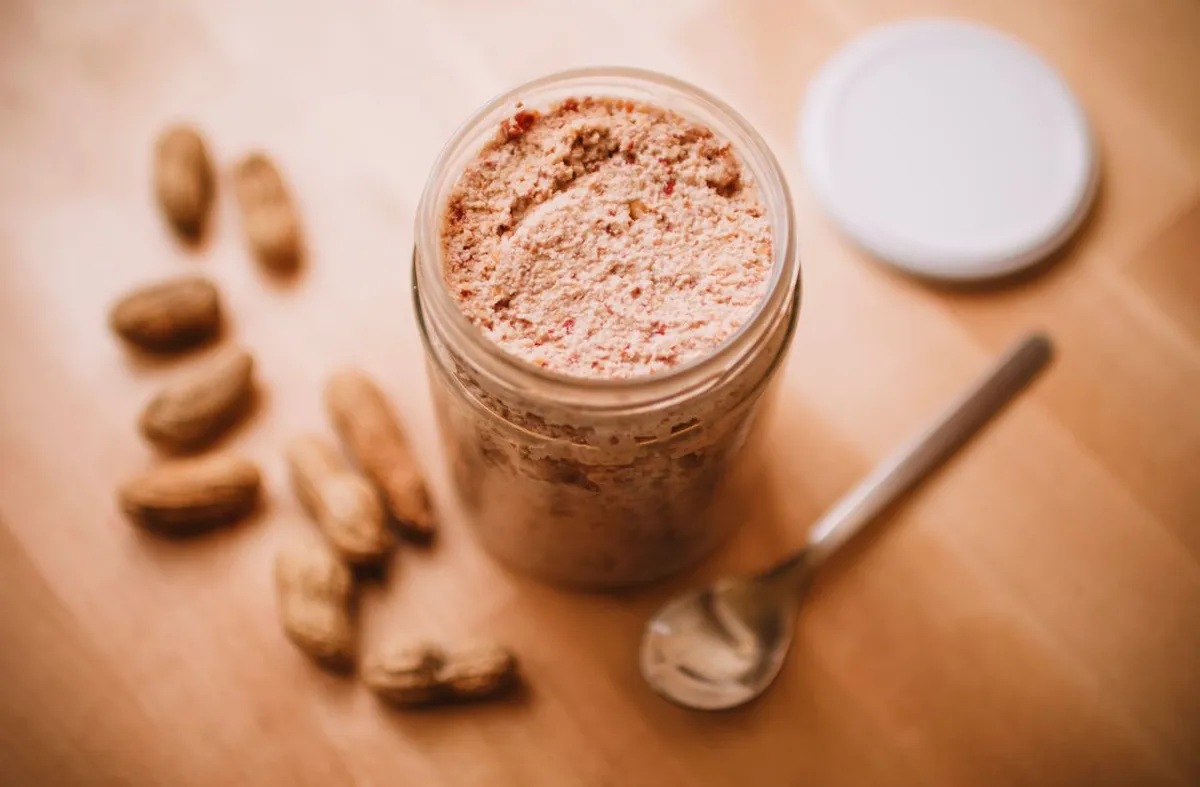
- Powdered peanut butter: made from peanuts with much of the oil pressed out, so protein per gram is higher and fat is lower.
So, if you want the peanut butter with the highest protein among standard products, read the ingredient list and choose one that is mostly or entirely peanuts. Then compare the protein per 100 g on the label, not only per serving, because serving sizes vary.
Protein quality matters as well as quantity. Peanut protein is a plant protein that is relatively low in the amino acid lysine. Dairy foods, eggs, soy and most beans are richer in lysine. Eating peanut butter as part of a varied diet, for example with milk or yoghurt, or alongside other protein foods during the day, helps to provide a balanced mix of amino acids. Athletes and gym users often choose peanut butter as an affordable plant protein, but it should be counted for its calories as well as its protein. Smooth and crunchy versions of the same recipe have almost the same protein, because the only difference is the size of the peanut pieces.
What Kinds of Fat Are in Peanut Butter?
Most of the fat in peanut butter is unsaturated. Per 100 g, the USDA data show about 25.9 g of monounsaturated fat, mainly oleic acid, and 12.5 g of polyunsaturated fat, mainly linoleic acid. Saturated fat is about 10.3 g, or about a fifth of the total.
Health authorities generally advise replacing saturated fats with unsaturated fats as part of a balanced diet. Stabilised peanut butters contain a small amount of added hardened vegetable oil, often up to about 2%, which can raise the saturated fat slightly. In the USA, stabilisers in peanut butter must be fully hydrogenated vegetable oils. Partially hydrogenated oils, the main source of industrial trans fat, are no longer permitted there.
Which Vitamins, Minerals and Fibre Does Peanut Butter Provide?
Peanut butter is a useful source of several micronutrients. A 32 g serving provides:
- Vitamin E: about 2.9 mg. Vitamin E is a fat-soluble antioxidant found in nuts and seed oils.
- Niacin (vitamin B3): about 4.2 mg. Peanuts are one of the richer plant sources of niacin.
- Magnesium: about 54 mg, along with potassium, phosphorus, zinc and copper.
- Fibre: about 1.6 g. Crunchy and natural types are similar to smooth.
Peanuts also contain plant compounds such as polyphenols and phytosterols. Their amounts vary with the peanut, the roast and the recipe. Natural and conventional peanut butters supply similar amounts of these micronutrients, because they come from the peanut rather than from added ingredients. Fortified products, with added vitamins or minerals, are sold in some markets and must declare this on the label.

How Does Natural Peanut Butter Compare With Conventional?
Natural and conventional peanut butter are close in calories, protein and fat. The main differences are sugar, salt and the small amount of added oil.
- Natural: peanuts only, sometimes with salt. Slightly more protein per serving, little or no added sugar, and the oil separates on the shelf.
- Conventional (stabilised): peanuts plus sugar, salt and a vegetable-oil stabiliser. Smooth and stable, with a few grams more sugar per 100 g.
- Reduced-fat spreads: some replace part of the peanut with starches or sugars. They may have fewer fat calories but often contain less protein and more sugar.
For a detailed comparison of recipes, see our guide on peanut butter without palm oil.
What Does the Research Say?
Research on peanuts and nuts has mostly looked at heart health. In 2003, the US FDA allowed a qualified health claim for nuts, stating that scientific evidence suggests but does not prove that eating 1.5 ounces per day of most nuts, such as peanuts, as part of a diet low in saturated fat and cholesterol may reduce the risk of heart disease. The word “qualified” means the evidence is supportive but not conclusive.
Peanut butter is also energy-dense, so it fits best in measured portions within a balanced diet. Peanut is a major food allergen worldwide. People with a peanut allergy must avoid it completely, and every pack must carry a clear allergen declaration.
This article is for general information and is not medical or dietary advice.
Related reading: Benefits of Peanut Butter: Nutrition Facts and What Research Says.
How Can You Source Peanut Butter and Private Label from India?
Elysium Agri Corporation supplies bulk and private label peanut butter from Jamnagar, Gujarat. Our standard specification is at least 90% peanuts, or 100% for natural, with protein of at least 25% on a dry basis, fat of 48–55% and moisture of 2% or less. Every batch is tested for aflatoxin, Salmonella and other parameters, and we provide nutrition and allergen data for your label.
If you plan a high-protein or natural line, our guide to starting a peanut butter business covers the next steps. Tell us your recipe, pack size and market, and we will quote the peanut butter with the highest protein that suits your brand. Request a peanut butter quote →
Frequently asked questions
How much protein is in two tablespoons of peanut butter?
Two tablespoons (32 g) of smooth peanut butter contain about 7 g of protein, according to USDA data for smooth peanut butter without salt. Most retail labels show 7 to 8 g per serving. Natural peanut butter made only from peanuts tends to sit at the higher end, while sweetened or reduced-fat spreads usually contain a little less.
How many calories are in a serving of peanut butter?
A 2-tablespoon (32 g) serving of smooth peanut butter contains about 190 kcal, according to USDA data. That is roughly 597 kcal per 100 g. Most of the energy comes from fat, about a seventh from protein and the rest from carbohydrate. Because it is energy-dense, measuring portions helps when you are watching calorie intake.
Which type of peanut butter has the most protein?
Among standard products, natural peanut butter made from 100% peanuts usually has the most protein, because no sugar or oil dilutes the peanuts. Products with added whey or pea protein can contain more. Powdered peanut butter, made from peanuts with much of the oil removed, has more protein per gram. Compare protein per 100 g on labels.
Is the fat in peanut butter healthy?
Most of the fat in peanut butter is unsaturated. USDA data show about 25.9 g of monounsaturated and 12.5 g of polyunsaturated fat per 100 g, with about 10.3 g saturated. Health authorities generally advise choosing unsaturated fats over saturated fats. Peanut butter is still energy-dense, so it fits best in measured portions in a balanced diet.
Does natural peanut butter differ in nutrition from regular?
Only slightly. Natural peanut butter contains just peanuts and sometimes salt, so it has a little more protein and little or no added sugar. Regular stabilised peanut butter adds sugar, salt and a small amount of hardened vegetable oil, which keeps it smooth. Calories and total fat are similar. The main practical difference is that natural peanut butter separates.
Related reads


