
On this page
- Is Peanut Butter Healthy?
- What Is in Peanut Butter Nutritionally?
- What Are the Potential Benefits of Peanut Butter?
- What Does the Research Say?
- What Should You Watch: Added Sugar, Salt and Oils?
- How Do Different Peanut Butter Types Compare on Nutrition?
- How Do You Choose a Quality Peanut Butter?
- How Can You Source Peanut Butter and Private Label from India?
- Frequently asked questions
The main benefits of peanut butter are its plant protein, its mostly unsaturated fats, and useful amounts of fibre, magnesium, niacin and vitamin E. Eaten in sensible portions, plain peanut butter can be part of a healthy diet, though it is high in calories and some products add sugar, salt and oils. This fact sheet sets out what is in peanut butter, what research says, and how to choose a good product, using data from USDA FoodData Central.
Key takeaways
- Smooth peanut butter without salt contains about 22 g of protein and 51 g of fat per 100 g, most of it unsaturated.
- A typical serving is 2 tablespoons (about 32 g), which gives roughly 190 kcal.
- Large observational studies link regular peanut butter intake with better health markers, but they do not prove cause and effect.
- The healthiest choice is usually a product with few ingredients: peanuts, and perhaps a little salt.
Is Peanut Butter Healthy?
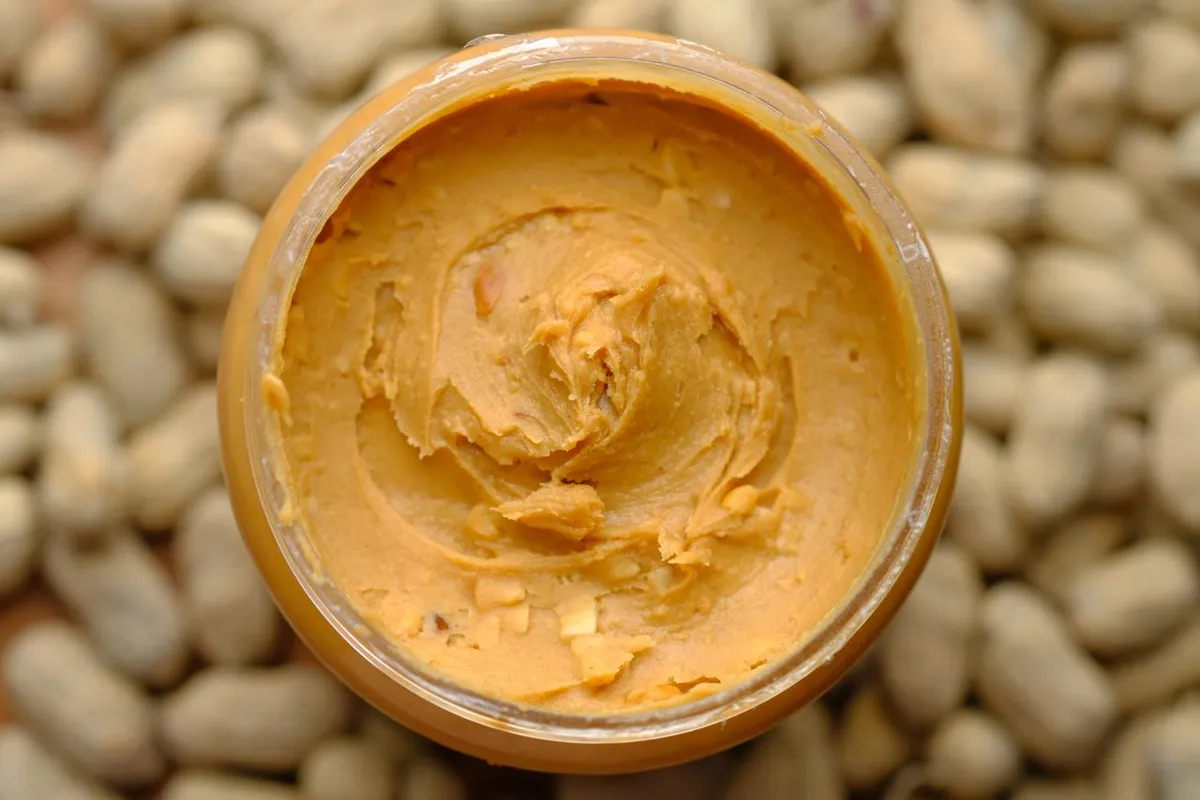
Yes, for most people, peanut butter is a healthy food when eaten in moderate amounts. It is a whole-food spread made mainly from roasted peanuts, so it keeps much of the nutrition of the nut. It provides energy, protein, fibre and a range of minerals and vitamins. Its fat is mainly monounsaturated and polyunsaturated, the types that dietary guidelines encourage in place of saturated fat.
Whether peanut butter is good for you also depends on the product and the portion. It is energy-dense, so large servings add many calories. Some brands add sugar, salt and hydrogenated or palm oils. And peanuts are a major allergen, so peanut butter is not suitable for anyone with a peanut allergy.
What Is in Peanut Butter Nutritionally?
Peanut butter is mainly fat and protein, with smaller amounts of carbohydrate and fibre. According to USDA FoodData Central, 100 g of smooth peanut butter without salt contains:
- Energy: 598 kcal
- Protein: 22.2 g
- Fat: 51.4 g, of which 25.9 g monounsaturated, 12.5 g polyunsaturated and 10.3 g saturated
- Carbohydrate: 22.3 g, including 5.0 g fibre and 10.5 g total sugars
- Magnesium: 168 mg; potassium: 558 mg; phosphorus: 335 mg
- Niacin (vitamin B3): 13.1 mg; vitamin E: 9.1 mg
In a 32 g serving of two tablespoons, that works out to about 190 kcal, 7 g of protein, 16 g of fat and 1.6 g of fibre. Peanut butter is also a source of zinc, copper and folate, as well as plant compounds such as resveratrol and phytosterols, which are found in peanuts.
What Are the Potential Benefits of Peanut Butter?
The potential benefits of peanut butter come from its nutrient profile. They include:
- Plant protein: about a quarter of its weight is protein, which helps meet daily needs, especially in vegetarian diets.
- Better fats: most of its fat is unsaturated. Replacing saturated fat with unsaturated fat is a common recommendation for heart health.
- Fullness: protein, fat and fibre together help a meal feel more satisfying, which may help some people manage hunger between meals.
- Micronutrients: it supplies magnesium, niacin and vitamin E, which many diets lack.
- Convenience: it is shelf-stable, affordable and easy to add to breakfasts and snacks.
These are general nutrition points, not treatment claims. The overall effect depends on your whole diet, your portion size and what the peanut butter replaces.
What Does the Research Say?
Research on peanut butter mostly comes from large observational studies of nuts and peanuts. These studies can show links between diet and health, but they cannot prove that peanut butter itself causes a better outcome.
One of the best-known studies followed 83,818 women in the US Nurses’ Health Study for 16 years. It was published in JAMA in 2002. Women who ate peanut butter five or more times a week had a lower risk of developing type 2 diabetes than women who rarely ate it, after the researchers adjusted for other factors. The authors suggested that nuts and peanut butter could replace refined grains or red meat in the diet, without adding total calories.
In the USA, the Food and Drug Administration allows a qualified health claim for nuts, first issued in 2003. It states that scientific evidence suggests but does not prove that eating 1.5 ounces per day of most nuts, such as peanuts, as part of a diet low in saturated fat and cholesterol, may reduce the risk of heart disease. The wording itself shows that the evidence is supportive but limited.
What Should You Watch: Added Sugar, Salt and Oils?
The main things to watch in peanut butter are added sugar, added salt and added oils, plus the portion size. The difference between products can be large.
- Salt: USDA data show 17 mg of sodium per 100 g in unsalted chunky peanut butter and 486 mg in the salted version. That gap comes almost entirely from added salt.
- Sugar: peanuts contain some natural sugar, but sweetened spreads add more. Check the ingredient list for sugar, jaggery, honey or syrups.
- Oils: stabilised peanut butter uses a small amount of vegetable oil, often hydrogenated or palm-based, to stop oil from separating. Natural peanut butter has none, so its oil rises to the top and needs stirring.
- Calories: at about 6 kcal per gram, it is easy to eat more than you intend straight from the jar.
Aflatoxin is a quality issue rather than a nutrition issue, but it matters. Peanuts can be contaminated by moulds that produce aflatoxins, so good manufacturers use tested kernels and test each batch against the legal limit in the market of sale.
How Do Different Peanut Butter Types Compare on Nutrition?
The table compares four common types of peanut butter per 100 g, using USDA FoodData Central values.
| Per 100 g | Smooth, no salt | Chunky, salted | Reduced sodium | Smooth, reduced fat |
|---|---|---|---|---|
| Energy (kcal) | 598 | 589 | 590 | 520 |
| Protein (g) | 22.2 | 24.1 | 24.0 | 25.9 |
| Total fat (g) | 51.4 | 49.9 | 49.9 | 34.0 |
| Saturated fat (g) | 10.3 | 7.6 | 7.7 | 5.8 |
| Carbohydrate (g) | 22.3 | 21.6 | 21.8 | 35.6 |
| Fibre (g) | 5.0 | 8.0 | 6.6 | 5.2 |
| Total sugars (g) | 10.5 | 8.4 | 9.3 | 9.3 |
| Sodium (mg) | 17 | 486 | 203 | 540 |
| Magnesium (mg) | 168 | 160 | 159 | 170 |
Source: USDA FoodData Central (FDC 172470, 174265, 169869 and 172458).
Reduced-fat peanut butter is not always the better choice. It has less fat, but more carbohydrate, because fillers such as sugars and starches replace some of the peanuts. Its sodium is also higher in the USDA sample.
How Do You Choose a Quality Peanut Butter?
Choose a peanut butter with a short ingredient list and a high peanut content. A good rule is to look for:
- At least 90% peanuts, or 100% for natural peanut butter.
- No added sugar, or a small amount stated clearly on the label.
- Little or no added salt, if you watch your sodium.
- No hydrogenated oils.
- A batch tested for aflatoxin and Salmonella by the maker.
Natural peanut butter is often seen as better than regular because it contains only peanuts and perhaps salt. Its main drawback is practical: the oil separates and needs stirring. Stabilised versions are easier to use, and the amount of stabiliser is usually small.
Storage also affects quality. Keep the jar closed and away from heat and light, because the oils in peanuts can turn rancid over time. Natural peanut butter keeps better in the refrigerator once opened. Always use a clean, dry spoon, and check the best-before date on the label.
This article is for general information and is not medical or dietary advice.
Related reading: Peanut Butter With Highest Protein: Nutrition Facts Explained and Peanut Butter Business: How to Start Your Own Brand.
How Can You Source Peanut Butter and Private Label from India?
For brands and food makers, the benefits of peanut butter to consumers start with the raw material and the recipe. Agree the peanut content, grind, salt and sugar, stabiliser, aflatoxin limit and packing before you order, and ask for a sample with a Certificate of Analysis.
Elysium Agri Corporation makes bulk peanut butter from Gujarat peanuts under an FSSAI licence. We offer smooth or crunchy, natural (100% peanuts) or stabilised, unsweetened or sweetened, with at least 90% peanuts. Every batch is tested for aflatoxin and microbiology, to the limit of your market. We pack in 200 kg drums, 20 or 25 kg pails, bag-in-box, IBC totes and retail jars, and we offer private label packing under your brand. See our certificates for our registrations.
Tell us the type, recipe, pack size, quantity and destination, and we will send a quote and specification sheet. Request a peanut butter quote →
Frequently asked questions
Is peanut butter healthy?
For most people, yes, when eaten in moderate amounts. Peanut butter provides plant protein, mostly unsaturated fats, fibre, magnesium, niacin and vitamin E. It is high in calories, and some brands add sugar, salt and hydrogenated oils, so the product and portion matter. People with a peanut allergy must avoid it completely.
What nutrients does peanut butter contain?
According to USDA FoodData Central, 100 g of smooth peanut butter without salt has about 598 kcal, 22 g protein, 51 g fat, 22 g carbohydrate and 5 g fibre. It also supplies magnesium, potassium, phosphorus, zinc, copper, niacin, vitamin E and folate. Most of its fat is monounsaturated and polyunsaturated.
Is peanut butter high in fat?
Yes. Peanut butter is about 50% fat by weight. Most of that fat is unsaturated: in smooth unsalted peanut butter, about 26 g per 100 g is monounsaturated and 12.5 g polyunsaturated, with about 10 g saturated. Because fat is energy-dense, peanut butter is high in calories, so portion size is important.
How much peanut butter is a reasonable serving?
A standard serving is 2 tablespoons, about 32 g. That gives roughly 190 kcal, 7 g of protein and 16 g of fat. Many people use one or two servings a day as part of a balanced diet. Your own needs depend on your total energy intake, activity level and any advice from a health professional.
Is natural peanut butter better than regular?
Natural peanut butter usually contains only peanuts and sometimes salt, with no added sugar or stabilising oils. That makes it a simple, clean-label choice. Regular peanut butter often adds sugar, salt and a small amount of hydrogenated or palm oil to stop separation. Nutritionally the difference is often modest, so check the label.
Related reads


