
On this page
- Why Are Lead in Turmeric and Adulteration a Risk?
- What Is Lead Chromate and Why Is It Used?
- Which Other Turmeric Adulterants Should You Know About?
- Which Tests Should Importers Ask For?
- How Do Lab Methods Like ICP-MS, HPLC and Colour Analysis Work?
- What Are the Regulatory Limits and Import Rejections?
- Which Supplier Controls Matter: Whole Fingers and Testing Every Lot?
- How Do You Source Tested Turmeric from India?
- Frequently asked questions
Lead in turmeric usually comes from lead chromate, a yellow industrial pigment that some processors have added to dull or poor-coloured turmeric to make it look brighter. Importers protect themselves by buying from suppliers who grind only tested whole fingers without colourants, and by requiring lot-wise tests for lead, chromium, synthetic dyes and starch before shipment. The EU limit for lead in root spices such as turmeric is 1.5 mg/kg. This checklist explains the main adulterants, the tests to ask for, and the controls that keep them out of your supply chain.
Key takeaways
- Lead chromate has been found in some South Asian turmeric, mostly in polished roots and loose powder.
- Other adulterants include metanil yellow, Sudan dyes, starch fillers and chalk or other mineral powders.
- Ask for ICP-MS or AAS tests for lead and chromium, LC-MS/MS or HPLC for dyes, and HPLC for curcumin on every lot.
- The EU sets a lead limit of 1.5 mg/kg for root spices, and lead chromate should be negative.
Why Are Lead in Turmeric and Adulteration a Risk?
Turmeric is sold largely on colour. Buyers and consumers link a bright yellow-orange colour with high quality, and brighter turmeric often sells at a higher price. That creates a temptation to improve the colour of weak, damaged or low-curcumin turmeric with something other than turmeric.
The risk is real and documented. A 2024 study in Science of The Total Environment, led by Stanford researchers, tested 356 turmeric samples from 23 cities in India, Pakistan, Sri Lanka and Nepal. It found that 14% contained lead above 2 µg/g, and some samples exceeded 1,000 µg/g. In samples with higher lead, the ratio of lead to chromium was close to 1:1, which points to deliberate addition of lead chromate (Stanford FSI summary). Lead is a toxic metal with no known safe level of exposure, which makes it a serious food safety issue.
The study also shows that most turmeric is not adulterated, and that results vary sharply by market and supply chain. That is why controls at the supplier level matter more than country of origin alone.
What Is Lead Chromate and Why Is It Used?
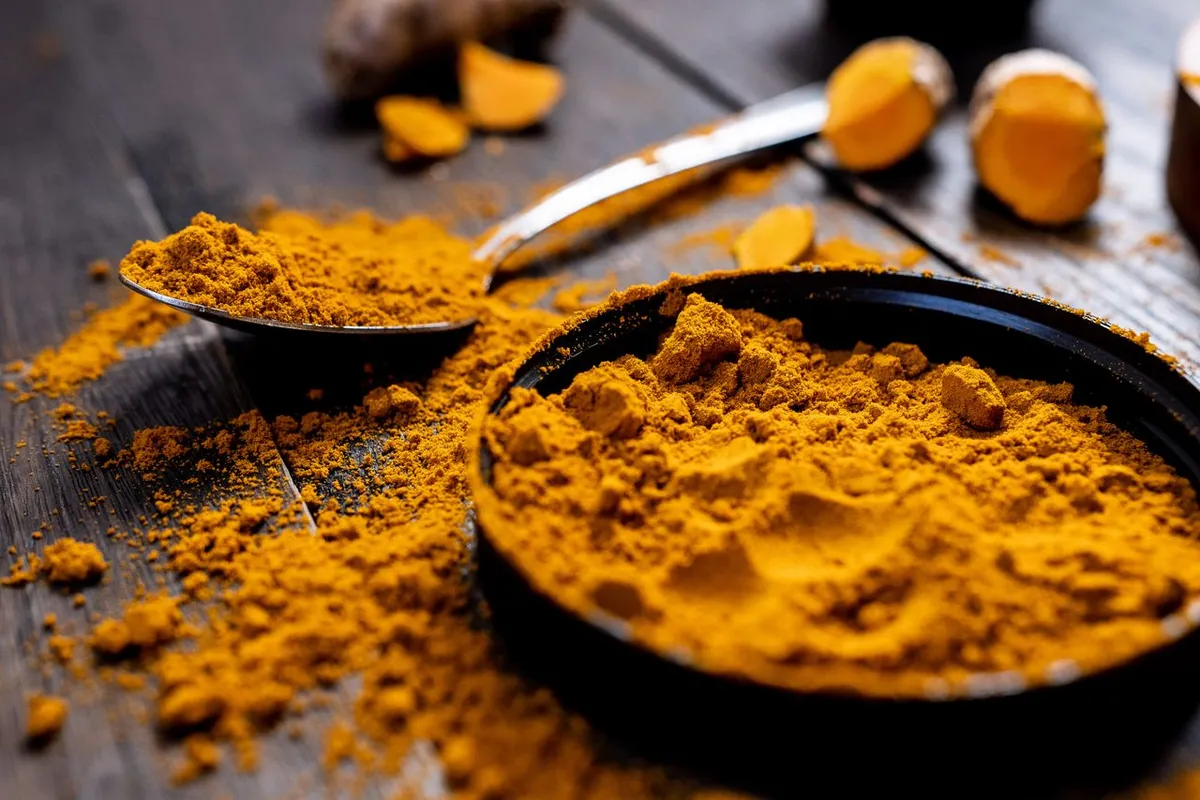
Lead chromate (PbCrO4) is a bright orange-yellow pigment used in industrial paints, such as road markings. It is not permitted in food anywhere. It is cheap, and a small amount gives a strong yellow colour.
According to Stanford Medicine, the practice in Bangladesh began in the 1980s, after floods damaged the turmeric harvest and left roots brown and mouldy. Some processors started dusting the roots with the pigment during polishing to hide the poor colour. Many did not know it was toxic. After a campaign of education, media coverage and enforcement in 2019, the share of Bangladeshi market samples with lead chromate fell from 47% to undetectable levels by 2021, and blood lead levels in the people studied dropped.
This history shows where the risk sits. Lead chromate is usually added during polishing of dried fingers, the step that removes the rough outer skin. Double-polished, very bright fingers and powder ground from them should therefore always be tested for lead and chromate.
Which Other Turmeric Adulterants Should You Know About?
Lead chromate is the most dangerous adulterant, but it is not the only one. Common turmeric adulterants include:
- Metanil yellow: a synthetic azo dye that is not permitted in food. It is used to brighten powder.
- Sudan dyes (I–IV): industrial dyes banned in food, sometimes found in chilli and turmeric products.
- Starch fillers: cheap flours such as maize, rice, wheat or cassava, added to increase weight. They dilute curcumin and colour.
- Chalk or mineral powders: yellow soapstone, chalk or similar powders that add weight and colour. They raise ash and acid-insoluble ash.
- Exhausted turmeric: turmeric from which curcumin has already been extracted, sold as normal powder.
- Other roots: cheaper related plants or root powders mixed into ground turmeric.
Powder is easier to adulterate than whole fingers, because fillers and dyes cannot be seen once mixed. This is the main reason why careful buyers ask how the powder was made and from which fingers.
Which Tests Should Importers Ask For?
A complete turmeric test panel covers safety, authenticity and quality. The table lists the tests to request and the typical export limits.
| Test | What it detects | Method | Typical requirement |
|---|---|---|---|
| Lead | Lead from lead chromate, soil or equipment | ICP-MS or AAS | ≤ 1.5 mg/kg (EU limit for root spices) |
| Chromium / lead chromate | Confirms lead chromate when tested with lead | ICP-MS; spot test | Chromate negative |
| Synthetic dyes | Metanil yellow, Sudan I–IV | LC-MS/MS or HPLC | Not detected |
| Curcumin | Colour strength; exhausted turmeric | HPLC or spectrophotometry | At least 2%; often 2.5–3%+ by contract |
| Starch | Flour fillers | Chemical test; microscopy | ≤ 60% for powder |
| Total and acid-insoluble ash | Sand, chalk, mineral powders | Gravimetric | Total ≤ 9%, acid-insoluble ≤ 1.5% (powder) |
| Aflatoxin and pesticides | Mould toxins and residues | HPLC; LC-MS/MS and GC-MS/MS | Within destination limits |
| Salmonella | Microbial safety | ISO 6579-1 | Absent in 25 g |
Turmeric test checklist with typical export limits. Your contract and destination rules apply.
How Do Lab Methods Like ICP-MS, HPLC and Colour Analysis Work?
Each test uses a method suited to what it is looking for. You do not need to run the tests yourself, but knowing the methods helps you read a Certificate of Analysis.
- ICP-MS and AAS: inductively coupled plasma mass spectrometry and atomic absorption spectroscopy measure metals such as lead, chromium and cadmium at very low levels. ICP-MS can measure several metals in one run.
- HPLC: high-performance liquid chromatography separates and measures curcuminoids. It is the reference method for curcumin content and can also detect some dyes.
- LC-MS/MS: liquid chromatography with tandem mass spectrometry confirms banned dyes and pesticide residues at trace levels.
- Colour and screening tests: X-ray fluorescence (XRF) can screen samples quickly for lead and chromium. Simple spot tests can flag metanil yellow or chromate, but a positive or doubtful result should always be confirmed by a lab method.
Use a laboratory accredited for the specific test, such as an NABL-accredited lab in India or an ISO/IEC 17025 lab in your own country. Check that the report names the method, the limit of quantification and the lot number.
What Are the Regulatory Limits and Import Rejections?
In the EU, Regulation (EU) 2023/915 sets maximum levels for lead in spices, including 1.5 mg/kg for root and rhizome spices such as turmeric. Lead chromate, metanil yellow and Sudan dyes are not permitted food additives in the EU, the USA, India or other major markets, so any detection makes the food non-compliant.
Other markets apply their own limits for lead in spices, and some set stricter internal limits through retailers. Always confirm the limit for your destination and write it into your contract. Food authorities in several countries have recalled turmeric products for lead or banned colours, and EU border posts report rejected spice consignments through the RASFF alert system. A single rejection can mean destruction of the lot, extra costs and closer checks on later shipments.
Which Supplier Controls Matter: Whole Fingers and Testing Every Lot?
The best protection against lead in turmeric is a supplier process that makes adulteration difficult and testing routine. Look for these controls:
- Grinding from whole fingers: the supplier buys whole dried fingers, inspects and tests them, and grinds them in its own controlled facility, rather than buying loose powder.
- Mechanical polishing only: fingers are polished in drums without any added colour.
- Known origin: fingers are bought by origin, such as Salem, Erode, Nizamabad or Sangli, with curcumin data.
- Lot-wise testing: every lot is tested for lead, chromium, dyes, curcumin, aflatoxin, pesticides and microbiology before loading.
- Traceable packing: each bag carries a lot number linked to the test report, as described on our traceability page.
- Independent checks: you can appoint a surveyor to draw samples at loading.
Related reading: What Is Turmeric Powder Made Of? How Turmeric Is Processed.
How Do You Source Tested Turmeric from India?
Elysium Agri Corporation exports turmeric fingers and turmeric powder from Indian origins. We polish fingers mechanically only, without colourants, and grind powder only from tested fingers. Every batch is tested for lead and chromium to rule out lead chromate, as well as Sudan dyes, metanil yellow, curcumin, aflatoxin, microbiology and pesticide residues, against the EU lead limit of 1.5 mg/kg. EU shipments also go through the Spices Board’s sampling and carry the official ethylene oxide certificate. Our lab testing page sets out the full panel, and you can read more about curcumin content in turmeric.
Tell us the form, curcumin level, mesh, quantity and destination, and we will send a quote with a sample test report. Request a tested turmeric quote →
Frequently asked questions
Why is lead chromate found in some turmeric?
Lead chromate is a bright yellow industrial pigment. Some processors in South Asia have added it during polishing to make dull, damaged or low-quality turmeric look brighter and sell at a higher price. It is not permitted in food anywhere. Studies have found it mainly in polished roots and in powder bought from loose markets.
How is lead in turmeric tested?
Laboratories measure lead with ICP-MS or atomic absorption spectroscopy. Chromium is tested at the same time, because a lead-to-chromium ratio near one to one points to lead chromate. X-ray fluorescence can screen samples quickly, but results should be confirmed by an accredited laboratory using an instrument method.
What are common adulterants in turmeric powder?
Common adulterants include lead chromate, the synthetic dye metanil yellow, Sudan dyes, starch fillers such as maize, rice or cassava flour, chalk or mineral powders, exhausted turmeric with its curcumin removed, and cheaper roots. Powder is easier to adulterate than whole fingers because fillers and dyes cannot be seen once mixed.
What is the permitted lead limit in turmeric for import?
In the EU, Regulation (EU) 2023/915 sets a maximum of 1.5 mg/kg of lead for root and rhizome spices, which includes turmeric. Other countries and retailers set their own limits, sometimes stricter. Lead chromate itself is not allowed in food in any major market, so any detection makes the lot non-compliant.
How can importers verify turmeric is free from artificial colours?
Ask for a lot-wise Certificate of Analysis from an accredited laboratory that tests for metanil yellow and Sudan I–IV by LC-MS/MS or HPLC, and for lead and chromium by ICP-MS. Check that curcumin by HPLC matches the colour. Buy powder ground from tested whole fingers, and appoint a surveyor to sample at loading if needed.
Related reads


