
On this page
- How Is Turmeric Powder Made?
- How Are Turmeric Rhizomes Harvested and Cleaned?
- Why Is Turmeric Boiled and Cured?
- How Are Turmeric Fingers Dried?
- How Are Turmeric Fingers Polished and Graded?
- How Is Turmeric Ground, Sieved and Packed?
- Which Quality Checks Apply: Curcumin, Moisture and Contaminants?
- How Do You Source Turmeric Powder from India?
- Frequently asked questions
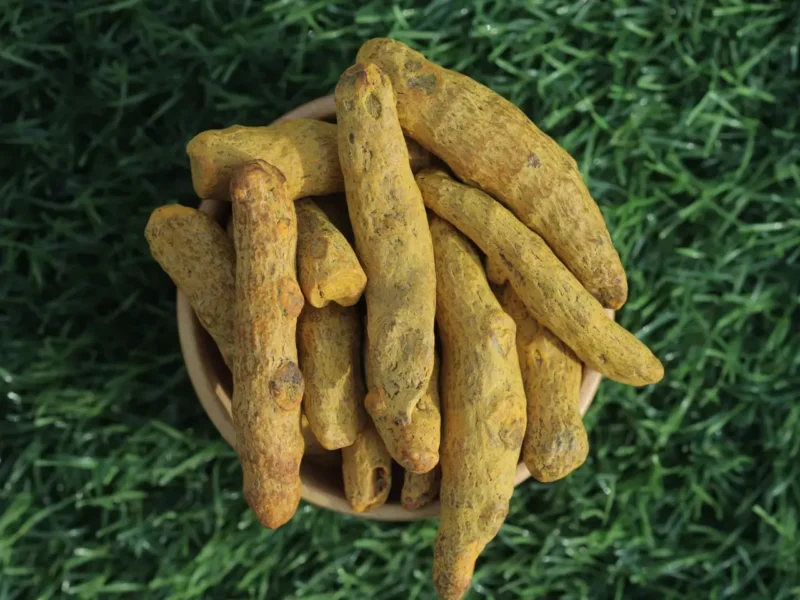
Pure turmeric powder is made of one thing: the dried, ground rhizome (underground stem) of the turmeric plant, Curcuma longa. To make it, harvested rhizomes are boiled, sun-dried, polished, cleaned and then ground and sieved into powder, with nothing added. If you are asking what is turmeric powder made of, the answer also covers what is inside the rhizome: starch, fibre, a little essential oil, and 2–5% curcumin, the pigment that gives the yellow colour. This guide walks through each processing step, from field to bag, and the quality checks at the end.
Key takeaways
- Turmeric powder is 100% ground dried turmeric rhizome. Any added starch, colour or filler is adulteration.
- Rhizomes are boiled for about 45–60 minutes, then sun-dried for 10–15 days to about 10% moisture.
- About 20–25% of the fresh weight remains as dry turmeric, depending on variety and location.
- Finished powder is tested for curcumin, moisture, ash, lead and chromate, dyes, aflatoxin and microbiology.
How Is Turmeric Powder Made?
Turmeric powder is made in two stages. In the first stage, close to the farm, fresh rhizomes are turned into dried turmeric “fingers”. In the second stage, in a spice mill, the dried fingers are cleaned, ground and sieved into powder.
- Harvesting and cleaning the rhizomes.
- Boiling (curing) the rhizomes.
- Drying the boiled rhizomes.
- Polishing and grading the dried fingers.
- Cleaning, grinding and sieving into powder.
- Testing and packing.
Inside the rhizome, the main parts are starch, fibre, protein, a small amount of essential oil that gives the aroma, and curcuminoids that give the colour. Indian turmeric typically contains 2–5% curcumin, depending on the variety. Turmeric powder for export usually contains no more than 60% starch, all of it natural to the root. India grows about 80% of the world’s turmeric and exported about 1.76 lakh tonnes in 2025-26, according to the Spices Board.
How Are Turmeric Rhizomes Harvested and Cleaned?
Turmeric is ready to harvest about seven to nine months after planting, when the leaves dry and turn light brown to yellow. In India, the crop is generally harvested from January to March, with peak market arrivals from February to May. These details come from the Spices Board of India’s turmeric cultivation guide.
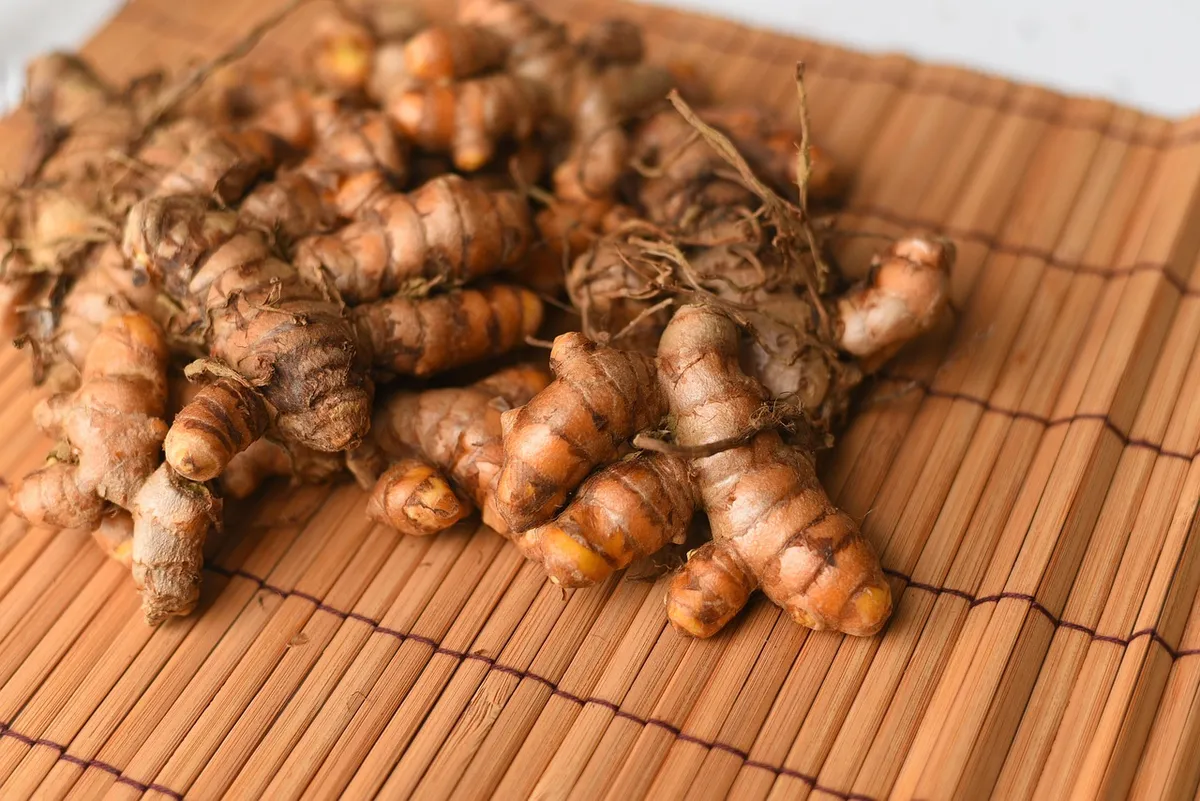
Farmers dig up the rhizome clumps by hand or with a plough. They shake off the soil, cut away roots and leaves, and wash the rhizomes. They then separate the clumps into two parts:
- Fingers: the side branches, usually 2.5–7.5 cm long. These are the main commercial product.
- Bulbs: the central mother rhizomes, which are rounder and thicker. Some are kept as seed for the next crop.
Fingers and bulbs are processed separately, because bulbs take longer to cook and dry.
Why Is Turmeric Boiled and Cured?
Boiling, also called curing, is done within three or four days of harvest. The rhizomes are boiled in water until they are soft, typically for 45 to 60 minutes. Traditionally, cooking is complete when froth forms, white fumes rise and the turmeric gives off its typical smell. A soft rhizome can be pierced easily with a blunt stick.
Boiling has three purposes:
- it removes the raw, earthy smell of fresh turmeric;
- it gelatinises the starch and spreads the colour evenly through the rhizome, giving a uniform yellow;
- it kills the living tissue, so the rhizome dries faster and does not sprout.
Over-boiling makes the rhizomes too soft and can spoil the colour. Under-boiling leaves raw cores that dry slowly and may go mouldy. Some processors now use steam boilers instead of open pans, which gives more even cooking and saves fuel.
How Are Turmeric Fingers Dried?
After boiling, the rhizomes are spread in thin layers on clean drying floors, mats or concrete yards and dried in the sun. They are turned regularly so that they dry evenly. Sun drying usually takes 10 to 15 days, until the rhizomes are hard and break with a metallic snap.
Export fingers are dried to 10% moisture or less. Drying also decides the yield. Only about 20–25% of the fresh weight remains as dry turmeric, so 100 kg of fresh rhizomes gives about 20–25 kg of dried fingers, depending on variety and location.
Drying is the step where hygiene matters most. Rhizomes dried on bare ground can pick up soil, stones and microbes. Damp weather slows drying and raises the risk of mould and aflatoxin. Clean surfaces, cover against rain and mechanical driers in bad weather all help protect quality.
How Are Turmeric Fingers Polished and Graded?
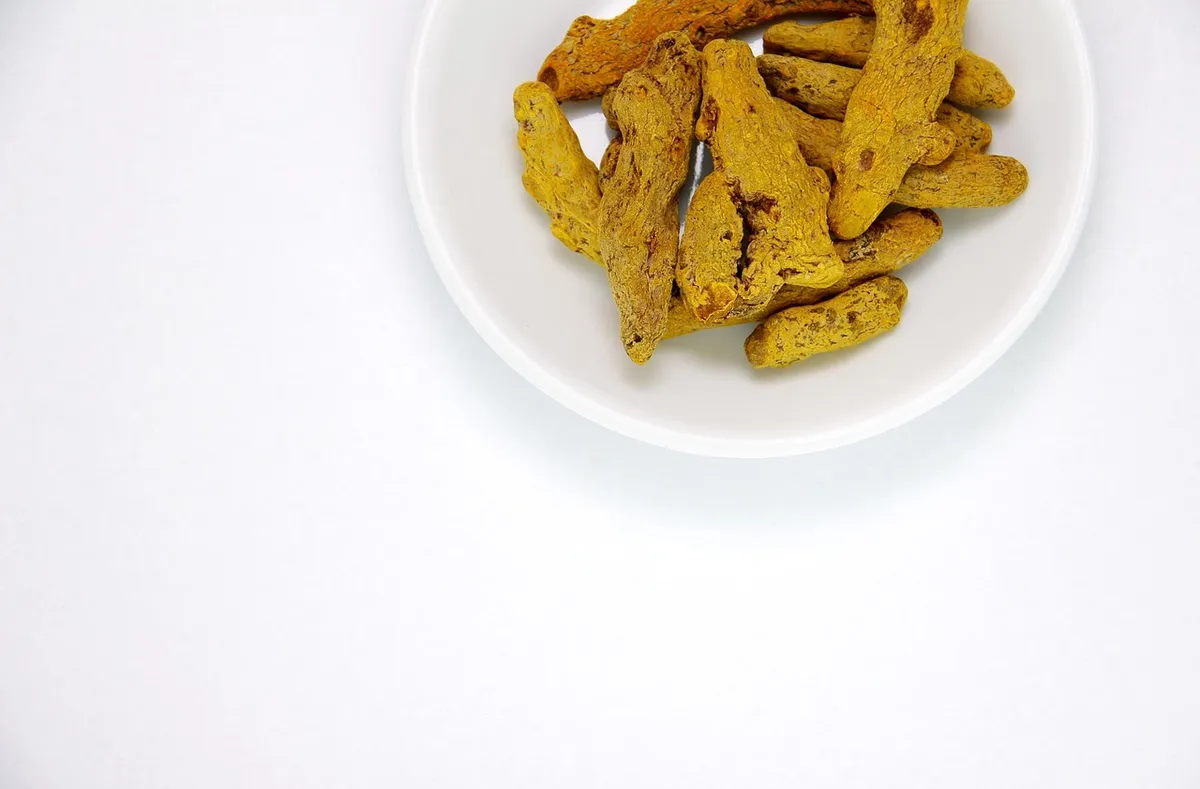
Dried turmeric has a rough, dull, scaly surface with root bits attached. Polishing removes this outer layer and gives a smooth, brighter finger. It is done by rubbing the fingers in hand-turned or power-driven drums. Full polishing removes about 5–8% of the weight, and half polishing about 2–3%.
Fingers are sold as unpolished, single-polished or double-polished. Polishing should be purely mechanical. It is also the step where some processors have added colour, including lead chromate, to make weak turmeric look brighter. That is why double-polished fingers, and powder ground from them, should always be tested for lead and chromate. Our article on lead and adulteration in turmeric explains this risk in detail.
After polishing, turmeric is graded into fingers, bulbs and splits (cut bulbs), and fingers are sorted by length, usually 3–6 cm. Indian turmeric is also traded by origin, which indicates curcumin: Nizamabad about 2–2.25%, Erode about 2.5–3%, Salem about 3–3.5%, and Alleppey or Lakadong 5% or more.
How Is Turmeric Ground, Sieved and Packed?
In the spice mill, dried fingers are cleaned again to remove dust, stones and metal. They are then broken, ground in hammer or pulveriser mills, and sieved to the required mesh. Oversize particles go back to the mill. Magnets and metal detectors check the powder before packing. Some buyers also ask for steam sterilisation to lower the microbial load.
| Step | What happens | Key control |
|---|---|---|
| Pre-cleaning | Sieving, destoning and aspiration of dried fingers | Remove soil, stones and foreign matter |
| Grinding | Fingers milled in hammer or pulveriser mills | Avoid overheating, which can reduce aroma and colour |
| Sieving | Powder passed through 60, 80 or 100 mesh screens (250, 177 or 149 µm) | About 98% through the agreed mesh |
| Metal control | Magnets and metal detector | No metal fragments |
| Steam sterilisation (optional) | Live steam treatment, then drying | Low micro counts; no ethylene oxide |
| Packing | 25 kg paper or PP bags with liner | Lot number on every bag; dry, odour-free storage |
Grinding, sieving and packing steps for export turmeric powder.
The choice of fingers decides the powder. Mills that make curry powder and blends often use Nizamabad turmeric with 2–2.5% curcumin. Retail powder and food colour users usually want 3% or more, from Erode or Salem turmeric. Buyers who need 4–5% or more ask for Salem selections, Alleppey or Lakadong. Blending lots of different origins is common, so ask for the curcumin result of the finished powder, not just the origin name.
Which Quality Checks Apply: Curcumin, Moisture and Contaminants?
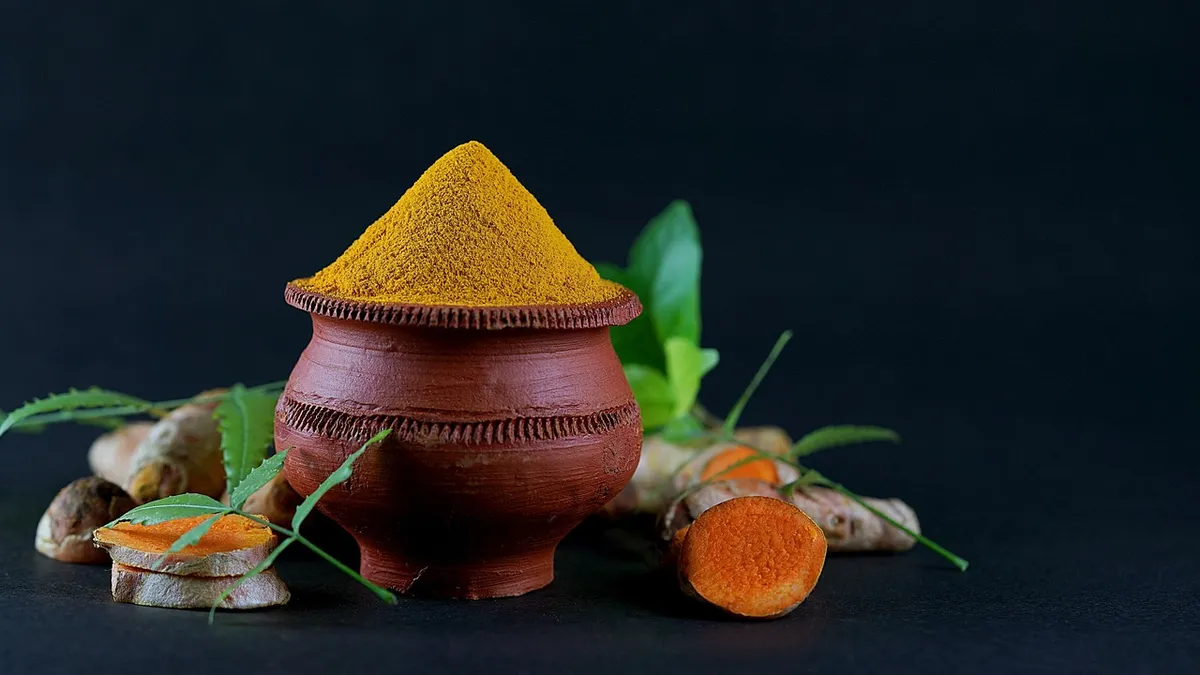
Each lot of powder is tested before shipment. A typical export specification covers:
- Curcumin: at least 2%, often 2.5–3% or more by contract, measured by HPLC or the ASTA method.
- Moisture: 10% maximum.
- Total ash and acid-insoluble ash: 9% and 1.5% maximum, which control sand and mineral fillers.
- Starch: 60% maximum, with no added starch.
- Lead and chromate: lead 1.5 mg/kg maximum (EU limit for root spices) and chromate negative.
- Dyes: Sudan I–IV and metanil yellow not detected.
- Mycotoxins: aflatoxin B1 5 µg/kg and total 10 µg/kg maximum, and ochratoxin A 15 µg/kg maximum.
- Microbiology and residues: Salmonella absent in 25 g, and pesticide residues within destination limits.
For the EU, turmeric shipments go through the Spices Board’s mandatory sampling and carry the official ethylene oxide certificate. Our lab testing page sets out the full panel, and you can learn more about colour strength in our article on curcumin content in turmeric.
How Do You Source Turmeric Powder from India?
Knowing what turmeric powder is made of helps you write a tight specification: origin, curcumin, mesh, treatment and test panel. Elysium Agri Corporation exports turmeric powder ground only from whole turmeric fingers of known origin, with no added colour, starch or fillers. We offer 2–5% curcumin in 60, 80 or 100 mesh, with a steam-sterilised option, and every batch is tested for curcumin, lead and chromate, dyes, aflatoxin, microbiology and pesticides. We can also pack under your brand through our private label service.
Tell us the curcumin level, mesh, quantity and destination, and we will send a quote and specification sheet. Request a turmeric powder quote →
Frequently asked questions
How is turmeric powder made?
Fresh turmeric rhizomes are harvested, washed and boiled for about 45 to 60 minutes, then sun-dried for 10 to 15 days to about 10% moisture. The dried fingers are polished, graded and cleaned, then ground in a mill and sieved to 60, 80 or 100 mesh. Each lot is tested before it is packed.
Why is turmeric boiled before drying?
Boiling, or curing, removes the raw earthy smell, gelatinises the starch and spreads the colour evenly through the rhizome. It also kills the living tissue so the rhizome dries faster and cannot sprout. Rhizomes are usually boiled within three or four days of harvest, until they are soft enough to pierce easily.
How long does turmeric take to dry?
Boiled turmeric usually takes 10 to 15 days to dry fully in the sun, spread in thin layers and turned regularly. It is ready when the rhizomes are hard and snap cleanly. Export fingers are dried to 10% moisture or less. Mechanical driers are used in wet weather to reduce the risk of mould.
What is turmeric polishing?
Polishing removes the rough, scaly outer skin and root bits of dried turmeric by rubbing the fingers in rotating drums. It gives a smoother, brighter finger. Full polishing removes about 5–8% of the weight. Polishing should be purely mechanical, and polished fingers should be tested for lead chromate, which has been used illegally to brighten colour.
How is turmeric powder tested for quality?
Laboratories test curcumin by HPLC or the ASTA method, plus moisture, total and acid-insoluble ash, starch, lead and chromium, synthetic dyes such as Sudan and metanil yellow, aflatoxin, ochratoxin A, Salmonella and pesticide residues. EU shipments also need Spices Board sampling and an official ethylene oxide certificate.
Related reads


