
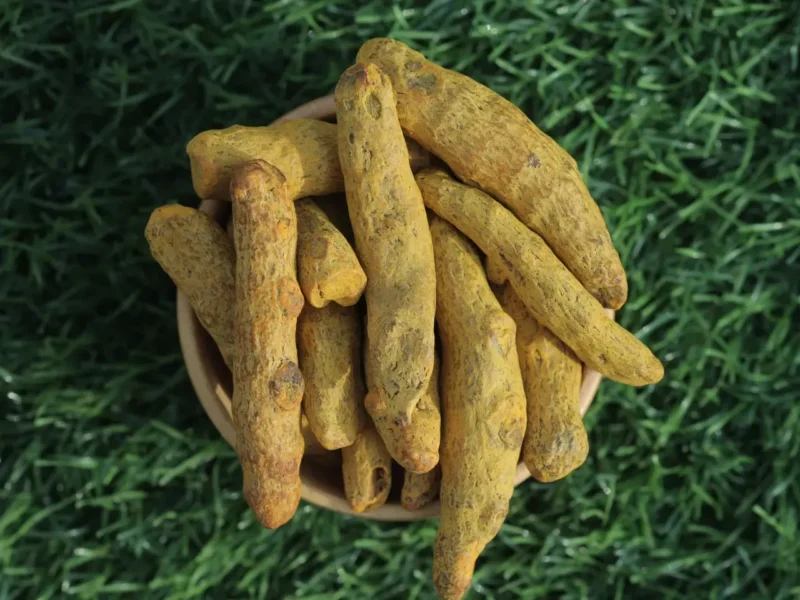
On this page
- What Is Curcumin Content in Turmeric?
- Why Do Curcumin Levels Vary?
- Which Turmeric Varieties Have the Highest Curcumin?
- How Is Curcumin Content Tested?
- How Does Curcumin Compare with Colour Value and Other Specifications?
- How Do You Write a High Curcumin Turmeric Specification?
- Which Tests and Certificates Should You Request?
- How Do You Buy High Curcumin Turmeric from India?
- Frequently asked questions
High curcumin turmeric is turmeric with a curcumin content of about 3% or more. Most Indian export turmeric contains 2–5% curcumin, and the level depends mainly on the variety and the growing region. Salem turmeric usually tests at 3–3.5%, while Lakadong and Alleppey turmeric can reach 5% or more. This guide explains why curcumin varies, how it is tested and how to write it into a purchase contract.
Key takeaways
- Codex sets a minimum of 2% curcumin for dried turmeric. Most export buyers ask for 2.5–3% or more.
- Origin is the best guide to curcumin: Nizamabad about 2–2.25%, Erode 2.5–3%, Salem 3–3.5%, Lakadong 6.8–7.5%.
- Spectrophotometric and HPLC methods give different results, so name the test method in your contract.
- A high curcumin result is only useful if the lot also passes lead, chromate and dye tests.
What Is Curcumin Content in Turmeric?
Curcumin content is the share of yellow pigment in dried turmeric, given as a percentage of the dry weight. Strictly, the pigment is a group of three related compounds called curcuminoids: curcumin, demethoxycurcumin and bisdemethoxycurcumin. In trade, the total of all three is usually reported as “curcumin”. So a turmeric curcumin percentage of 3% means that 100 g of dried turmeric contains about 3 g of curcuminoids.
Curcumin gives turmeric its colour and much of its commercial value. Spice grinders use it to set colour strength. Food makers use it as a natural yellow colour. Oleoresin and extract plants pay by the kilogram of curcumin they can recover. For all three buyers, a higher curcumin content means more value from each tonne of raw material.
Why Do Curcumin Levels Vary?
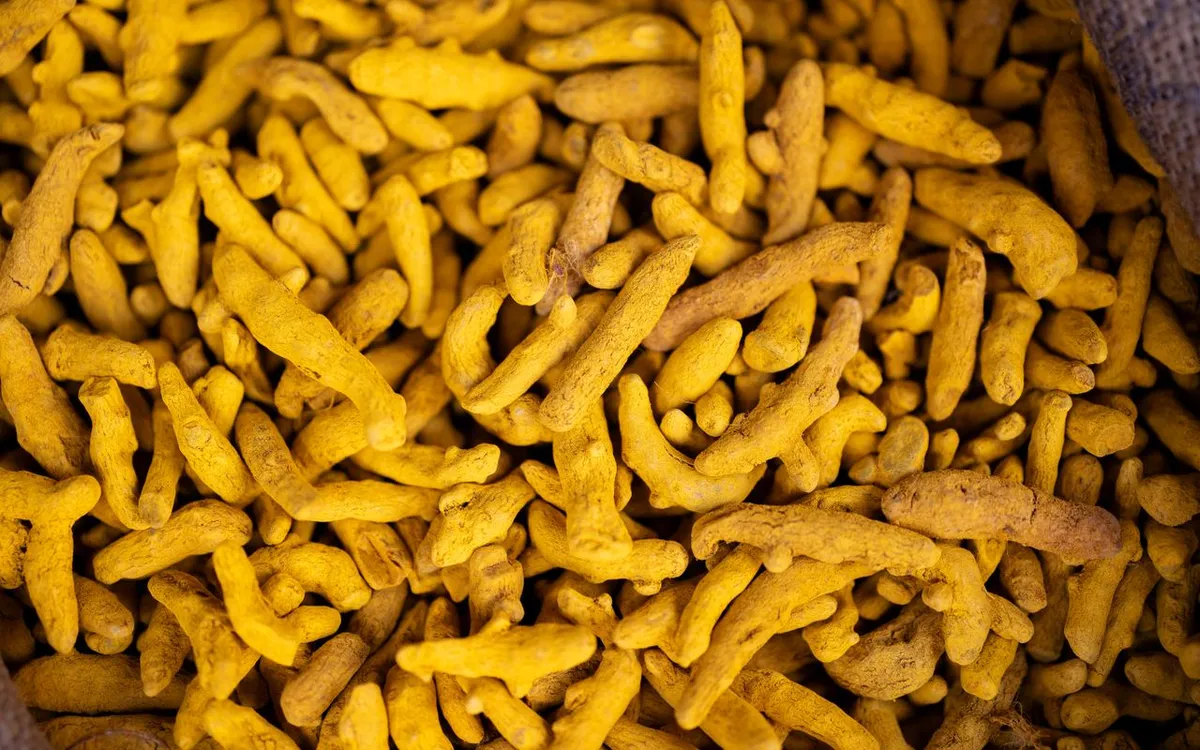
Curcumin levels vary mainly because of the variety, then because of the growing conditions and the post-harvest handling. Two lots from the same market can still differ, so every lot needs its own test.
- Variety and genetics: this is the largest factor. Some cultivars build up much more pigment in the rhizome than others, whatever the farm practice.
- Soil, climate and altitude: the same variety can give different results in different regions. This is one reason why origin names such as Salem, Erode and Lakadong carry a price difference.
- Crop maturity: rhizomes harvested at full maturity, usually seven to nine months after planting, tend to have more developed colour.
- Boiling and drying: fresh rhizomes are boiled or steamed and then sun dried. Long exposure to strong sunlight, over-boiling or slow drying can reduce the pigment.
- Storage: curcumin is sensitive to light. Ground turmeric loses colour faster than whole fingers, especially in clear packs.
Polishing changes the look of the finger, not the curcumin inside it. A bright, double-polished finger is not proof of high curcumin. Only a lab test can confirm the level.
Which Turmeric Varieties Have the Highest Curcumin?
Lakadong turmeric from Meghalaya and Alleppey turmeric from Kerala have the highest curcumin among Indian origins. Among the large trading origins, Salem is higher than Erode, and Erode is higher than Nizamabad. The table shows typical ranges for export lots.
| Variety / origin | Typical curcumin | Look | Common use |
|---|---|---|---|
| Nizamabad (Telangana) | 2.0–2.25% | Bright yellow, bold fingers | Volume grinding, Middle East, Bangladesh |
| Erode (Tamil Nadu, GI) | 2.5–3.0% | Yellow, medium fingers | Powder and curry blends |
| Salem (Tamil Nadu) | 3.0–3.5% | Deep yellow-orange, bright | Premium powder and colour |
| Alleppey (Kerala) | 5%+ | Deep orange | Oleoresin, extracts, high-colour powder |
| Lakadong (Meghalaya, GI) | 6.8–7.5% | Deep orange | Curcumin extraction, premium retail |
Typical curcumin ranges for Indian turmeric origins. Each lot is confirmed by lab test.
Lakadong and Alleppey turmeric are grown in smaller volumes and cost more. For most grinding and blending work, Salem or a good Erode lot gives enough colour at a lower price. Nizamabad and Sangli turmeric suit buyers who need large volumes at a competitive price and can accept curcumin close to the 2% minimum.
How Is Curcumin Content Tested?
Curcumin content is tested in a lab by one of two main methods: spectrophotometry or high-performance liquid chromatography (HPLC). Both start with a ground sample and a solvent extraction of the pigment.
- Spectrophotometric method: the extract is measured for how much light it absorbs at the yellow wavelength. The ASTA 18.0 method and ISO 5566 (colouring power of turmeric) work this way. The test is fast and low in cost, and it is widely used for trade samples.
- HPLC method: the extract is separated into the three curcuminoids, and each is measured on its own. HPLC is more specific and is preferred by extract makers and buyers who need exact figures.
The two methods do not always agree. A spectrophotometric result can read higher, because other yellow compounds in the extract also absorb light. If your supplier tests by one method and your own lab uses the other, small differences are normal. Agree the method before shipment, and use the same method for the pre-shipment test and any arrival test.
How Does Curcumin Compare with Colour Value and Other Specifications?
Curcumin is the most important quality figure for turmeric, but it is only one part of a full specification. Colour, cleanliness and safety tests decide whether a lot can be sold at all.
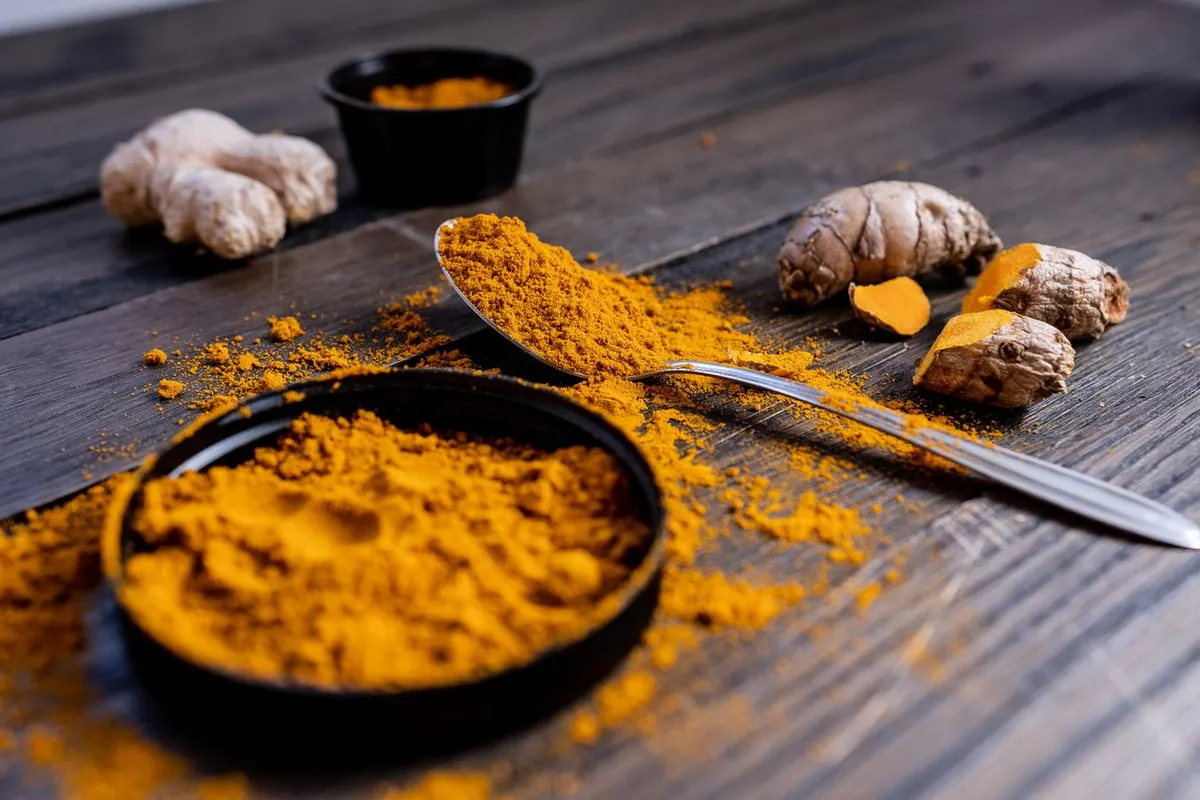
Curcumin and colour are linked. Higher curcumin turmeric gives a deeper yellow-orange colour, and a stronger colour per gram in your blend. However, colour seen by eye can mislead. Polishing makes the outside of the finger brighter, and in the worst cases lead chromate or synthetic dyes have been used to fake colour. This is why a curcumin result must always come with safety tests.
Export turmeric fingers typically meet these limits as well: moisture of 10% or less, total ash of 8% or less, acid-insoluble ash of 1.5% or less, lead of 1.5 mg/kg or less and a negative chromate test. Aflatoxin, ochratoxin A, Salmonella and pesticide residues are tested against the rules of your market. Buyers of ground turmeric also check starch, mesh size and the absence of Sudan dyes and metanil yellow. You can read more about the safety risks in our lab testing overview.
How Do You Write a High Curcumin Turmeric Specification?
Write a minimum curcumin figure, the test method and the basis of the result into your specification. A clear specification prevents disputes when the goods arrive. We suggest these points:
- Minimum curcumin: state a minimum, for example “curcumin 3.0% min”, rather than a range. Set it a little below the typical figure for your chosen origin.
- Test method: name the method, for example “ASTA 18.0” or “HPLC, total curcuminoids”.
- Basis: say whether the result is on a dry basis or “as is”. The dry-basis figure is higher because water is excluded.
- Origin and form: name the origin (for example Salem), fingers or bulbs, and polished or unpolished.
- Safety limits: include lead, chromate, dyes, aflatoxin, ochratoxin A, Salmonella and pesticide residues.
- Physical limits: moisture, ash, acid-insoluble ash, foreign matter and finger size.
- Sampling and dispute rule: say who draws the sample, which lab tests it and how a difference between labs will be settled.
If you buy for a price per unit of curcumin, as many extract makers do, add a price adjustment for each 0.1% above or below the agreed level. Our landed cost calculator helps you compare origins once freight and duty are added.
Which Tests and Certificates Should You Request?
Ask for a Certificate of Analysis for your specific lot, issued before loading by an accredited lab. A general product sheet is not enough. The table lists the documents most turmeric buyers request.
| Document | What it confirms |
|---|---|
| Certificate of Analysis (lot-wise) | Curcumin, moisture, ash, lead, chromate, dyes, mycotoxins, microbiology, pesticides |
| Phytosanitary certificate | Plant health inspection by India’s plant quarantine authority |
| Certificate of origin | Indian origin, and preferential duty where a trade agreement applies |
| Spices Board registration | The exporter is registered to export spices from India |
| Third-party inspection (optional) | Independent sampling at stuffing by SGS, Intertek or Bureau Veritas |
Common documents for a turmeric finger shipment from India.
Check that the Certificate of Analysis shows the lot number printed on the bags, the test method for curcumin and the name of the lab. Our certificates page lists our registrations, and our quality page explains how we sample and hold lots until results are clear.
Related reading: What Is Turmeric Powder Made Of? How Turmeric Is Processed and Lead in Turmeric: Adulteration Risks and Tests for Importers.
How Do You Buy High Curcumin Turmeric from India?
Start by matching the origin to your end use, then ask for a type sample with a lab report. Test the sample in your own product before you agree the contract. India grows about 80% of the world’s turmeric and exported about 1.76 lakh tonnes worth US$ 327 million in 2025-26, according to the Spices Board, so supply is broad. Good high-curcumin lots still sell quickly after harvest.
Elysium Agri Corporation exports dried turmeric fingers from Salem, Erode, Nizamabad and Sangli, with 2–5% curcumin by variety, and Alleppey or Lakadong lots on request. We polish mechanically only, with no colourant, and test every lot for curcumin, lead, chromate, aflatoxin and pesticide residues. We pack in 25 or 50 kg jute or PP bags, and a 40 ft container holds about 25–28 MT. If you need ground turmeric, see our turmeric powder with a stated curcumin grade.
Tell us your required curcumin level, test method, origin and quantity, and we will send a price with the specification sheet. Request a high curcumin turmeric quote →
Frequently asked questions
What is a typical curcumin percentage in turmeric?
Most Indian export turmeric contains 2–5% curcumin. Codex sets a minimum of 2% for dried turmeric. Nizamabad lots are usually about 2–2.25%, Erode 2.5–3% and Salem 3–3.5%. Alleppey turmeric can exceed 5%, and Lakadong turmeric from Meghalaya can reach about 6.8–7.5%.
How is curcumin content in turmeric tested?
A lab grinds a representative sample and extracts the pigment with a solvent. It then measures it by spectrophotometry, such as the ASTA 18.0 or ISO 5566 method, or by HPLC, which separates the three curcuminoids. The methods can give slightly different results, so the contract should name the method used.
Which turmeric variety has the highest curcumin?
Lakadong turmeric from Meghalaya has the highest curcumin among Indian origins, typically about 6.8–7.5%. Alleppey turmeric from Kerala usually has 5% or more. Among the large trading origins, Salem turmeric is the highest at about 3–3.5%, followed by Erode and then Nizamabad.
Why does curcumin content matter to turmeric buyers?
Curcumin sets the colour strength and much of the value of turmeric. Grinders need it to meet the colour of their blends, food makers use it as a natural colour, and extract plants pay by the amount of curcumin they recover. Higher curcumin turmeric gives more colour or extract per tonne bought.
Does curcumin content affect turmeric colour?
Yes. Higher curcumin gives a deeper yellow-orange colour and stronger colouring power in food. However, the outer look of a finger can mislead, because polishing brightens the surface. Colour should always be confirmed by a curcumin test, together with tests for lead chromate and synthetic dyes.
Related reads


