

On this page
- What Are the Food Import Requirements for Saudi Arabia?
- What Is the SFDA?
- How Does SFDA Registration Work for Importers?
- How Do Product Registration and Shipment Clearance Work?
- What Are the Labelling and Shelf-Life Requirements?
- Which Documents Are Required for Import?
- What Are the Common Reasons for Rejection or Delay?
- How Can You Source Food for Saudi Arabia from India?
- Frequently asked questions
To import food into Saudi Arabia, the importer must complete SFDA registration of its establishment and its food products on the SFDA’s Ghad platform, then clear each shipment through the Fasah platform with a health certificate, certificate of origin, invoice and, for crops, a phytosanitary certificate. Labels must be in Arabic and follow the Gulf standards for labelling and expiry dates. The Saudi Food and Drug Authority (SFDA) controls food imports, and it can sample and test any shipment at the port. This guide explains each requirement for importers of agri commodities such as pulses, spices, seeds and peanuts.
Key takeaways
- SFDA registration covers both the importing establishment and each food product, and both are done on the Ghad platform before import.
- Shipment documents are submitted electronically through Fasah, the national customs platform.
- Labels must be in Arabic under SFDA.FD/GSO 9, with expiry dates under SFDA.FD/GSO 150-1.
- Most delays come from missing certificates, unregistered products, non-Arabic labels and failed laboratory tests.
What Are the Food Import Requirements for Saudi Arabia?
Saudi food import requirements fall into four groups: registering the importer, registering the products, clearing each shipment and labelling. The rules are set out in the SFDA’s Conditions and Requirements for Food Clearance. All food must also comply with the Saudi and Gulf technical regulations that apply to the product.
Saudi Arabia is a member of the Gulf Cooperation Council (GCC), so many of its food standards are Gulf Standardization Organization (GSO) standards adopted by the SFDA. If you already ship to the UAE, much will look familiar, but the registration and clearance systems are Saudi-specific. Our guide to food import requirements for the UAE covers the neighbouring market.
What Is the SFDA?
The Saudi Food and Drug Authority is the government body that regulates food, medicines, medical devices and cosmetics in the Kingdom. For food, it registers importers and products, sets and adopts technical regulations, inspects shipments at the border and runs laboratory testing. Its decision decides whether a food consignment is released, held or rejected.
The SFDA works with the Zakat, Tax and Customs Authority (ZATCA) at the ports. Customs procedures run through the Fasah platform, and the SFDA’s food clearance checks are part of that process. For buyers of Indian agri commodities, the main entry ports are Jeddah Islamic Port on the Red Sea and King Abdulaziz Port in Dammam on the Gulf.

How Does SFDA Registration Work for Importers?
The importer must register its establishment with the SFDA on the Ghad platform before it can clear food. In practice this is a Saudi company with a valid commercial registration. The foreign exporter does not register as the importer, although it supplies product data and documents.
The SFDA also requires food importers to use a licensed warehouse. There are exemptions. Local factories importing raw materials for their own production are exempt, as are importers with no more than five shipments a year and a combined weight of 2,000 kg or less. A trader importing full containers of pulses or seeds will normally need a licensed warehouse.
How Do Product Registration and Shipment Clearance Work?
Each food product must be registered on the Ghad platform before it is imported. The importer enters product details such as name, ingredients, origin, manufacturer and label information. Registration should be completed before the goods are shipped, because an unregistered product cannot be cleared on arrival.
When a shipment arrives, the importer or its customs broker submits the documents electronically on Fasah. The SFDA reviews the file and may inspect the cargo. It can also take samples free of charge for laboratory analysis. The importer pays for the analysis, and unpaid fees cause delays. For bulk agri commodities, tests can cover pesticide residues, aflatoxins, heavy metals, microbiology and physical quality. A clean pre-shipment test report from the exporter reduces the risk of a failed port test, although the SFDA may still test the goods itself.
What Are the Labelling and Shelf-Life Requirements?
Food labels must be in Arabic and follow SFDA.FD/GSO 9, the labelling standard for pre-packaged food. English can appear as well, but Arabic is required. Expiry dates must follow SFDA.FD/GSO 150-1, which sets how production and expiry dates are shown and the expiry periods for food products. There is one exception: food for manufacturing use can carry English-only labels if the importer submits a commitment on Fasah.
A retail label normally shows the product name, the ingredient list, net content in metric units, the name and address of the manufacturer or packer and of the importer, the country of origin, the lot or batch number, the production and expiry dates, storage conditions and any allergens. Peanuts, sesame and other allergens must be declared. Batch numbers and expiry dates must also appear on the commercial invoice.
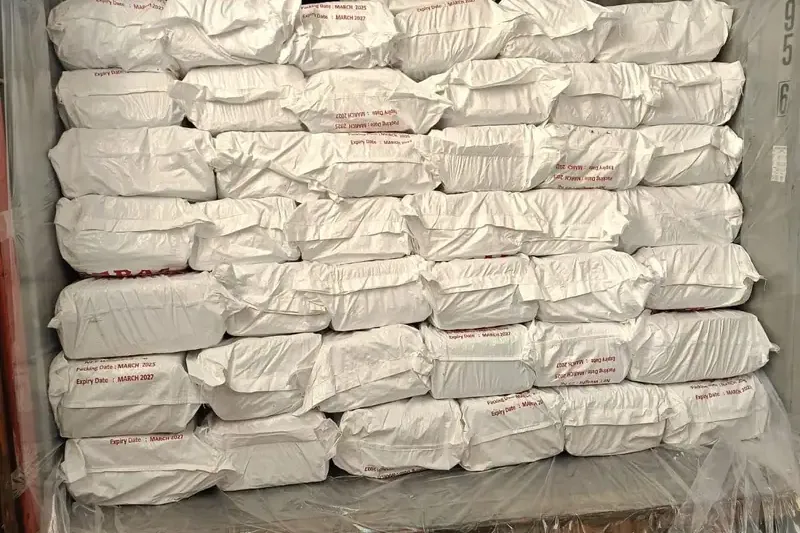
Bulk 25 kg or 50 kg bags for repacking or processing still need clear marks: product, grade, origin, net weight, lot number, production date and expiry or best-before date. Agree the bag marking with your exporter before loading. Our packaging page explains how we print bags and labels for each market.
Which Documents Are Required for Import?
The SFDA lists the following documents for food clearance. Not every document applies to every product, so check the list for your product before you sign the contract.
| Document | Issued by | When required |
|---|---|---|
| Commercial invoice | Exporter | Always; must show product details, quantities, batch numbers and expiry dates |
| Bill of lading | Shipping line | Always for sea freight |
| Certificate of origin | Chamber of commerce or authorised agency | Always |
| Health certificate | Competent authority in the exporting country | Always |
| Phytosanitary certificate | Plant protection authority (India: Plant Quarantine) | Grains, agricultural crops, fresh fruit and vegetables |
| Certificate of conformity | Approved conformity body | Mandatory for some countries; optional for others |
| Halal certificate | Recognised halal body | Where required by regulation; always for meat, poultry and gelatine |
| Organic or gluten-free certificate | Accredited certifier | Only if the product makes that claim |
For plant products like pulses and spices, halal certification is usually a buyer requirement rather than a legal one, but many Saudi buyers ask for it. Our guide to halal certification in India explains how it works. The phytosanitary certificate guide covers how that document is issued in India.
What Are the Common Reasons for Rejection or Delay?
Most problems at Saudi ports come from paperwork and registration, not from the food itself. The common causes are:
- Unregistered importer or product. The establishment or product is not on Ghad when the goods arrive.
- Missing or wrong certificates. A health or phytosanitary certificate is missing, or its details do not match the invoice.
- Label problems. No Arabic label, missing dates, or an expiry date that does not follow GSO 150-1.
- Short remaining shelf life. Goods arrive too close to expiry for the buyer or the market to accept them.
- Failed laboratory tests. Pesticide residues, aflatoxin or microbiology results exceed the limits.
- Unpaid sampling fees. Analysis costs are not paid, so the file stays open.
You can prevent most of these by agreeing the document list, the label text and the test panel with your exporter before shipment, and by checking that every document carries the same product name, lot numbers and weights.
Related reading: Shipping Time from India to Dubai, Europe and Other Markets and FDA Prior Notice: How to Import Food into the USA.
How Can You Source Food for Saudi Arabia from India?
Choose an Indian exporter that already ships to the GCC, tests every lot and can print Arabic labels. Before your first order, complete SFDA registration for your company and products, share the label text and document list with the exporter, and agree the test parameters. This keeps clearance smooth at Jeddah or Dammam.
Elysium Agri Corporation exports pulses, chickpeas, grains, sesame, spices and peanuts from Jamnagar, Gujarat, and Saudi Arabia is one of our markets. We pack to GSO 9:2022 with Arabic labelling for GCC buyers and declare allergens. Every lot is tested at an NABL-accredited lab before loading; see our lab testing page. We provide the phytosanitary certificate, certificate of origin and Certificate of Analysis with each shipment, and our registrations are on the certificates page. Retail packs under your brand are available through our private label service.
Tell us the product, grade, quantity and Saudi port, and we will send a quote with the specification sheet and document list. Request a Saudi Arabia shipment quote →
Frequently asked questions
What are the requirements to import food into Saudi Arabia?
The importer must register its establishment and each food product with the SFDA on the Ghad platform, use a licensed warehouse unless exempt, and clear each shipment on Fasah with an invoice, bill of lading, certificate of origin and health certificate. Crops also need a phytosanitary certificate. Labels must be in Arabic under SFDA.FD/GSO 9.
What is SFDA registration?
SFDA registration is the process of recording a food importer's establishment and its food products with the Saudi Food and Drug Authority on the Ghad platform. Both must be registered before the goods arrive. Without registration, the shipment cannot be cleared, so importers should complete it before the exporter ships the first container.
Do food importers need an SFDA licence?
Yes. Food importers must register their establishment with the SFDA and normally need a licensed warehouse. The SFDA exempts local factories importing raw materials for their own use and importers with no more than five shipments a year and a combined weight of 2,000 kg or less. Commercial traders of container loads usually need the licence.
What must Saudi food labels include?
Labels must be in Arabic and follow SFDA.FD/GSO 9. They normally show the product name, ingredients, net content, manufacturer and importer details, country of origin, batch number, storage conditions, allergens, and production and expiry dates under SFDA.FD/GSO 150-1. Food for manufacturing may use English-only labels if the importer files a commitment on Fasah.
How can I source food from an Indian exporter for Saudi Arabia?
Choose an exporter that already ships to the GCC, tests every lot at an accredited lab and can print Arabic labels. Complete your SFDA registration first, then share the label text, document list and test parameters with the exporter. Ask for a phytosanitary certificate, certificate of origin and Certificate of Analysis with each shipment.
Related reads


