
On this page
- How Much Calcium Do Sesame Seeds Contain?
- What Are Sesame’s Nutrition Facts per 100 g?
- How Does Calcium Differ Between Natural and Hulled Sesame?
- What Other Key Nutrients Does Sesame Provide?
- What Does the Research Say About Sesame Calcium?
- What Are Practical Ways to Include Sesame in Meals?
- How Can You Source Sesame Seeds from India?
- Frequently asked questions
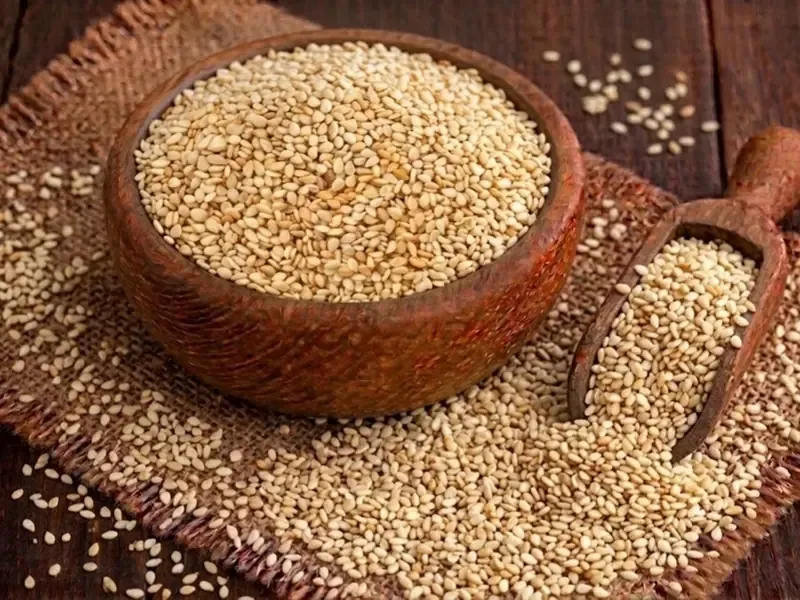
On sesame seeds and calcium, the short answer is that whole, unhulled sesame seeds contain about 975 mg of calcium per 100 g, or roughly 88 mg in one tablespoon, according to USDA data. Hulled sesame contains far less, about 131 mg per 100 g, because much of the calcium sits in the hull. Part of the calcium in the hull is bound as calcium oxalate, which the body absorbs poorly. This fact sheet explains the numbers, the research and how to use sesame in everyday meals.
Key takeaways
- Whole dried sesame seeds contain 975 mg of calcium per 100 g (USDA FoodData Central).
- Hulled, toasted sesame kernels contain 131 mg per 100 g, so hulling removes most of the calcium.
- Research shows about half of the calcium in whole sesame is calcium oxalate in the hull, which is poorly absorbed.
- Sesame also supplies healthy fats, fibre, protein, magnesium, iron, zinc and copper.
How Much Calcium Do Sesame Seeds Contain?
According to USDA FoodData Central, whole dried sesame seeds contain 975 mg of calcium per 100 g. Roasted and toasted whole seeds contain 989 mg. On paper, that is more calcium per gram than almost any other plant food, and far more than whole milk, which contains 113 mg per 100 g.
Portions tell a different story. One tablespoon of whole sesame seeds weighs about 9 g and gives about 88 mg of calcium. For comparison, the US National Institutes of Health sets the recommended daily allowance for most adults aged 19 to 50 at 1,000 mg. So sesame seeds can add calcium to a diet, but the amounts people normally eat make them a useful contributor rather than a main source.
What Are Sesame’s Nutrition Facts per 100 g?
The table shows the key nutrients in whole and hulled sesame, using USDA FoodData Central values. Whole seed is what the export trade calls natural sesame.
| Per 100 g | Whole, dried (natural) | Whole, roasted and toasted | Kernels, toasted (hulled) |
|---|---|---|---|
| Energy (kcal) | 573 | 565 | 567 |
| Protein (g) | 17.7 | 17.0 | 17.0 |
| Total fat (g) | 49.7 | 48.0 | 48.0 |
| Fibre (g) | 11.8 | 14.0 | 16.9 |
| Calcium (mg) | 975 | 989 | 131 |
| Iron (mg) | 14.6 | 14.8 | 7.8 |
| Magnesium (mg) | 351 | 356 | 346 |
| Phosphorus (mg) | 629 | 638 | 774 |
| Zinc (mg) | 7.8 | 7.2 | 10.2 |
| Copper (mg) | 4.1 | 2.5 | 1.5 |
Source: USDA FoodData Central (FDC 170150, 170151 and 170152).
Sesame is about half fat, and most of that fat is unsaturated: USDA lists 18.8 g monounsaturated and 21.8 g polyunsaturated fat per 100 g of whole seed, against 7.0 g saturated. It is also energy-dense, at nearly 6 kcal per gram.
How Does Calcium Differ Between Natural and Hulled Sesame?
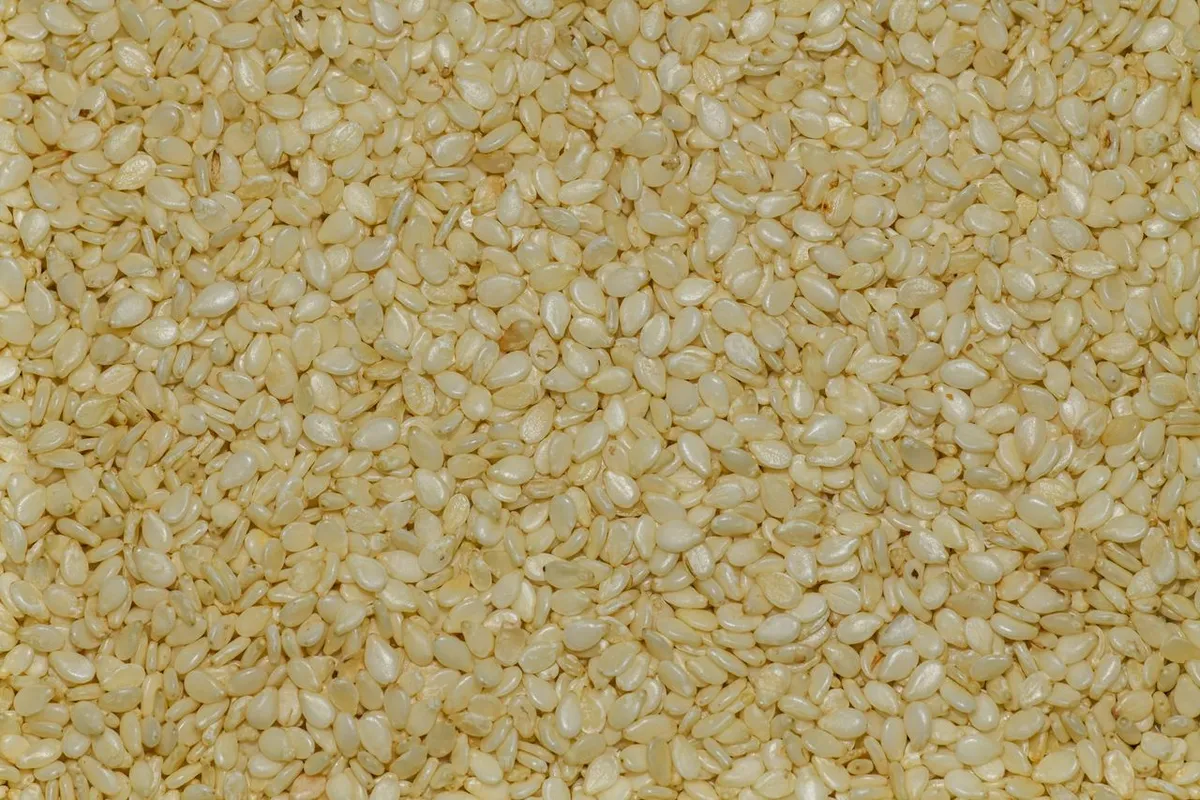
Hulled sesame has much less calcium than natural sesame, because the hull is where most of the calcium is stored. USDA data show 975 mg per 100 g for whole dried seed and 131 mg for toasted hulled kernels, a drop of about 85%.
Hulling, also called decortication, removes the thin outer seed coat to leave a bright white, mild seed. It is done either mechanically, by soaking and rubbing, or chemically, with a caustic soda solution. Hulled seed is the standard choice for tahini, halva, burger buns and sushi, because it looks cleaner and tastes softer. Natural seed is nuttier and crunchier and keeps more calcium and fibre. If calcium content matters for your product, specify natural sesame and state it in your contract.
The same pattern shows up in sesame pastes. USDA lists 960 mg of calcium per 100 g for sesame paste made from whole seeds, and 426 mg per 100 g for the most common type of tahini, made from roasted and toasted hulled kernels. Values for hulled products vary between samples and processes, so a brand that wants to make a calcium statement should test its own product rather than rely on general tables.
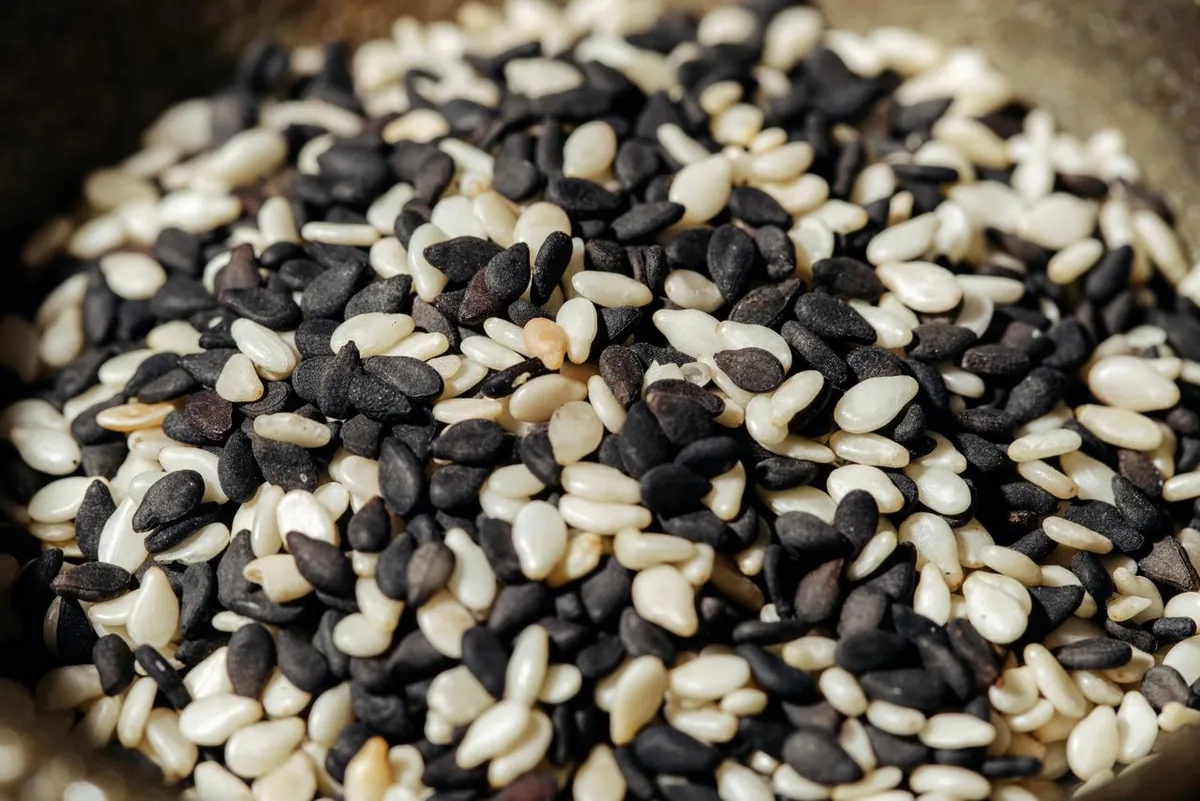
Black sesame is usually sold unhulled, so it also keeps its seed coat. USDA FoodData Central does not list a separate entry for black sesame, and published values vary by variety and origin. If you need a figure for labelling, ask for a lab analysis of the lot you buy.
What Other Key Nutrients Does Sesame Provide?
Beyond calcium, sesame is a rich source of several minerals and useful plant compounds:
- Healthy fats: mostly monounsaturated and polyunsaturated fatty acids.
- Protein: about 17–18 g per 100 g.
- Fibre: 11.8 g per 100 g in whole seed.
- Magnesium, phosphorus and zinc: present in both whole and hulled seed.
- Iron and copper: higher in whole seed than in hulled seed.
- Lignans: sesame contains plant compounds such as sesamin and sesamolin, which are widely studied.
Sesame is also a major food allergen in many countries, including the EU, the UK and the USA, where it must be declared on labels. People with a sesame allergy should avoid it in every form.
What Does the Research Say About Sesame Calcium?
Research suggests that the calcium in whole sesame is less available to the body than the high figure suggests. A study by Ishii and Takiyama, published in the Journal of Cookery Science of Japan in 2000, found that about half of the calcium in dried sesame seeds was present as calcium oxalate crystals, almost all of them in the hull.
Oxalate binds calcium and reduces how much the body can absorb. The NIH calcium fact sheet notes that plant compounds such as oxalic acid and phytic acid can decrease calcium absorption by forming indigestible salts with calcium. It gives spinach as an example: only about 5% of its calcium is absorbed, compared with about 27% from milk. Sesame contains both oxalate and phytate.
Some studies have looked at soaking, roasting and other processing to reduce these anti-nutrients and improve mineral availability, but results vary with the method. The fair summary is that whole sesame is a good contributor of calcium as part of a varied diet, but it should not be counted as equal to the same number of milligrams from dairy or fortified foods.
What Are Practical Ways to Include Sesame in Meals?
Sesame is easy to add to everyday food in small amounts. Common ways include:
- Sprinkling toasted seeds over salads, rice, noodles and vegetables.
- Using tahini in hummus, dressings and sauces.
- Baking seeds onto bread, buns and crackers.
- Making traditional sweets such as chikki, til ladoo and halva.
- Coating fish, chicken or tofu before cooking.
- Grinding seeds into chutneys and spice mixes.
Lightly toasting the seeds brings out their nutty flavour. Grinding or chewing them well also helps, because whole seeds can pass through the gut without being fully broken down. For more ideas, see our guide on how to eat sesame seeds.
Keep portions in mind. A tablespoon or two a day adds flavour, minerals and fibre without adding too many calories. Because sesame is high in fat, store it in a cool, dry place in a closed container, and buy amounts you will use within a few months so the seeds do not turn rancid.

This article is for general information and is not medical or dietary advice.
Related reading: Sesame Seeds for Oil: Oil-Grade vs Food-Grade Sesame.
How Can You Source Sesame Seeds from India?
For food makers interested in sesame seeds and calcium, the key decision is natural or hulled. Natural sesame keeps the calcium-rich hull; hulled sesame gives a whiter, milder product. Specify the type, purity grade, cleaning method and test panel in your contract, and ask for a lot-wise Certificate of Analysis.
India is one of the world’s largest sesame exporters. It shipped about 244,000 tonnes of sesame worth US$ 497 million in 2024, and most export-grade white sesame comes from Gujarat. Elysium Agri Corporation exports natural, hulled and black sesame from Jamnagar, Gujarat, in sortex-cleaned grades up to 99.98% purity. Every lot is tested for Salmonella, ethylene oxide, pesticide residues and aflatoxin before loading, as set out on our lab testing page. A 20 ft container holds about 19 MT. Our full range is on the sesame products page.
Tell us the type, grade, quantity and destination port, and we will send a quote and specification sheet. Request a sesame quote →
Frequently asked questions
How much calcium is in sesame seeds?
According to USDA FoodData Central, whole dried sesame seeds contain 975 mg of calcium per 100 g, and roasted whole seeds contain 989 mg. Hulled sesame kernels contain much less, about 131 mg per 100 g, because most of the calcium is in the hull. Actual amounts vary with variety, growing conditions and processing.
Are sesame seeds a good source of calcium?
Whole sesame seeds are high in calcium on paper, but people usually eat them in small amounts, and part of the calcium is bound as calcium oxalate in the hull, which is poorly absorbed. They are a useful contributor of calcium in a varied diet, but they should not replace dairy or fortified foods as a main source.
Do hulled sesame seeds have less calcium?
Yes. Hulling removes the seed coat, where most of the calcium is stored. USDA data show 975 mg of calcium per 100 g in whole dried seed and 131 mg in toasted hulled kernels, a drop of about 85%. Hulled seed is whiter and milder, which suits tahini, halva and burger buns.
How much calcium is in a tablespoon of sesame seeds?
A tablespoon of whole sesame seeds weighs about 9 g and contains roughly 88 mg of calcium, based on USDA values. A tablespoon of hulled sesame contains only about 12 mg. For context, the US recommended daily allowance for most adults aged 19 to 50 is 1,000 mg of calcium.
Is the calcium in sesame seeds well absorbed?
Not fully. A Japanese study found that about half of the calcium in whole sesame is calcium oxalate in the hull. Oxalate and phytate form salts with calcium that the body absorbs poorly. Grinding, chewing well and eating sesame as part of a varied diet help, but its calcium is less available than milk calcium.
Related reads


