
On this page
- How Can You Eat Sesame Seeds?
- Can You Eat Sesame Seeds Raw?
- Are Roasted Sesame Seeds Better?
- Should You Soak Sesame Seeds?
- How Is Sesame Eaten as Tahini and Paste?
- What Does the Research Say About Eating Sesame?
- How Do Sesame Preparation Methods Compare?
- How Can You Buy Sesame Seeds in Bulk?
- Frequently asked questions
You can eat sesame seeds raw, roasted, soaked, sprouted or ground into tahini and paste. Roasting brings out the nutty flavour, and grinding the seed into tahini or a paste is the simplest way to make sure it is fully chewed and digested. How to eat sesame also depends on the form you buy: natural (unhulled) seeds, hulled white seeds or black seeds. This guide compares each method and summarises what the research says, for food brands, bakers and home cooks alike.
Key takeaways
- Sesame seeds are safe to eat raw when they come from a clean, tested lot, but most people prefer them toasted.
- Whole, unhulled sesame is far richer in calcium than hulled sesame, according to USDA data.
- Roasting lowers some polyphenols but can raise overall antioxidant activity through browning reactions.
- Sesame is a major food allergen in the EU, the UK, the USA and many other markets, so it must be declared on labels.
How Can You Eat Sesame Seeds?
There are five common ways to eat sesame seeds. Each one changes the taste, texture and the way the seed is used in food.
- Raw: sprinkled on salads, yoghurt, cereals or smoothies, or pressed onto bread and buns before baking.
- Roasted or toasted: dry-roasted in a pan or oven until golden, then used as a topping, in chikki and brittle, or in spice mixes such as za’atar and gomasio.
- Soaked or sprouted: soaked in water for a few hours, or sprouted, and then eaten or blended into drinks and spreads.
- As tahini or paste: roasted, hulled seeds ground into a smooth paste for hummus, dressings, halva and sauces. Black sesame paste is popular in East Asian desserts.
- As oil: pressed into sesame oil, either cold-pressed from raw seed or made from roasted seed for a darker, stronger flavour.
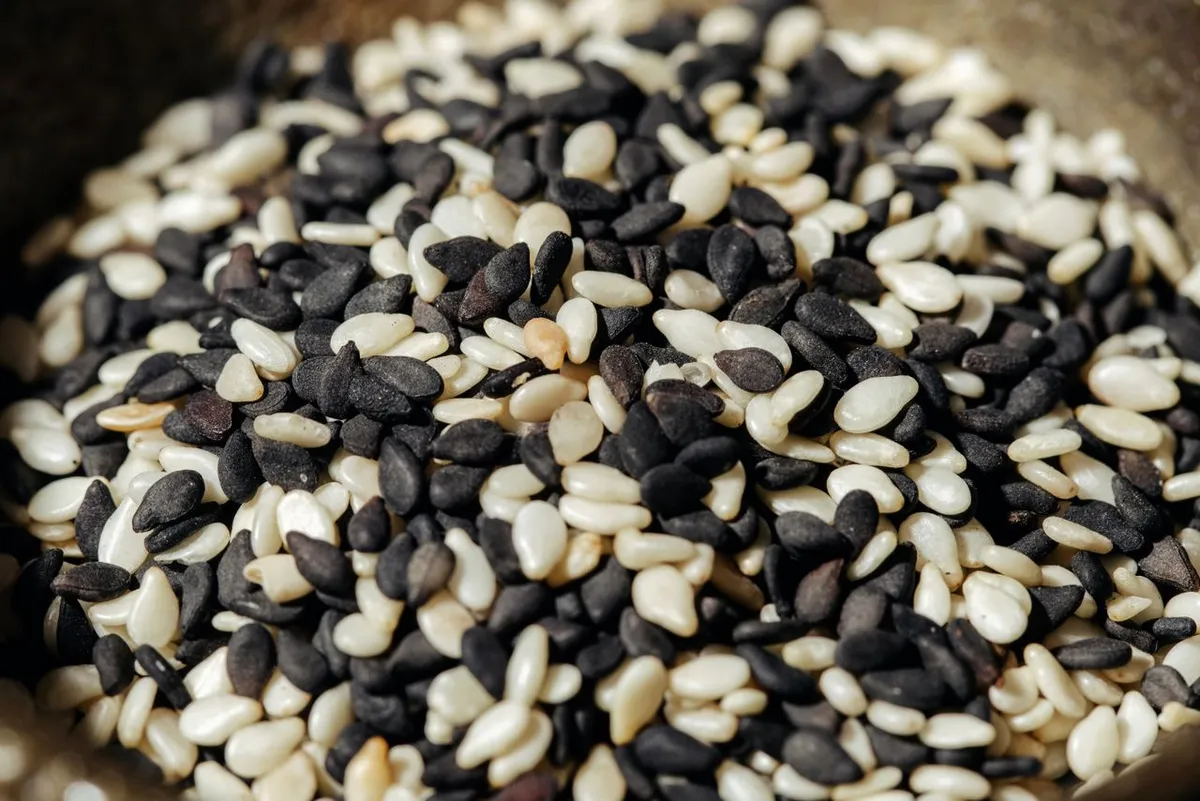
The type of seed matters too. Natural sesame keeps its hull and is crunchy and slightly bitter. Hulled sesame is white, soft and mild. Black sesame has a stronger, earthy taste.
Food manufacturers use the same methods at scale. Bakeries press raw seeds onto buns and crackers, confectioners roast seeds for brittle and sesame bars, and tahini plants grind roasted hulled seed into paste. Spice blenders add toasted seeds to seasonings, and Asian food brands grind black sesame into fillings and sweet soups.
Can You Eat Sesame Seeds Raw?
Yes, you can eat sesame seeds raw. They are a dry, low-moisture seed and do not need cooking to be safe, provided the seed comes from a clean lot that has been tested for microbes.
This testing matters because raw sesame is used in ready-to-eat foods with no further heating. Salmonella is the main microbial risk in sesame. Reputable exporters therefore test every lot and require Salmonella to be absent in 25 g. Our lab testing page explains the full panel, which also covers ethylene oxide, pesticide residues and aflatoxin.
Raw sesame has a mild, slightly sweet taste. It suits muesli, energy bars, salads and bread toppings, where the seed will be baked anyway. Small whole seeds are easy to swallow without chewing, so a part of them may pass through the body intact. Chewing well, or grinding the seeds, helps.
Are Roasted Sesame Seeds Better?
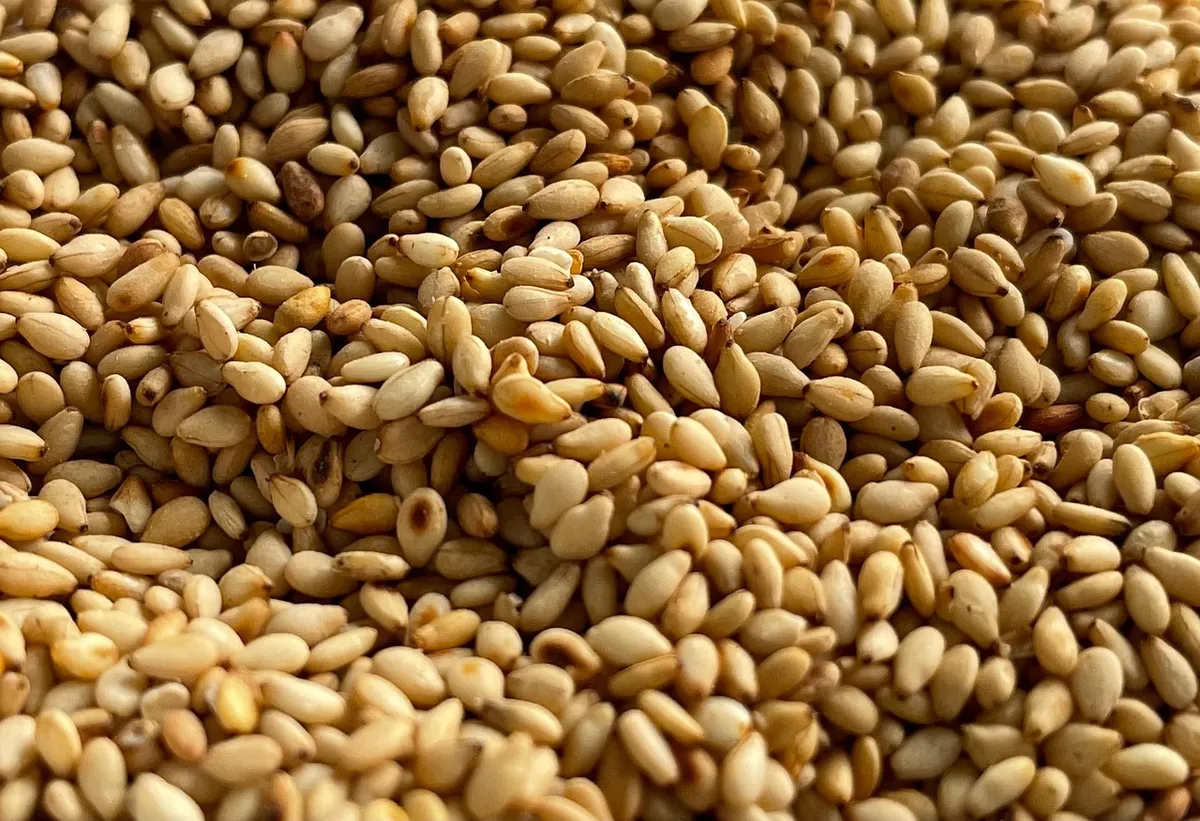
Roasted sesame seeds are not necessarily healthier, but they taste better to most people and are easier to grind. Roasting dries the seed, deepens the colour and creates the familiar nutty aroma.
To roast sesame at home, heat a dry pan over a low to medium flame and stir the seeds for a few minutes until they turn light golden and start to pop. Remove them from the pan straight away, because they burn quickly. Industrial roasters use controlled ovens or drum roasters. For tahini, hulled sesame is commonly roasted at around 130 °C before grinding.
Roasting changes the seed’s chemistry. A 2024 study in the Journal of Agriculture and Food Research found that roasting Ethiopian sesame lowered total phenolic content by 16.4% to 50%. Yet the roasted seeds showed higher antioxidant activity in lab tests, which the authors linked to new compounds formed by the Maillard (browning) reaction.
Should You Soak Sesame Seeds?
Soaking sesame seeds is optional. It softens the seed, makes it easier to blend into milk or spreads, and is a traditional step in some kitchens.
Soaking is often said to reduce natural compounds such as phytate and oxalate, which can bind minerals. Studies on processing do report changes in these compounds after soaking, roasting and dehulling, but the size of the effect varies with the method and the seed. If you soak sesame, use clean water, keep the time to a few hours and dry or use the seeds promptly to avoid spoilage.
In industry, sesame is also soaked during mechanical hulling. The seed is soaked in water, the hull is removed by friction, and the kernel is dried and sortex-cleaned. This is how we produce our hulled white sesame.
How Is Sesame Eaten as Tahini and Paste?
Tahini is sesame seeds roasted and ground into a smooth paste. It is the easiest way to eat sesame in quantity, because grinding breaks every seed open.
To make tahini, roast hulled sesame lightly, cool it, and grind it in a food processor until the oil releases and a smooth paste forms. A little neutral oil can help. Hulled seed gives a lighter, smoother and less bitter paste than unhulled seed. Commercial tahini makers use stone or colloid mills and keep the roast consistent from batch to batch.
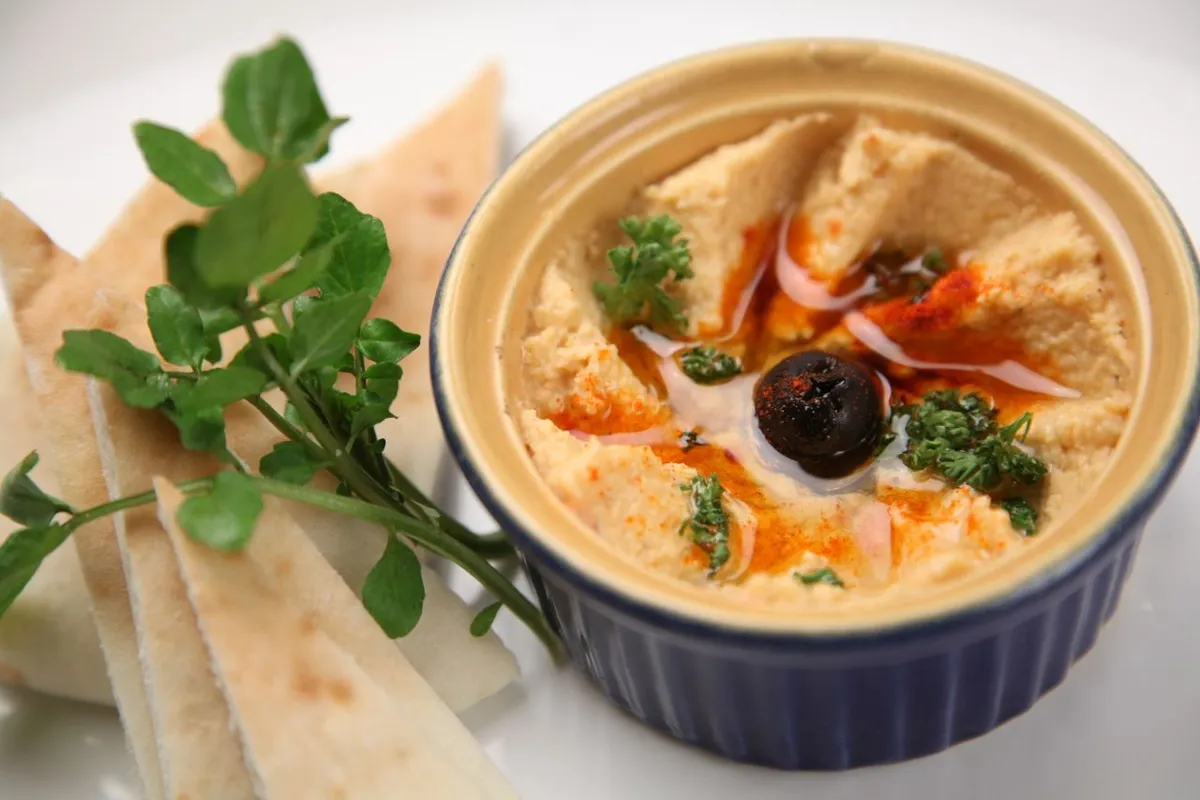
Tahini is used in hummus, baba ganoush, dressings, sauces and halva. Unhulled tahini and black sesame paste are darker and stronger, and are used in health-food and Asian dessert products.
What Does the Research Say About Eating Sesame?
Sesame is an energy-dense seed rich in fat, protein, fibre and minerals. The figures below come from USDA FoodData Central (SR Legacy) per 100 g.
- Whole, dried sesame: about 573 kcal, 17.7 g protein, 49.7 g fat, 11.8 g fibre, 975 mg calcium, 14.6 mg iron and 351 mg magnesium.
- Hulled (decorticated) kernels: about 631 kcal, 20 g protein, 61 g fat, 11 g fibre, 60 mg calcium, 6 mg iron and 345 mg magnesium.
The big difference is calcium. Most of it sits in the hull, so hulled sesame has far less. However, the hull also holds oxalate, which can reduce how much of that calcium the body absorbs, so the label figure does not tell the whole story. A 2025 review in the Journal of Food Biochemistry describes sesame’s lignans, such as sesamin and sesamol, as the subject of ongoing research. Most of that work is laboratory or small human studies, so it should not be read as proof of health effects.
Sesame is also a major allergen. It must be declared on labels in the EU and the UK, and it became the ninth major food allergen in the USA under the FASTER Act from 1 January 2023.
How Do Sesame Preparation Methods Compare?
| Method | Taste and texture | Best seed type | Typical uses | Points to note |
|---|---|---|---|---|
| Raw | Mild, crunchy | Natural or hulled | Salads, muesli, bread toppings | Use a Salmonella-tested lot |
| Roasted | Nutty, aromatic, crisp | Natural, hulled or black | Toppings, chikki, spice blends | Burns quickly; store airtight |
| Soaked or sprouted | Soft, mild | Natural | Seed milk, spreads, smoothies | Use or dry promptly |
| Tahini or paste | Smooth, rich | Hulled (light) or natural and black (dark) | Hummus, halva, sauces, desserts | Grinding breaks every seed |
| Oil | Light (raw) or dark (roasted) | Natural | Cooking, dressings, flavouring | Fibre and most minerals stay in the cake |
A quick guide to how to eat sesame in its main forms.
This article is for general information and is not medical or dietary advice.
Related reading: Sesame Seeds and Calcium: How Much Calcium Is in Sesame? and Sesame Allergen Labeling Rules in the US, EU and GCC.
How Can You Buy Sesame Seeds in Bulk?
Whichever way your customers eat sesame, the product starts with the right grade. Bakeries usually buy natural or hulled seed for toppings, tahini makers buy mechanically hulled seed, and Asian food brands buy black sesame.
Elysium Agri Corporation exports natural, hulled and black sesame from Jamnagar, Gujarat. We supply natural white sesame from 99/1 to 99.95% purity and mechanically hulled sesame from 99.95% to 99.98%. Every lot is tested for Salmonella, ethylene oxide, pesticide residues and aflatoxin before loading. A 20 ft container holds about 19 MT. Our private label service covers retail packs, and our certificates page lists our registrations.
Send us your grade, quantity and destination port, and we will reply with a price and specification sheet. Request a sesame quote →
Frequently asked questions
Can you eat sesame seeds raw?
Yes. Sesame seeds are safe to eat raw as long as they come from a clean lot tested for Salmonella and other contaminants. Raw seeds taste mild and work well in salads, muesli and bread toppings. Chew them well or grind them, because small whole seeds can pass through the body intact.
Is it better to eat sesame seeds roasted?
Roasting improves flavour and makes seeds easier to grind. A 2024 study found that roasting lowered total phenolic content in sesame but raised antioxidant activity in lab tests, linked to browning reactions. Neither form is clearly better, so choose by taste and use, and avoid burning the seeds.
Should sesame seeds be soaked before eating?
Soaking is optional. It softens the seeds, makes them easier to blend into milks and spreads, and may change levels of compounds such as phytate and oxalate. If you soak sesame, use clean water, keep the time to a few hours, and dry or use the seeds promptly to avoid spoilage.
How do you make tahini from sesame seeds?
Lightly roast hulled sesame seeds until pale golden, then let them cool. Grind them in a food processor until the oil releases and a smooth paste forms, adding a little neutral oil if needed. Hulled seeds give a lighter, less bitter tahini; natural or black seeds give a darker, stronger paste.
Do sesame seeds need to be ground to be digested?
Not always, but grinding helps. Sesame seeds are small and are often swallowed without being fully chewed, so some may pass through the body whole. Chewing well, or eating sesame as tahini, paste or ground seed, breaks the seed coat and makes its nutrients easier for the body to access.
Related reads


