
On this page
- What Is an HS Code?
- What Is the Full Form and Meaning of the Harmonized System?
- How Are HS Codes Structured: Chapters, Headings and Subheadings?
- Why Do HS Codes Matter for Duties and Documents?
- How Are Agro Products Classified Under the HS?
- Which Classification Mistakes Should You Avoid?
- How Do You Find the Right HS Code for Your Shipment?
- How Does Elysium Agri Handle HS Codes on Your Shipment?
- Frequently asked questions
The full form of HS code is Harmonized System code, short for the Harmonized Commodity Description and Coding System. It is a six-digit product classification maintained by the World Customs Organization and used by more than 200 countries and economies to set duties and record trade. Every export and import document carries an HS code, so getting it right affects your duty, your paperwork and the speed of customs clearance. This guide explains the meaning, the structure and how to find the right code for agro products.
Key takeaways
- HS stands for Harmonized System, the Harmonized Commodity Description and Coding System of the World Customs Organization.
- The first six digits are the same in every member country. Countries add their own digits for more detail.
- India uses 8-digit ITC-HS codes, the EU uses 8-digit CN codes and the USA uses 10-digit HTS codes.
- Processing can change the code: whole and ground cumin, or raw and roasted peanuts, are classified differently.
What Is an HS Code?
An HS code is a number that identifies a product in international trade. Customs officers use it to decide the import duty, apply trade rules and collect trade statistics. Exporters and importers write it on the commercial invoice, the shipping bill, the bill of entry and many certificates.
The code describes what a product is, not who sells it or where it comes from. Whole cumin seeds, for example, are HS 0909.31 whether they come from India, Syria or Turkey. Because the same six digits are used worldwide, a buyer in Dubai and a seller in Gujarat can refer to the same product without confusion.
What Is the Full Form and Meaning of the Harmonized System?
The full form of HS code is Harmonized System code. The full name of the system is the Harmonized Commodity Description and Coding System. “Harmonized” means that countries use one shared list instead of separate national lists, and “coding system” means each product group has a fixed number.
The system is managed by the World Customs Organization (WCO). According to the WCO, it covers more than 5,000 commodity groups, is used by more than 200 countries and economies, and classifies over 98% of the goods in international trade. It came into force in 1988 under the HS Convention.
The HS is updated every five to six years to reflect new products and trade patterns. The current edition is HS 2022, and the WCO has adopted amendments for HS 2028, which take effect in January 2028. Each update can split, merge or move codes, so exporters should check their codes when a new edition starts.
How Are HS Codes Structured: Chapters, Headings and Subheadings?
HS codes are built in layers, from broad to specific. The system is divided into sections, then chapters, headings and subheadings. Each pair of digits adds detail.
- Chapter (first 2 digits): a broad product group. Chapter 09 covers coffee, tea, maté and spices.
- Heading (first 4 digits): a narrower group within the chapter. Heading 0909 covers seeds of anise, coriander, cumin, caraway, fennel and juniper.
- Subheading (first 6 digits): the specific product. Subheading 0909.31 is cumin seeds, neither crushed nor ground.
- National digits (7 to 10): added by each country. India’s ITC-HS code for whole cumin is 0909 31 29.
So when someone asks how many digits an HS code has, the answer is six at the international level. India uses eight digits for exports and imports. The EU uses eight-digit Combined Nomenclature (CN) codes, with ten-digit TARIC codes for duties, and the USA uses ten-digit Harmonized Tariff Schedule (HTS) codes.
Classification follows fixed legal rules, not guesswork. The General Rules for the Interpretation of the Harmonized System set the order in which headings are applied, starting with the wording of the headings and the section and chapter notes. The WCO also publishes Explanatory Notes, which describe what each heading covers. Customs officers use both when they check a declaration, so exporters should use them too.
Why Do HS Codes Matter for Duties and Documents?
HS codes matter because they decide how much duty you pay and which rules apply to your goods. A wrong code can lead to extra cost, delays or penalties.
- Import duty: each national tariff line carries a duty rate. For example, peanut butter under EU CN 2008 11 10 carries a 12.8% third-country duty.
- Trade agreements: preferential rates under free trade agreements depend on the code and the rules of origin linked to it.
- Export policy: India’s DGFT sets export policy by ITC-HS code, such as “free”, “restricted” or “prohibited”.
- Food safety controls: EU rules on increased checks for certain foods from certain countries are listed by code.
- Documents: the code must match across the invoice, packing list, shipping bill, certificate of origin and phytosanitary certificate.
How Are Agro Products Classified Under the HS?
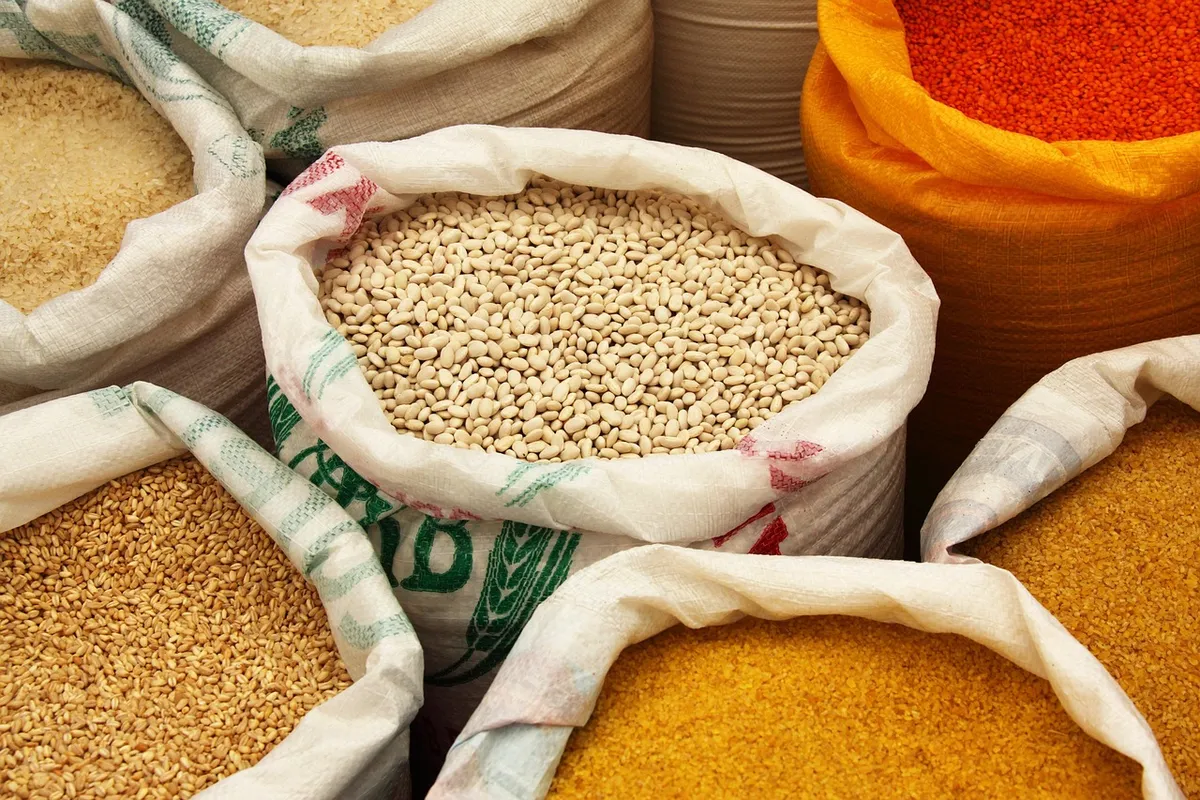
Most agro commodities fall in Chapters 07 to 12, while processed items often move to Chapters 11, 20 or 23. The table shows codes for common products as declared on Indian shipping bills.
| Product | HS (6-digit) | India ITC-HS (8-digit) | Chapter |
|---|---|---|---|
| Bold or Java peanut kernels | 1202.42 | 1202 42 10 | 12 (oilseeds) |
| In-shell peanuts | 1202.41 | 1202 41 10 / 1202 41 90 | 12 |
| Roasted peanuts, peanut butter | 2008.11 | 2008 11 xx | 20 (prepared foods) |
| Sesame seeds (natural, hulled, black) | 1207.40 | 1207 40 90 | 12 |
| Cumin seeds, whole | 0909.31 | 0909 31 29 | 09 (spices) |
| Coriander seeds | 0909.21 | 0909 21 90 | 09 |
| Turmeric powder | 0910.30 | 0910 30 30 | 09 |
| Kabuli chickpeas | 0713.20 | 0713 20 10 | 07 (vegetables, pulses) |
| Dehydrated onion powder | 0712.20 | 0712 20 00 | 07 |
| Soyabean meal | 2304.00 | 2304 00 30 | 23 (feed) |
Codes as used on Indian shipping bills. The importing country’s customs decides the final classification.
Which Classification Mistakes Should You Avoid?
Most HS code mistakes come from ignoring how a product is processed. A change in form can move a product to a different subheading or even a different chapter.
- Whole vs ground: whole cumin is 0909.31 but ground cumin is 0909.32.
- Raw vs roasted: roasting moves peanuts from 1202 to 2008 11, and chickpeas from 0713 20 to 2008 19.
- Fresh vs dried: fresh onions are under 0703, but dehydrated onion is 0712 20.
- Blanched peanuts: India commonly declares them under 1202 42, but some importing countries classify them under 2008 11.
- Using only six digits: the national tariff line, not the six-digit code, sets the duty rate.
- Copying an old code: codes change with each HS edition, so check them after every update.
A wrong code can lead to underpaid duty, fines, held cargo, or a lost preferential rate. When the classification is unclear, ask for a binding tariff ruling from the customs authority in the importing country.
How Do You Find the Right HS Code for Your Shipment?
Start with an accurate product description: the product name, its form (whole, split, ground, roasted), and its use. Then search the official tariff of the importing country. For India, this is the CBIC Customs Tariff or the DGFT ITC-HS schedule. Confirm the code with your customs broker before you sign the contract, and make sure your supplier uses the same code on every document.
Our free HS code finder lists the 8-digit ITC-HS code, the 6-digit HS code and the current export policy for every product we ship. Once you know your code, the landed cost calculator helps you estimate duty and delivered cost, and the container load calculator shows how much fits in each container.

Related reading: How to Find Suppliers in India: A 12-Point Exporter Checklist and FOB Full Form in Export: Meaning, Costs and Risk.
How Does Elysium Agri Handle HS Codes on Your Shipment?
Elysium Agri Corporation, based in Jamnagar, Gujarat, exports peanuts, sesame, spices, pulses, grains, dehydrated vegetables and animal feed. We declare the correct ITC-HS code on each shipping bill and keep it consistent across the invoice, certificate of origin and phytosanitary certificate. In a mixed container, each product is declared under its own code with its own lab report. Our registrations are listed on the certificates page. If you are still unsure about the full form of HS code or the right line for your product, our export desk can help.
Tell us the product, quantity and destination, and we will send a quote with the HS code and document list. Request an export quote →
Frequently asked questions
What is the full form of HS code?
HS code stands for Harmonized System code. The full name of the system is the Harmonized Commodity Description and Coding System, managed by the World Customs Organization. It gives each product group a six-digit number that more than 200 countries and economies use to set customs duties and to collect trade statistics.
How many digits does an HS code have?
The international HS code has six digits: two for the chapter, two more for the heading and two more for the subheading. Countries then add their own digits. India uses eight-digit ITC-HS codes, the EU uses eight-digit CN codes with ten-digit TARIC codes for duties, and the USA uses ten-digit HTS codes.
Who assigns HS codes and how are they updated?
The World Customs Organization maintains the six-digit Harmonized System, and national customs authorities set the extra digits. The WCO updates the system every five to six years. The current edition is HS 2022, and HS 2028 takes effect in January 2028. Exporters should review their codes whenever a new edition starts.
How do I find the HS code for an agro product?
Describe the product precisely, including its form, such as whole, ground, raw or roasted. Then search the official tariff of the importing country, or India's CBIC tariff and DGFT ITC-HS schedule for exports. Our free HS code finder lists codes for the products we ship. Always confirm the final code with your customs broker.
What happens if the wrong HS code is used on export documents?
A wrong code can lead to the wrong duty being paid, fines, delays while customs reviews the shipment, or loss of a preferential duty rate under a trade agreement. It can also break document consistency between the invoice and certificates. If a code is unclear, ask the importing country's customs for a binding tariff ruling.
Related reads


