
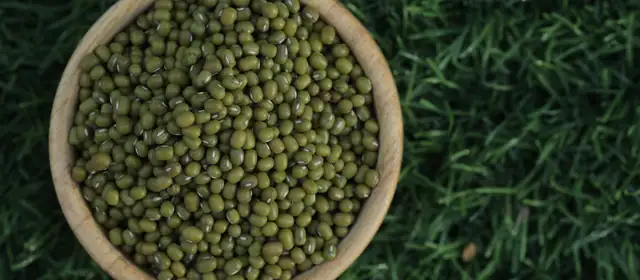
Moong, Urad, Lentils and Peas from India, Bagged and Documented for Saudi Importers
One grade through the whole lot, and papers that match your SFDA product registration.
If you import pulses into Saudi Arabia, Elysium Agri Corporation can supply green moong, moong mogar, urad, pigeon peas, red and green lentils and green peas from Gujarat, India. Lots are cleaned at specialist processing units, tested at an NABL-accredited lab and shipped from Mundra, Kandla or Pipavav.
India shipped about US$22 million of pulses to Saudi Arabia in 2025. Many Saudi importers and wholesalers repack for retail, and repacking needs the same grade in every bag and documents that agree with what you registered. SFDA registers each product separately, so tell us exactly which pulses you bring in.
Pulses We Supply to Saudi Arabia
| Grade / form | Typical specification | Used for |
|---|---|---|
| Green moong (whole) | Machine-cleaned and sorted; size and moisture as per your specification | Wholesale, retail repacking |
| Moong mogar | Split and skinned; colour as per your specification | Dal packs, food service |
| Urad | Whole or split; as per your specification | Wholesale, catering |
| Pigeon peas | Whole or split (toor dal); as per your specification | Retail packs, catering |
| Red and green lentils | Whole or split; size and colour as per your specification | Soups, retail packs |
| Green peas | Whole dried; size as per your specification | Retail packs, food processing |
Import Rules for Pulses in Saudi Arabia
Pulses are plain plant commodities, so the checks are on registration, marking and safety.
- Register each pulse in your SFDA E-Account before import: HS code, barcode, ingredients in Arabic and English, label and pack images.
- File the documents on FASAH, the ZATCA customs platform, at least 48 hours before the vessel arrives.
- Marking: product name, packer name and address, country of origin and shelf life, in Arabic or with an Arabic translation.
- A health or phytosanitary certificate travels with the lot as applicable. Residue and contaminant limits follow SFDA.FD/GSO 382 and GSO 193.
- A halal certificate is not required for plain plant commodities.
Bags, Pallets and Routing
- See packaging.
- The Saudi pallet rule of mid-2025 exempted jumbo bags, and was reported suspended in May 2026. Check the current position with your clearing agent.
- The Red Sea ports of Jeddah and King Abdullah are being booked at present. Dammam and Jubail on the Gulf are affected by the closure of the Strait of Hormuz. Routing and transit are confirmed with each quote.
Frequently Asked Questions
Can one container carry several types of pulses?
Each type must match a product you have registered with SFDA, and is shown on its own line on the invoice and packing list.
How are production and expiry dates shown on the bags?
SFDA does not accept dates on a sticker. They are printed, engraved or embossed by the producer. Dry pulses have a shelf life above three months, so the format is month and year.
Is the import duty on pulses the 5% that applies to most food?
Most food products pay 5% on CIF value, plus 15% VAT. Higher rates exist where local production is large. We have not verified the rate for each pulse, so ask your broker, then use the landed cost calculator.
Do you also supply chickpeas for the Saudi market?
Yes. Kabuli, desi and roasted chickpeas are part of the range. Tell us the size you need and whether the lot is for repacking or processing.
Related Pages
Last reviewed: October 2026